

Most apartments hand you a front door that opens directly into a living room, a hallway barely wide enough for two people, or if you are lucky, a sliver of floor that technically counts as a foyer. There is no bench, no built-in hooks, no coat closet waiting nearby. What lands at the door stays at the door, and before long that zone becomes the most chaotic square footage in the apartment.
Building a real apartment entryway drop zone is mostly a mindset shift paired with a few inexpensive tools. You do not need to own the space or drill into the walls. You just need a system that meets you at the door, because that is where the chaos actually starts. These 12 steps will walk you through setting one up from scratch using small space organization principles that hold up in rentals long-term.
Key takeaways
- A freestanding or adhesive-mounted system can replace a built-in mudroom in almost any apartment entryway.
- Vertical space and the back of your front door are two of the most underused storage surfaces in small apartments.
- Keeping your drop zone limited to true daily-use items prevents it from becoming a general dumping ground.
Why I finally fixed my own apartment entryway
For the first two years in my apartment, everything landed on the floor inside the door because I had nowhere else to put it. Three adhesive hooks, a 12-inch-deep console I found secondhand, and one honest look at what I actually carry every day changed the whole entry. It took one afternoon and it has held up through three full years of daily use.
Step-by-step
Plan Before You Buy
1. Map out what actually lands at your door every day
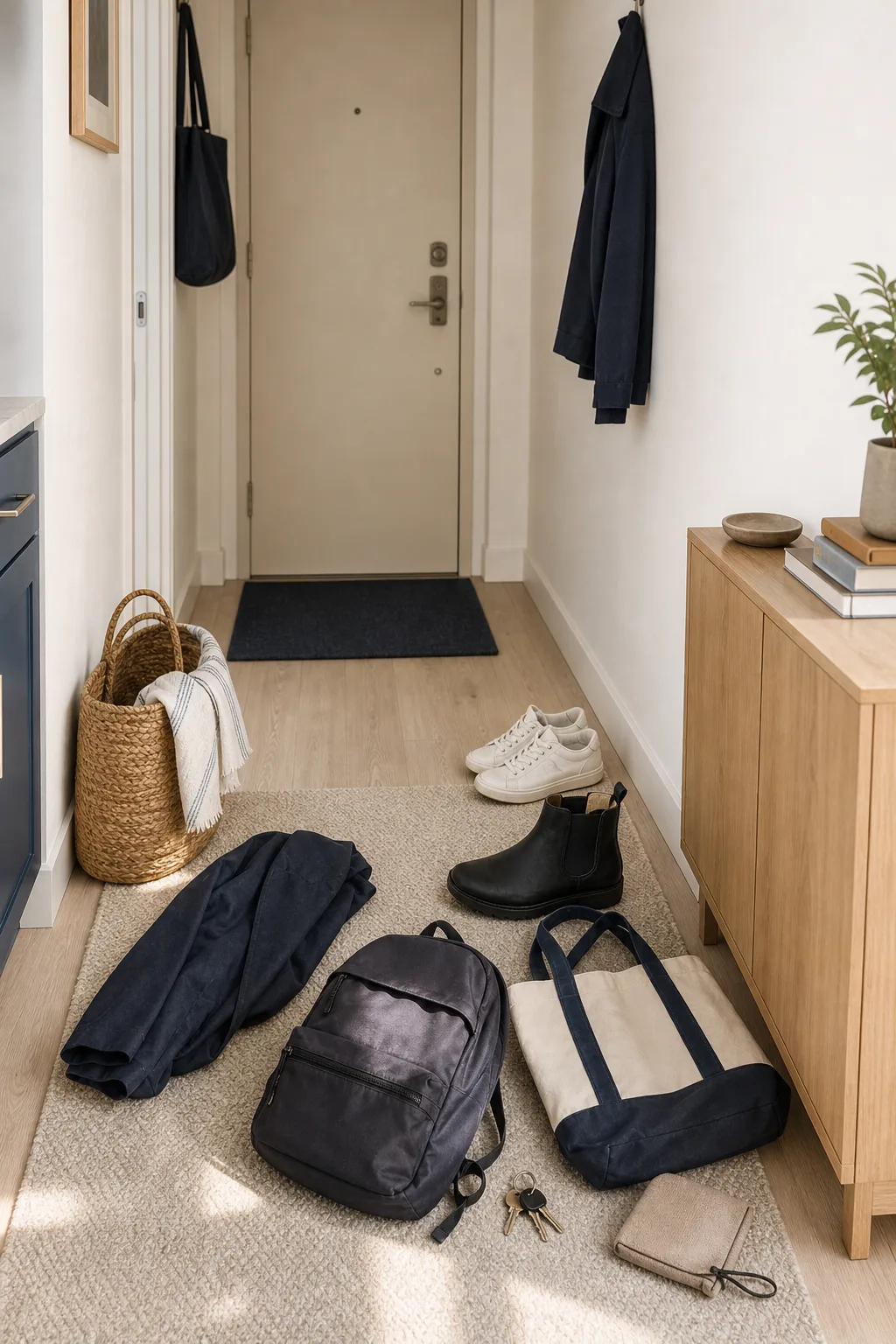
Before you buy a single bin or hook, spend one week paying attention to what you drop at the entrance the moment you walk in. For most people in apartments it is keys, a bag or backpack, shoes, a jacket, and maybe a reusable tote. Write those items down. This list becomes your shopping guide and your editing tool, because a drop zone only works when it is built around your actual habits rather than a wishlist of what you think you should store there.
Tip: Org tip: Limit your list to seven items or fewer. Anything beyond that belongs somewhere else in the apartment.
2. Measure your entryway footprint before committing to furniture
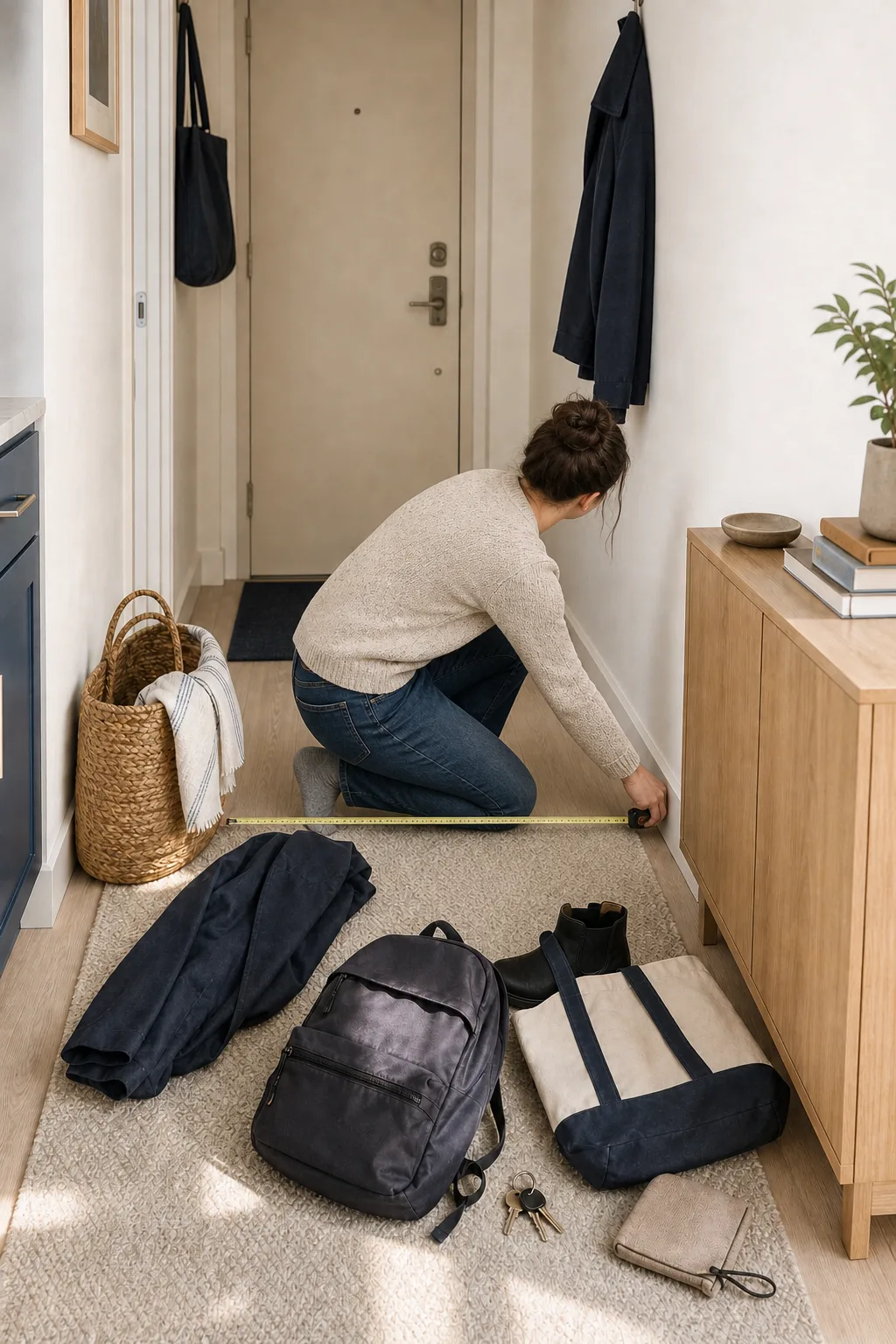
Apartment entryways are frequently as narrow as 24 to 36 inches wide, which rules out most standard hall benches and console tables sold in big box stores. Measure the width of your entry wall, the depth you can afford to lose without blocking the door swing, and the ceiling height. Note any baseboard heaters or light switches that a piece of furniture would cover. Those three numbers will tell you whether you need a slim console, a wall-mounted shelf, or a purely vertical solution like a freestanding coat rack.
Tip: Org tip: Tape the footprint on the floor with painter's tape before ordering anything online so you can see it in real life.
3. Choose one anchor piece that does double duty

In a small space, every piece of furniture needs to earn its square footage. A slim entryway bench with interior storage handles seating for putting on shoes and hides items like umbrellas or dog leashes inside. A narrow console with a drawer keeps surface clutter contained while giving you a landing spot for mail and keys. A freestanding coat rack with a small shelf at the base adds vertical hook space and a place to corral shoes underneath. Pick one anchor piece based on your measured footprint and your daily-items list, then build around it.
Tip: Org tip: A bench depth of 12 to 14 inches is usually the sweet spot for apartments without blocking foot traffic.
Renter-Friendly Hanging Solutions
4. Use adhesive hooks for jackets and bags instead of drilling

Command hooks and similar adhesive options have become genuinely strong over the last few years, with some rated to hold up to seven or even ten pounds per hook. That covers most lightweight jackets, tote bags, and crossbody bags easily. Space two or three hooks at slightly different heights along the wall beside your door so items hang without overlapping. For heavier winter coats, look for adhesive utility hooks with a wider base plate, which distribute the weight better on drywall. This is the core of any renter friendly storage setup because the wall comes down clean at move-out.
Tip: Org tip: Let adhesive hooks cure for 24 hours before hanging anything on them so the bond sets properly.
5. Maximize the back of your front door

The back of the front door is essentially free square footage that most apartment renters completely ignore. An over-the-door organizer with pockets works well for smaller items: sunglasses, hand sanitizer, pet leashes, a spare mask, lip balm. An over-the-door hook bar adds hanging space for bags or an umbrella. Because everything is mounted on the door itself rather than the wall, it qualifies as a true no-drill solution in most rentals. Just confirm your door swings freely with the organizer attached before you fill every pocket.
Tip: Org tip: Limit back-of-door storage to lightweight, flat items so the door closes smoothly and the organizer does not pull away over time.
6. Anchor a wall-mounted floating shelf with no-drill adhesive strips

A small floating shelf at eye level near the door gives you a place to land your keys, sunglasses, and anything that needs to leave with you the next morning. Adhesive mounting strips designed for shelves (the same brand that makes the hooks works well here) can hold a short, lightweight shelf without touching the wall with a drill. Keep the shelf narrow, around four to six inches deep, and limit what lives on it to only true daily essentials. Anything left on it for more than two days gets relocated to another part of the apartment.
Tip: Org tip: A small tray or shallow dish on the shelf corrals loose items like keys and transit cards so they do not slide around.
Floor-Level Organization
7. Create a dedicated shoe zone with a low-profile rack

Shoes on the floor with no system are the fastest way to make a small entryway feel out of control. A low-profile shoe rack that holds four to six pairs keeps things contained without taking over the hallway. Stackable shoe shelves let you adjust height as seasons change. If floor space is truly minimal, a wall-mounted shoe pocket organizer (hung with adhesive strips on a closet wall nearby) moves shoes off the floor entirely. Rotate seasonal footwear to another closet so only current-season shoes live at the door.
Tip: Org tip: Wipe the rack down once a month and pull out any shoes that have migrated there from another season.
8. Place a small basket or bin for the things that travel daily

A single basket on your shelf or console designated for outgoing items prevents that last-minute scramble before you leave. This is where library books going back, packages to mail, or items to return to a friend live temporarily. The rule is simple: if it is not leaving within 48 hours it does not belong in the basket. Keeping this container small, something about the size of a shoebox, enforces that limit naturally because there is only so much room. This one habit quietly supports most apartment organization ideas by stopping clutter before it spreads.
Tip: Org tip: Check the basket every Sunday and move anything that has been sitting there for a week to wherever it actually belongs.
9. Add a compact umbrella holder that fits beside the door

Wet umbrellas dripping on the floor is a small but persistent problem in apartments, especially when the door opens straight into a carpeted living area. A narrow freestanding umbrella stand or a simple tall vase beside the door solves it. If floor space is too tight, a wall-mounted umbrella hook (adhesive mounted) keeps one or two umbrellas flat against the wall. Limit it to two umbrellas maximum so the holder does not become a general long-item dumping zone for things like yoga mats and folded bags.
Tip: Org tip: Keep a small folded cloth or paper towels in the umbrella holder to wipe down wet shafts before they drip on the floor.
Daily-Habit Systems
10. Build a key system that means you never dig through your bag again

Keys are small, easy to misplace, and the source of a surprising amount of daily stress. A dedicated key hook right at eye level beside the door, or a small key tray on your shelf, means keys go there every single time you walk in. Two hooks work better than one if you have a roommate or a partner sharing the space. For a studio apartment setup where the entrance is visible from the whole living area, a small decorative key dish can hold keys without looking utilitarian. The home organization tip here is pure repetition: keys in the same spot every time removes the decision entirely.
Tip: Org tip: If you keep forgetting to hang your keys, set a phone reminder for two weeks until the habit sticks.
11. Set a one-in-one-out rule for your drop zone surface
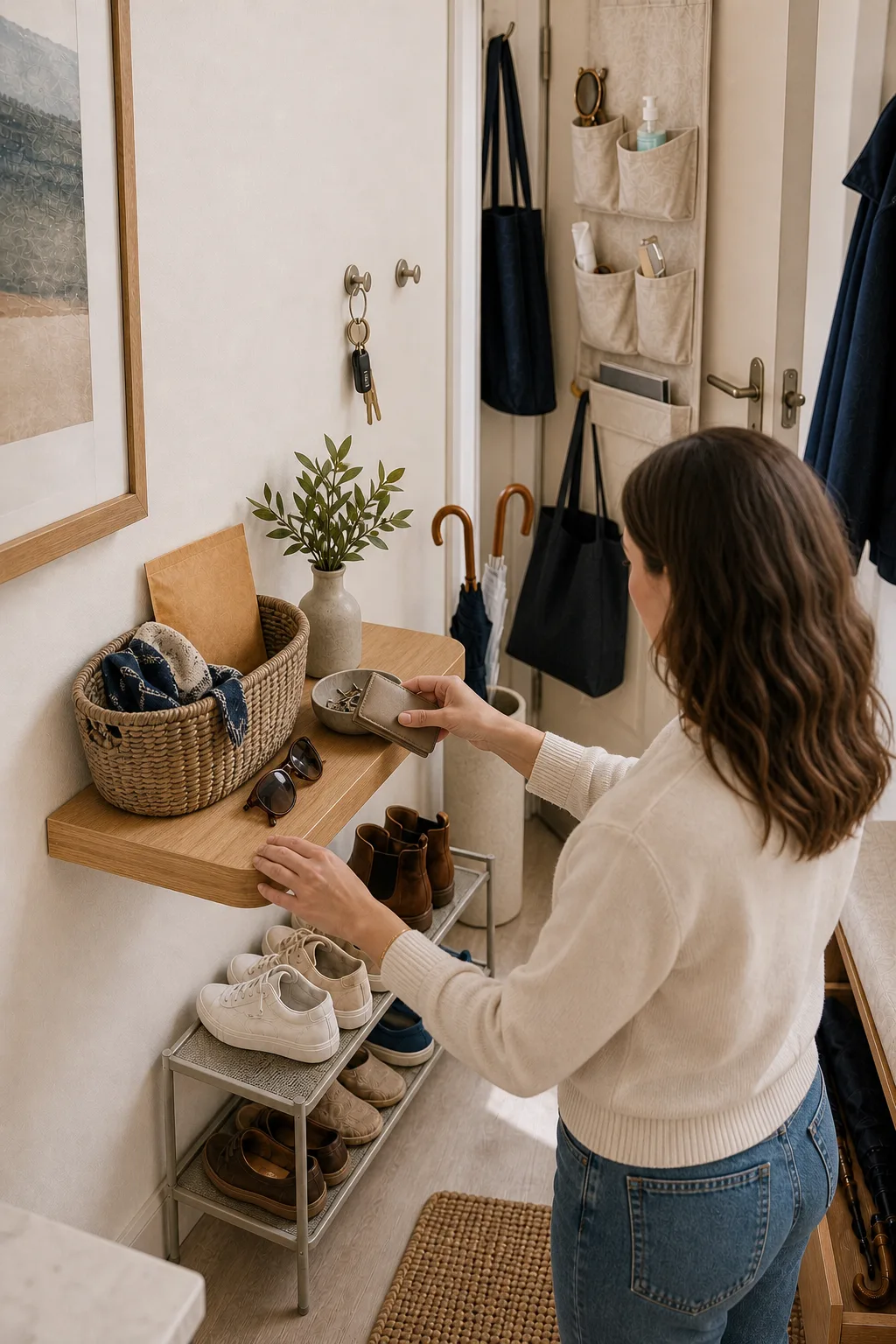
Drop zones fail not because the system is wrong but because items accumulate past the system's capacity. A small entryway shelf or tray can only hold so much before it becomes a horizontal pile. The one-in-one-out rule applied here means that if a new item lands on the surface, something else gets put away or relocated. This keeps the zone functioning as a transitional space rather than a permanent storage spot. Walk through the drop zone every evening as part of your wind-down routine and it stays reset for the next morning.
Tip: Org tip: A daily reset takes about 90 seconds when the drop zone is properly sized and stocked only with essentials.
12. Adapt the system seasonally without replacing everything

An apartment entryway drop zone in January looks different from one in July. Winter means heavier coats, scarves, and boots that need more hooks and floor space. Summer trims down to a lighter jacket, sandals, and a smaller bag. Rather than overhauling the whole setup, keep the core infrastructure (hooks, shelf, rack) in place and swap the contents. Add a boot tray in winter and remove it in warmer months. Rotate the number of hooks you actively use. Seasonal adjustments keep the system working with your life rather than against it, which is the whole point of small space organization done well.
Tip: Org tip: At each seasonal swap, take five minutes to wipe down the shelf and hooks and pull anything out that does not belong in the entryway at all.
FAQ
How do I create an apartment entryway drop zone with no wall drilling?
Start with over-the-door organizers and hook bars for the front door itself, adhesive hooks rated for your item weights on the wall beside the door, and a freestanding anchor piece like a slim console or coat rack on the floor. Adhesive mounting strips can also hold a small floating shelf. The combination of these three gives you hooks, a surface, and a floor system without a single hole in the wall.
What should I keep in my apartment entryway drop zone?
Stick to daily-use items only: keys, the bag or backpack you carry most, one or two jackets based on season, current-season shoes (four to six pairs maximum), and an outgoing-items basket. Anything you do not interact with at least a few times a week belongs somewhere else in the apartment. Keeping the list short is what makes the drop zone actually work.
My apartment hallway is very narrow. What are my options?
Focus entirely on vertical and door-mounted solutions when floor space is under 24 inches wide. Adhesive hooks on the wall, an over-the-door organizer, and a small wall-mounted floating shelf give you keys, bags, and small-item storage without touching the floor at all. If you need shoe storage, a wall-mounted pocket shoe organizer inside a nearby closet door keeps footwear off the hallway floor completely.
How do I stop my entryway from becoming a clutter pile again?
Two habits keep it reset: a daily 90-second tidy as part of your evening routine, and the one-in-one-out rule for the surface. The system also needs to match your real habits, not your ideal habits. If your coat always ends up on the floor, add a lower hook rather than trying to force yourself to use a high one. A system that meets your actual behavior stays organized far longer than one that requires you to change who you are.
Can I set up a drop zone in a studio apartment with almost no entryway?
Yes, and studios often have the front door opening directly into the main living space, which makes a compact vertical setup the right call. A freestanding coat rack doubles as a room divider suggestion and handles hooks. A small bench or cube ottoman with interior storage near the door handles shoes and a bag. Keep everything within a two-foot zone beside the door so it reads as intentional rather than scattered across the studio.
Save this guide somewhere easy to find before you head to the store. If you want more practical small space organization tips sent straight to your inbox, the Nest and Narrow newsletter covers apartment-specific setups every week without the noise. You can sign up at nestandnarrow.com.