
When I moved into my current apartment, the kitchen came with exactly one deep shelf tucked inside a narrow cabinet beside the fridge. No pantry closet, no built-ins, no extra cabinet to repurpose. Just one shelf and whatever I could make of it. I know that feeling is not unique to me. Apartment pantry organization with one shelf is one of the most searched small-space organization problems out there, and it makes sense because one shelf forces you to be intentional in a way that a full pantry never does.
The good news is that one shelf, done right, can hold more than you think and stay tidy longer than a bigger space that never got a real system. These 12 steps walk through exactly how I approached mine, from clearing it out to maintaining it week to week. Every idea here is renter-friendly, requires no drilling, and works whether your shelf is in a kitchen cabinet, a closet converted to pantry use, or even a bookcase in a studio apartment.
Key takeaways
- One shelf works best when it is divided into clear zones by category, so everything has a designated spot and nothing gets lost behind something else.
- Risers, bins, and turntables multiply the usable surface of a single shelf without any permanent changes, making them ideal renter-friendly storage tools.
- Editing your food inventory before organizing is the most important step. A one-shelf pantry only works when you keep what you actually use.
Why I Finally Got Serious About My One Shelf
For the first year in my apartment I told myself the pantry chaos was just because I did not have enough space. Then I actually cleared the shelf, edited what I kept, and added two bins and a turntable. Same shelf, same square footage, completely different result. It turns out I had plenty of space. I just had not given everything a home.
Step-by-step
Start Here: Reset the Shelf
1. Pull Everything Off and Edit Before You Organize

Before any bin or label touches your shelf, take every single item off and put it on the counter. Check dates, toss duplicates, and be honest about what you actually cook with. Apartment pantry organization only works when the contents are intentional. One shelf cannot absorb clutter the way a full pantry might, so editing is the foundation. Keep only what you reach for in a normal week or two.
Tip: Group what you pull out into rough categories on the counter so you can see the volume you are working with before buying any organizers.
2. Measure the Shelf Before Buying Anything
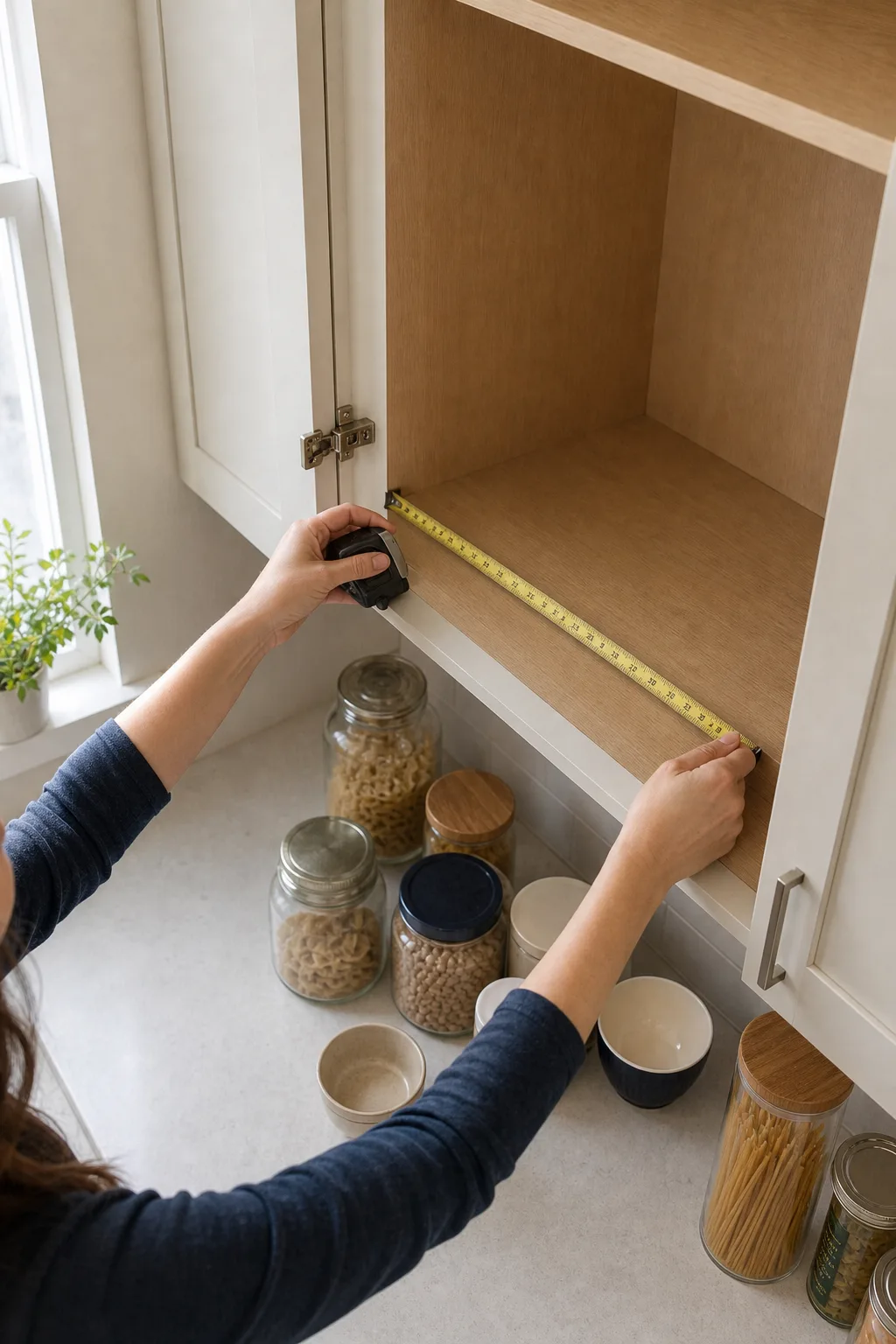
Width, depth, and the clearance height above the shelf all matter before you spend a dollar on organizers. Many apartments have shallower shelves than standard, and a bin that works in a pantry photo might stick out past the cabinet door or block airflow. Write down your measurements and keep them in your phone. This single step prevents the most common small-space organization mistake: buying things that do not fit.
Tip: Also measure the cabinet door clearance if yours swings shut, so your tallest items clear it without catching.
Design the System
3. Divide the Shelf into Three Functional Zones

Think of your one shelf in thirds: a front zone for daily grab items, a middle zone for weekly staples, and a back zone for backup stock or less-used ingredients. This zoning approach is the core of practical pantry organization on one shelf because it removes the habit of just stacking things wherever they fit. Everything gets a neighborhood, not just a shelf. When you zone first, putting things back after grocery shopping becomes automatic.
Tip: If your shelf is very deep, use a turntable in the back zone so items there do not disappear and get forgotten.
4. Use a Lazy Susan to Rescue the Back of a Deep Shelf

A single turntable on a deep shelf is one of the highest-return small space organization moves you can make. Oils, vinegars, canned goods, and jars that normally get buried become fully accessible with one spin. Look for a low-profile turntable with a lip so bottles do not slide off. This is a renter-friendly storage solution because it requires zero installation and comes with you when you move. A turntable in the back third of your shelf essentially turns dead space into active storage.
Tip: Put your most-used condiments or oils on the turntable so they are always one reach away instead of something you dig for.
5. Add a Shelf Riser to Double Your Vertical Space

A freestanding shelf riser sits on top of your existing shelf and creates two levels where there was one. This is the single best no-drill solution for apartment pantry organization because it effectively gives you a second shelf without touching a wall or cabinet. Stack cans or jars on the lower level and use the riser surface for boxes or bags. Look for a riser with open sides so air circulates and you can see items on both levels.
Tip: Put items you use less often on the riser's top surface and keep daily staples at the base level where they are easiest to grab.
6. Contain Loose Bags and Boxes in Open Bins
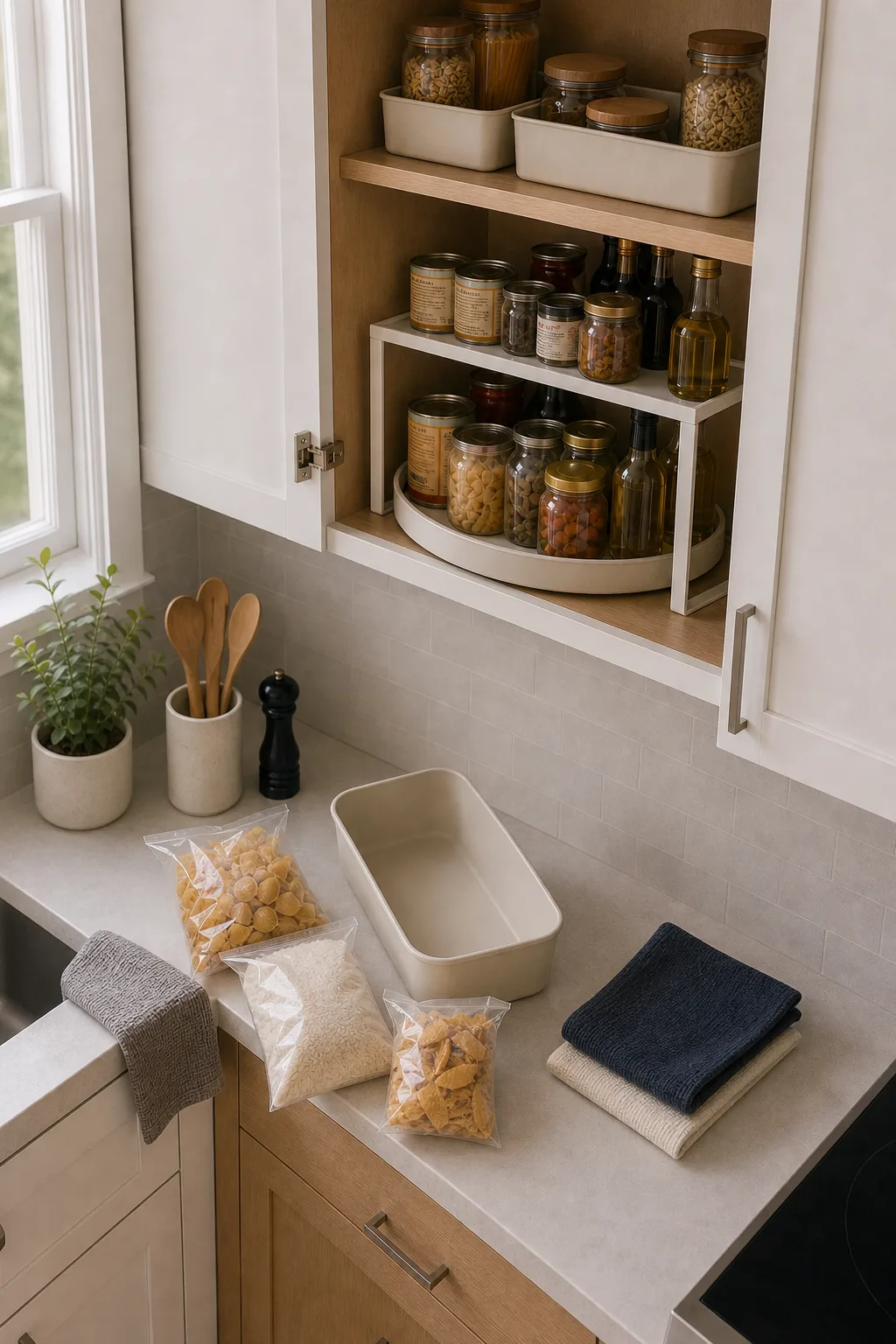
Bags of rice, pasta, flour, and snacks tend to tip, slide, and take up more space than their contents justify. Corralling them in a simple open-top bin keeps the shelf looking tidy and makes it easy to see when something is running low. Bins also let you pull an entire category forward at once instead of fishing behind boxes. For apartment organization ideas on a budget, basic white or clear bins from any home goods store work perfectly without looking cluttered.
Tip: Label the front of each bin so the category is visible at a glance and anyone in your household can put things back correctly.
Organize by Category
7. Decant Staples into Clear Canisters to Save Space and Reduce Visual Noise

Bulky cereal boxes, cracker sleeves, and snack bags take up far more shelf real estate than their contents need to. Transferring frequently used staples into uniform clear canisters reduces the footprint and makes it easier to see at a glance what you have. This is one of those home organization tips that feels like extra work until you try it and realize how much calmer the shelf looks. Clear containers also help you track when you are running low without digging through bags.
Tip: Start with just two or three staples you use daily rather than overhauling everything at once. Progress beats perfection on a one-shelf system.
8. Group Canned Goods with Labels Facing Forward

Canned goods are the most common culprit for pantry shelf chaos because they look identical from the top and get stacked randomly. Line them up in a single row with labels facing out, or use a small can organizer that lets cans roll forward as you use them. If your shelf is wide enough, group cans by type: proteins together, vegetables together, tomato products together. This micro-zoning within a category is a simple apartment organization idea that makes meal planning faster.
Tip: If you only have a few cans, skip the organizer and just line them up front to back in one tidy row with labels visible.
9. Keep Snacks in One Dedicated Bin So They Stop Sprawling

Snack packaging is chaotic by nature: different sizes, weird shapes, partial bags. Giving snacks one bin that lives in a consistent spot on your shelf keeps them from spreading across the whole surface. When the bin is full, that is your signal that you are overstocked. This is especially useful in a studio apartment where the pantry shelf might also be visible from the main living space and visual tidiness matters more.
Tip: A handled bin works well for snacks because you can pull the whole thing out to see what is inside without unstacking anything.
Build Habits That Stick
10. Assign One Small Basket to Backup Stock Only
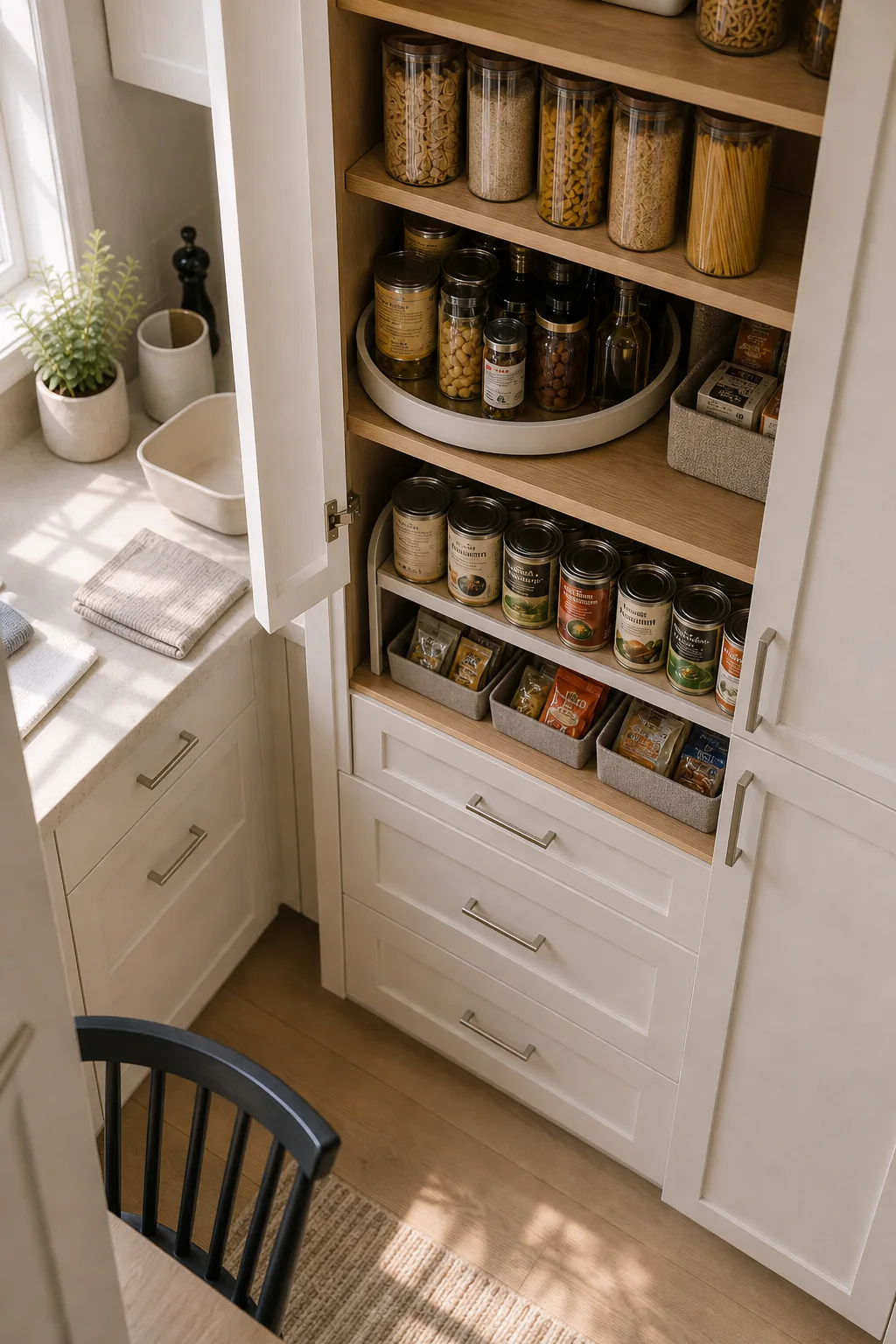
Keeping backup pantry items mixed in with your active supply is one of the fastest ways a one-shelf system breaks down. Designate one small basket or corner of the shelf strictly for backup: the second jar of peanut butter, the extra box of pasta. When you open a backup item, it moves out of that basket and into the active zone. This habit keeps your pantry organization on one shelf working without weekly resets.
Tip: If your backup basket starts overflowing, that is feedback that you are over-buying before the apartment pantry organization system can keep up.
11. Do a 5-Minute Shelf Reset After Every Grocery Trip
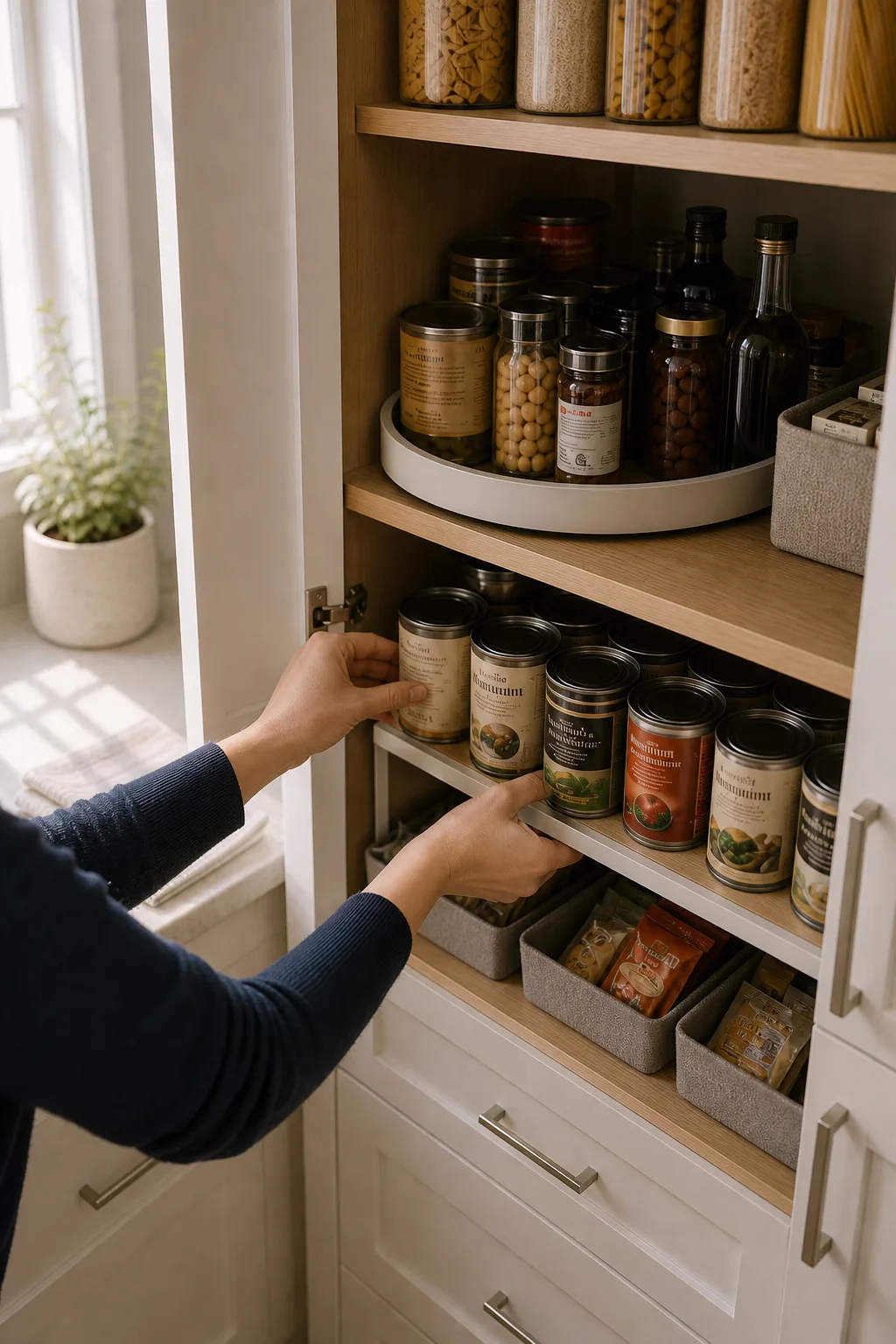
The best small space organization systems are built around short, consistent habits rather than big weekend overhauls. After putting away groceries, take five minutes to rotate older items to the front, place new items behind them, and return anything that has migrated to the wrong zone. This is especially important on a one-shelf pantry where there is no spare room to absorb disorder for long. Five minutes once a week prevents the two-hour frustration session once a month.
Tip: Do the reset before you put new groceries away so you are not hiding fresh items behind older ones that should be used first.
12. Use the Inside of the Cabinet Door for Lightweight Extras

If your one-shelf pantry lives inside a cabinet, the door itself is bonus storage that most renters ignore. Over-the-door organizers with pockets or small hooks can hold spice packets, foil boxes, snack bars, or small jars without any drilling if you choose a tension or adhesive model rated for the weight. This is one of the most practical renter-friendly storage moves in a small apartment because it uses completely dead vertical real estate. Keep it lightweight to avoid stressing the door hinge over time.
Tip: Limit door storage to flat or lightweight items. Heavy jars on a door organizer can cause it to shift or warp over time, especially in rental cabinets with thinner doors.
FAQ
How do I organize a pantry when I only have one shelf?
Start by editing what you keep so the shelf is not overstocked, then divide it into front, middle, and back zones by how often you use things. Add a riser for vertical space and a turntable for the back zone. Contain loose items in bins and label everything so putting groceries away stays intuitive. A one-shelf pantry works best when the system is simple enough to maintain in a few minutes a week.
What are the best renter-friendly pantry organizers for one shelf?
Freestanding shelf risers, lazy Susans, open bins, and clear canisters are all renter-friendly because they require no installation and move with you. Avoid anything that requires screwing into the shelf or cabinet walls. Over-the-door organizers with adhesive or tension mounts also work well as long as you choose ones rated for your door type and keep them lightweight.
How do I keep a small apartment pantry shelf from getting messy again?
The most effective habit is a five-minute reset after every grocery run. Put new items behind older ones, return things to their designated zones, and remove anything that does not belong on the shelf. When the system is simple and each category has a consistent home, tidiness becomes much easier to maintain without a big weekly effort.
Can apartment pantry organization work in a studio apartment with no dedicated pantry?
Yes. In a studio, a single kitchen cabinet shelf, a floating shelf, or even one tier of a bookcase can function as a pantry shelf with the right zoning and containers. The same principles apply: edit first, zone by category, use risers and bins to maximize the surface, and keep a weekly reset habit. The smaller the space, the more important a consistent system becomes.
Save this guide so it is easy to reference on your next grocery run or the next time your shelf starts to feel chaotic. If you want more practical small-space organization ideas sent straight to your inbox, the Nest and Narrow newsletter is where I share what is actually working in my apartment week to week. You can sign up at nestandnarrow.com.