

Cleaning caddy organization sounds like a minor detail, but in a small space it makes a real difference. When your supplies are scattered under the sink, behind the toilet, and on a random shelf in the closet, cleaning feels like a production before you even start. One caddy that holds everything you need for a full apartment sweep changes that completely.
I have lived in rentals for years, and I do not have a utility room or a mudroom or even a deep cabinet to work with. What I do have is a system that keeps my cleaning supplies contained, portable, and easy to grab on a weekday when I only have twenty minutes. These twelve steps will help you build that same system, whether you are working with a hall closet, an under-sink cabinet, or a single shelf in a studio.
Key takeaways
- One portable caddy that holds a full apartment's worth of supplies cuts cleaning prep time significantly in small spaces.
- Renter-friendly storage solutions like tension rods, stackable bins, and over-door organizers keep everything accessible without damaging walls.
- Editing your supplies down to what you actually use is the first and most important step in any small-space cleaning caddy setup.
How I Finally Got My Cleaning Supplies Under Control
I used to keep cleaning supplies in three different spots in my apartment and still somehow could never find the glass cleaner when I needed it. I spent one afternoon pulling everything out, editing it down to what I actually used, and fitting it into a single handled caddy that lives under my kitchen sink. Cleaning my apartment went from feeling chaotic to feeling genuinely manageable, which is the most I could ask of any small-space system.
Step-by-step
Start Here: Build the Right Foundation
1. Audit your supplies before you buy a single organizer
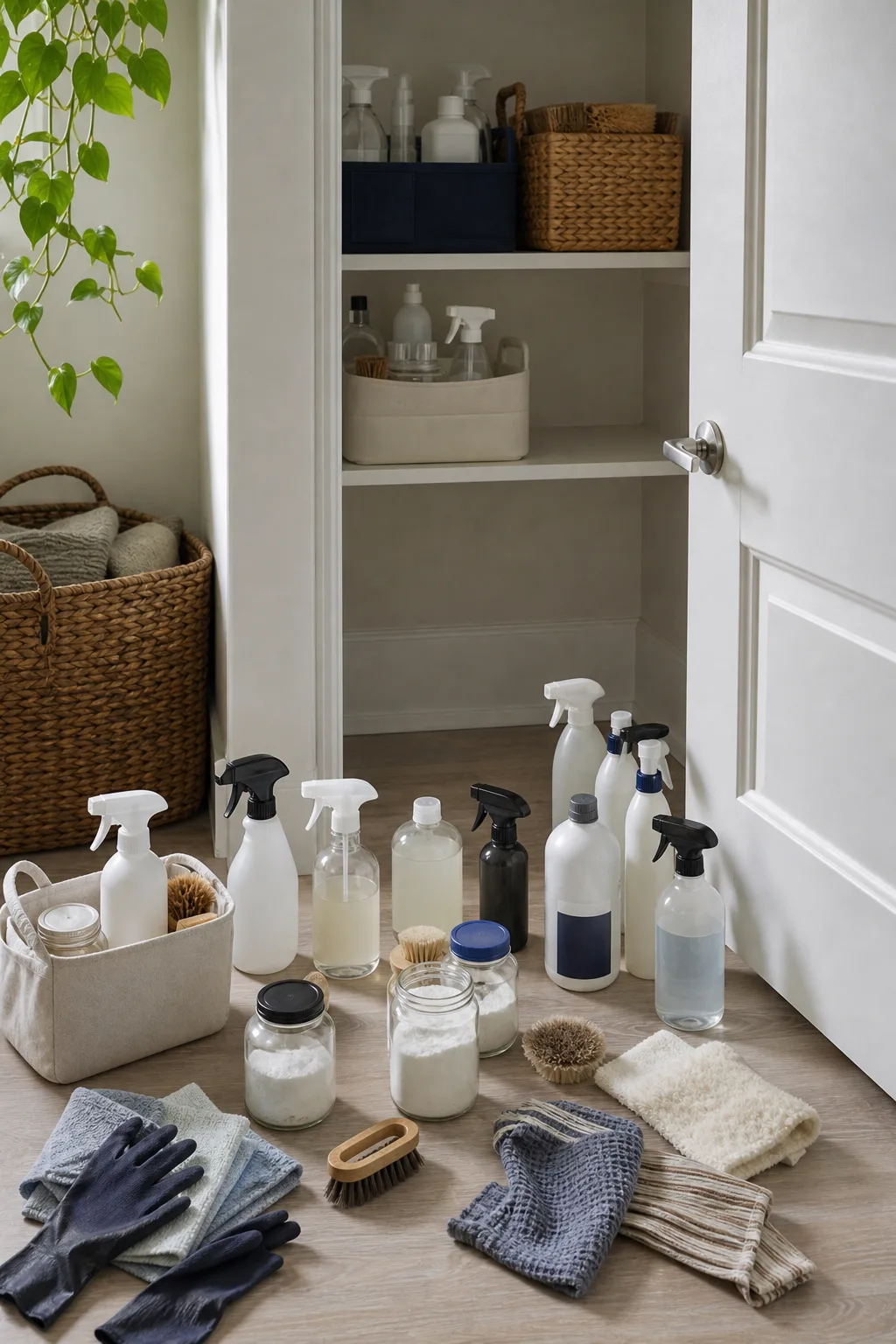
Pull every cleaning product out of every cabinet, shelf, and bag it currently lives in. Line them up and check for duplicates, expired products, and things you have not touched in months. In a small apartment, every item in your caddy needs to earn its spot. This editing step is what separates a functional cleaning caddy from a cluttered one. Toss what is empty, consolidate duplicates, and be honest about what you actually use.
Tip: Tip: Limit yourself to one product per task, like one glass cleaner and one all-purpose spray, before you organize anything.
2. Choose a caddy size that fits your actual storage spot
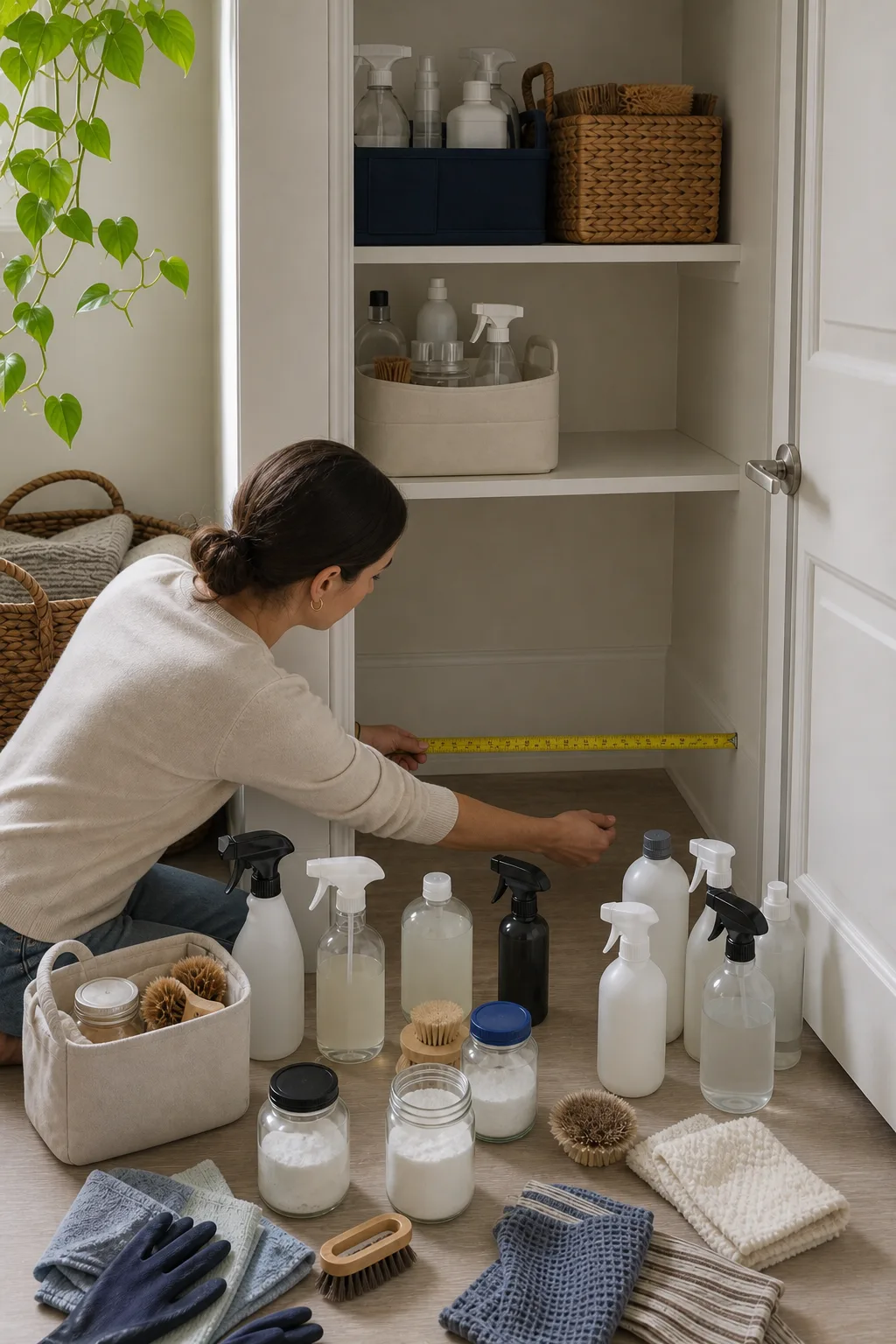
Measure the shelf, cabinet floor, or closet section where your caddy will live before buying anything. A caddy that is too tall will not clear the shelf above it, and one that is too wide blocks access to everything else. For most studio apartment setups, a medium-size plastic or wire caddy around 10 to 12 inches wide is the sweet spot. If your storage space is genuinely tiny, a small handled tote works just as well and fits on a single bathroom shelf. Cleaning caddy organization small space organization starts with knowing your actual dimensions.
Tip: Tip: Bring a tape measure to the store or screenshot your measurements before ordering online.
3. Assign one caddy per zone, not one caddy for everything

If your apartment has a kitchen, bathroom, and a separate living area, consider two small caddies rather than one large one. A bathroom caddy stays under the sink and holds toilet cleaner, scrub brush, and surface spray. A kitchen caddy lives under the kitchen sink with degreaser, dish soap backup, and a sponge caddy. This zoning approach is a core home organization tip because it means you are never carrying supplies from one end of the apartment to the other. For a true studio, one caddy works fine since your zones are steps apart.
Tip: Tip: Label each caddy with a small piece of washi tape so anyone in the household knows where things go.
Renter-Friendly Storage Setup
4. Use a tension rod to hang spray bottles inside a cabinet door

A spring-tension curtain rod installed horizontally inside an under-sink cabinet creates an instant spray bottle rack at no cost to your security deposit. Hang bottles by their trigger handles directly over the rod. This frees up the cabinet floor for your caddy, a trash bin, or extra supplies. It is one of the most reliable renter-friendly storage solutions I know because it requires zero tools and leaves no marks. Tension rods also work inside closet cabinets and pantry shelves for the same purpose.
Tip: Tip: Choose a rod rated for at least a few pounds so it holds multiple bottles without bowing.
5. Add a small lazy Susan to the cabinet floor for deep shelves

Under-sink cabinets in rentals are often deep and awkwardly shaped around pipes. A lazy Susan on the cabinet floor means you can spin your supplies into reach instead of crouching and digging. Place your caddy on one side and a spare roll of paper towels or extra bottles on the other. This is one of those apartment organization ideas that sounds too simple but saves real frustration on cleaning day. Look for a lazy Susan with a lip so bottles do not slide off when you spin it.
Tip: Tip: A lazy Susan works equally well on a bathroom vanity shelf or inside a linen closet.
6. Hang an over-door organizer for flat supplies and extras

The back of a cabinet door or closet door is underused space in almost every rental I have lived in. An over-door organizer with shallow pockets is perfect for flat things: microfiber cloths, scrubbing pads, rubber gloves, dryer sheets, and extra sponges. This keeps them visible and dry, which matters for cloths that can get musty when stuffed in a caddy. No drilling required, which makes it a true no-drill solution for renters. Look for one with adjustable hooks that grip a door without scratching the finish.
Tip: Tip: Keep the pockets on the door organizer at eye level so you actually see and use what is stored there.
Make Your Caddy Portable and Practical
7. Decant bulky bottles into smaller refillable ones

Gallon-size refill bottles of all-purpose cleaner are economical but impossible to fit in a small caddy. Decant your most-used cleaners into smaller 16-ounce spray bottles and store the refill jug in a separate spot, like the back of a closet or under a bathroom vanity. Label each small bottle clearly with a paint pen or label maker so you never confuse them. This single step is one of the most practical home organization tips for apartments because it makes your caddy lighter, neater, and easier to carry room to room. Smaller bottles also dry faster and create less dripping mess.
Tip: Tip: Date the label when you fill the bottle so you know how long a refill lasts and can plan restocking.
8. Group your caddy contents by surface type, not product brand
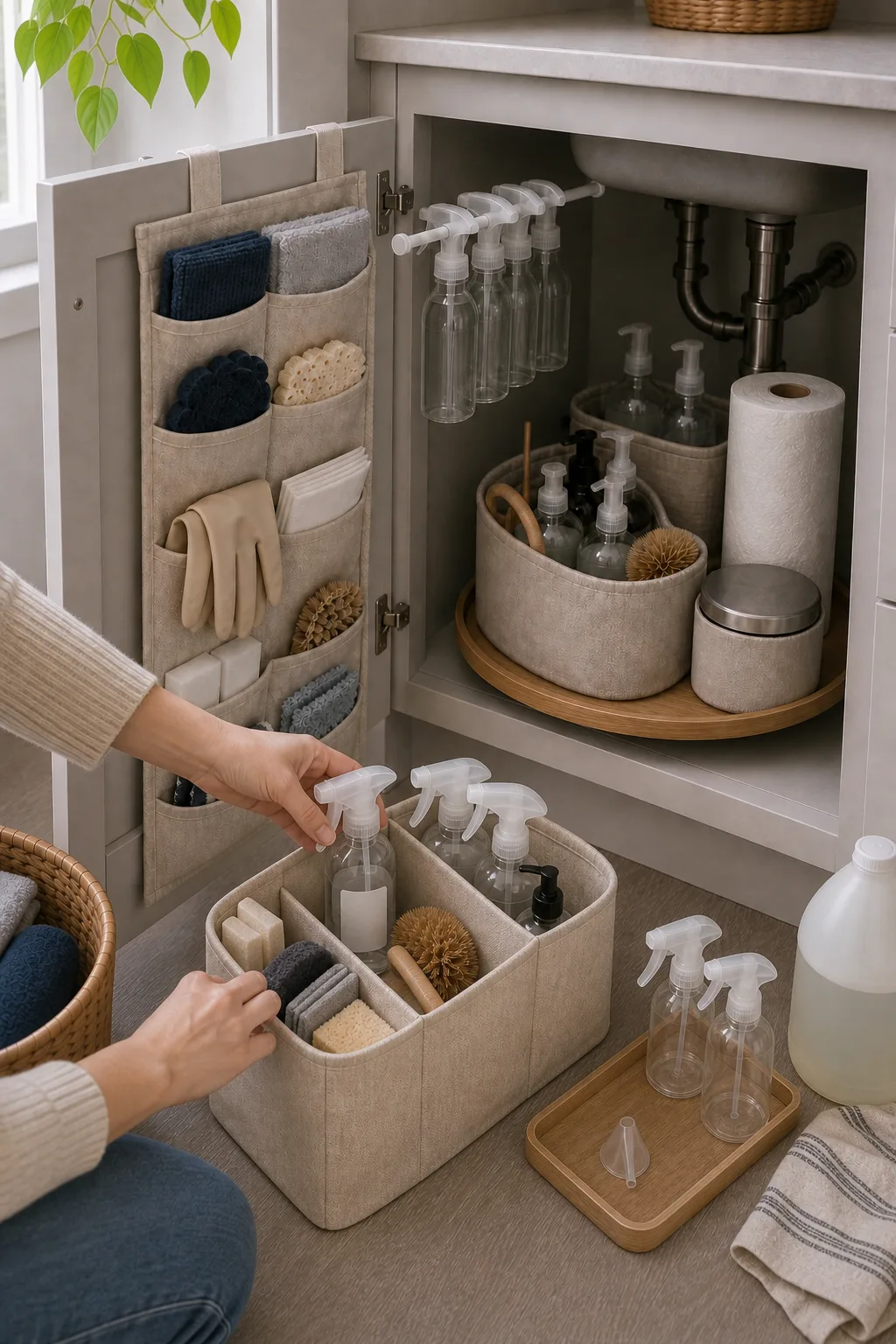
Organize what goes into your caddy by what it cleans rather than by how it looks. Glass and mirror products together, bathroom surface products together, floor and multi-surface products together. This grouping method means you can grab the right section of your caddy without reading every label mid-clean. It is a small but genuine time saver when you are moving quickly through an apartment. In a small space where everything needs to work efficiently, cleaning caddy organization built around function beats organization built around aesthetics every time.
Tip: Tip: Use small zip-top bags or rubber bands to keep loose items like cotton rounds or scrubber pads grouped inside the caddy.
9. Store your caddy at the spot where cleaning actually starts
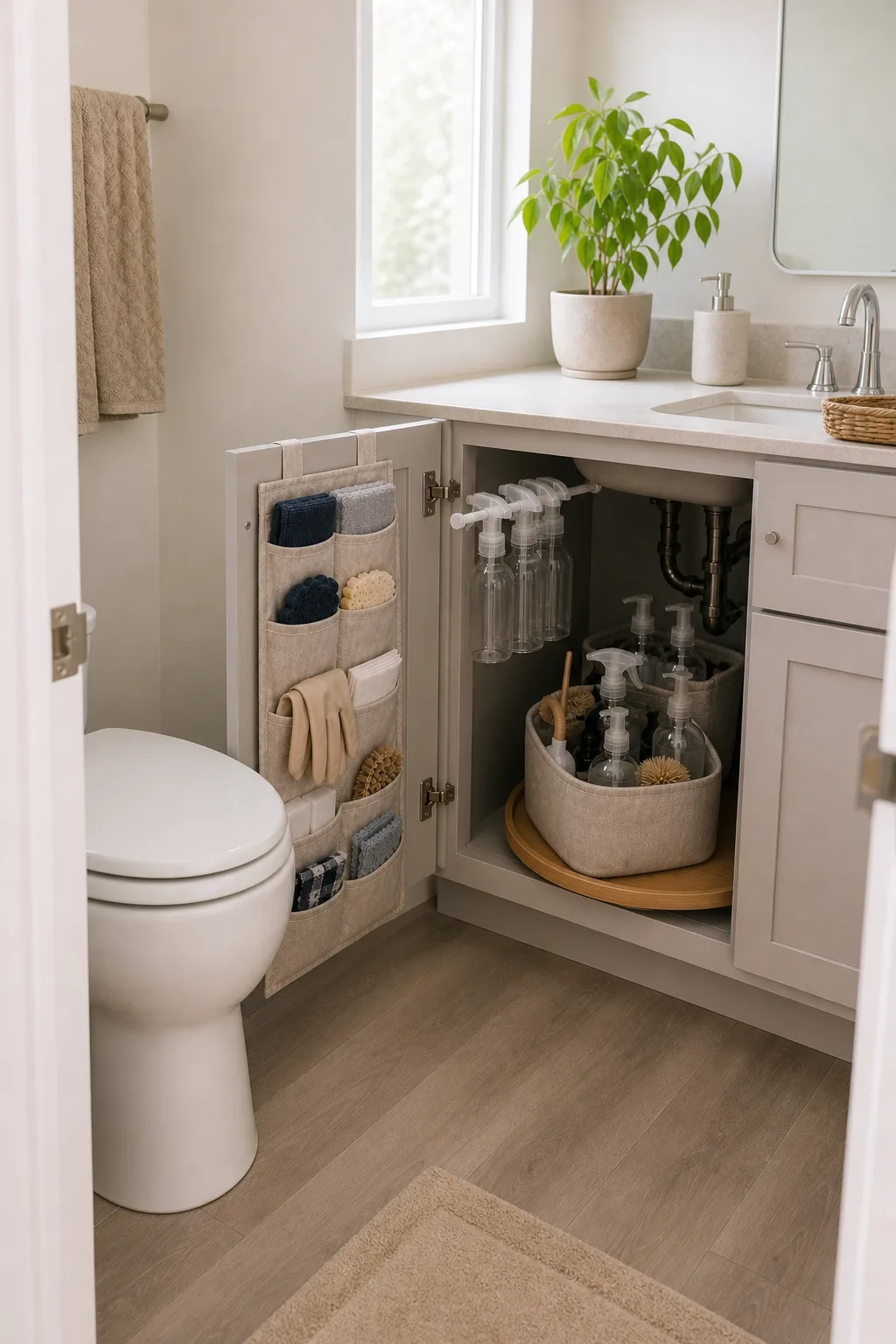
Think about where you begin your cleaning routine and put your caddy there. For most apartment dwellers, cleaning starts in the bathroom or kitchen. If your caddy lives in a hall closet but you always begin in the bathroom, you are adding a small but real friction point every single time. Place the caddy where the work begins and the rest of the routine flows naturally. This is a basic but often overlooked apartment organization idea that makes your system feel easier to maintain.
Tip: Tip: If you clean both bathroom and kitchen regularly, store the caddy on the path between them, like a hallway shelf or closet.
Zone-Specific Caddy Tips
10. Build a secondary supply station inside your desk or WFH area

If you work from home in your apartment, a small secondary caddy or a pouch on your desk shelf with a screen cloth, keyboard wipes, and a small bottle of glass cleaner keeps your workspace clean independently. You should not have to go to the kitchen every time your monitor needs a wipe. A compact pouch or a small handled bin on a bookshelf is enough for desk and WFH cleaning storage. This separates your general apartment cleaning supplies from your workspace tools, which helps with both organization and mental clarity when you are at your desk.
Tip: Tip: A pencil cup or small mason jar on the desk shelf corrals microfiber cloths so they are folded and ready without taking up caddy space.
11. Set up a minimal entryway cleaning kit for quick wipe-downs

If your apartment has any kind of entryway, even just a small corner near the front door, keep a compact kit there for immediate messes. A small handled basket with a pack of cleaning wipes, a lint roller, and a small hand broom handles most entryway situations without pulling out your full caddy. Renter friendly storage in a tight entryway means using hooks, a small shelf, or a wall-mounted basket since you likely have no closet there. Keeping supplies at the point of use, right where shoes come off and bags get dropped, prevents dirt from spreading further into the apartment.
Tip: Tip: Replenish the entryway kit when you restock your main caddy so it never runs dry.
Maintain What You Built
12. Do a monthly caddy reset to keep the system working

Once a month, pull your caddy out and do a quick reset. Wipe out the caddy itself, check product levels, toss anything that is empty or expired, and make sure everything is back in its assigned spot. This fifteen-minute habit prevents the slow drift that turns a tidy system into a cluttered one. It is also the moment to notice what you are running low on before cleaning day, so you are not mid-task without supplies. Consistent resets are what keep cleaning caddy organization working as a long-term small space organization habit rather than a one-time fix.
Tip: Tip: Tie your monthly caddy reset to something you already do, like a first-of-the-month grocery run, so it becomes automatic.
FAQ
What is the best caddy for a small apartment under-sink cabinet?
A medium-size plastic or wire caddy with a handle works well for most under-sink setups. Look for one that is 10 to 12 inches wide with compartments tall enough for spray bottles. If space is especially tight, a small handled tote gives you portability without the bulk. Always measure your cabinet opening and shelf height before buying.
How do I organize cleaning supplies in a rental with no closet?
Use the space you do have strategically. An over-door organizer on a bathroom door, a tension rod under the kitchen sink, or a small shelf unit in a corner can all hold a caddy and basic supplies without requiring any drilling. Decanting into smaller bottles keeps your setup compact enough to fit in a single cabinet or even on a shelf.
Is it better to have one cleaning caddy or separate caddies per room?
For a studio or small one-bedroom, one portable caddy that covers the whole apartment is usually the most practical approach. For a larger apartment where the kitchen and bathroom are far apart, two small caddies, one per zone, reduces the time you spend carrying supplies back and forth. Start with one and split into two only if you find yourself frustrated by the distance.
How many cleaning products should actually be in a small-space caddy?
Most apartments need fewer products than people think. An all-purpose spray, a glass cleaner, a bathroom surface cleaner, a toilet cleaner, dish soap, and a scrubbing pad covers nearly every surface. That is roughly six items, plus a few cloths or sponges. If your caddy holds significantly more than that, it is worth asking which products are actually earning their space.
What no-drill options work for cleaning storage in a rental?
Tension rods inside cabinet doors for hanging spray bottles, adhesive hooks rated for smooth surfaces, over-door organizers that hook over the door frame, lazy Susans on cabinet floors, and freestanding shelf units all work well in rentals without any drilling. These are the options I rely on most and they all leave zero damage when you move out.
Save this guide somewhere easy to find the next time your cleaning supplies feel like a scattered mess. If you want more small-space organization ideas sent straight to your inbox, the Nest and Narrow newsletter is where I share the kind of practical tips that actually work in real apartments.