

When I converted the narrow reach-in closet in my apartment into a work zone, I was skeptical it would actually feel like a real office. What I found was the opposite: having a defined space with a door I could close made it easier to focus during the day and easier to mentally clock out at night. Closet office organization for remote work is less about square footage and more about how intentionally you use every inch you have.
Whether you are dealing with a shallow closet, a bifold door situation, or a landlord who does not want you touching the walls, there is a renter-friendly solution for almost every constraint. The steps below cover how to plan the layout, manage cables, store supplies, and keep the whole setup functional even when your closet doubles as actual clothing storage. These apartment organization ideas work in studios, one-bedrooms, and anywhere you are trying to carve out a dedicated remote work corner.
Key takeaways
- Measure your closet depth before buying a desk surface because shallow closets need a narrower desktop to allow the door to close.
- Tension rods, over-door organizers, and freestanding shelves are the backbone of renter-friendly closet office storage that leaves walls intact.
- A power strip with a long cord solves most outlet problems in closets without requiring any electrical work or landlord approval.
Why I Turned My Hall Closet Into an Office
I spent almost a year working from my couch before I finally cleared out the hall closet and set up a real desk inside it. The difference was immediate: I stopped losing track of my hours, I stopped eating lunch at my laptop, and I stopped feeling like my apartment had been completely taken over by work. It is a small closet in a small apartment, and it changed how I feel about both.
Step-by-step
Plan the Layout First
1. Measure the closet before buying anything
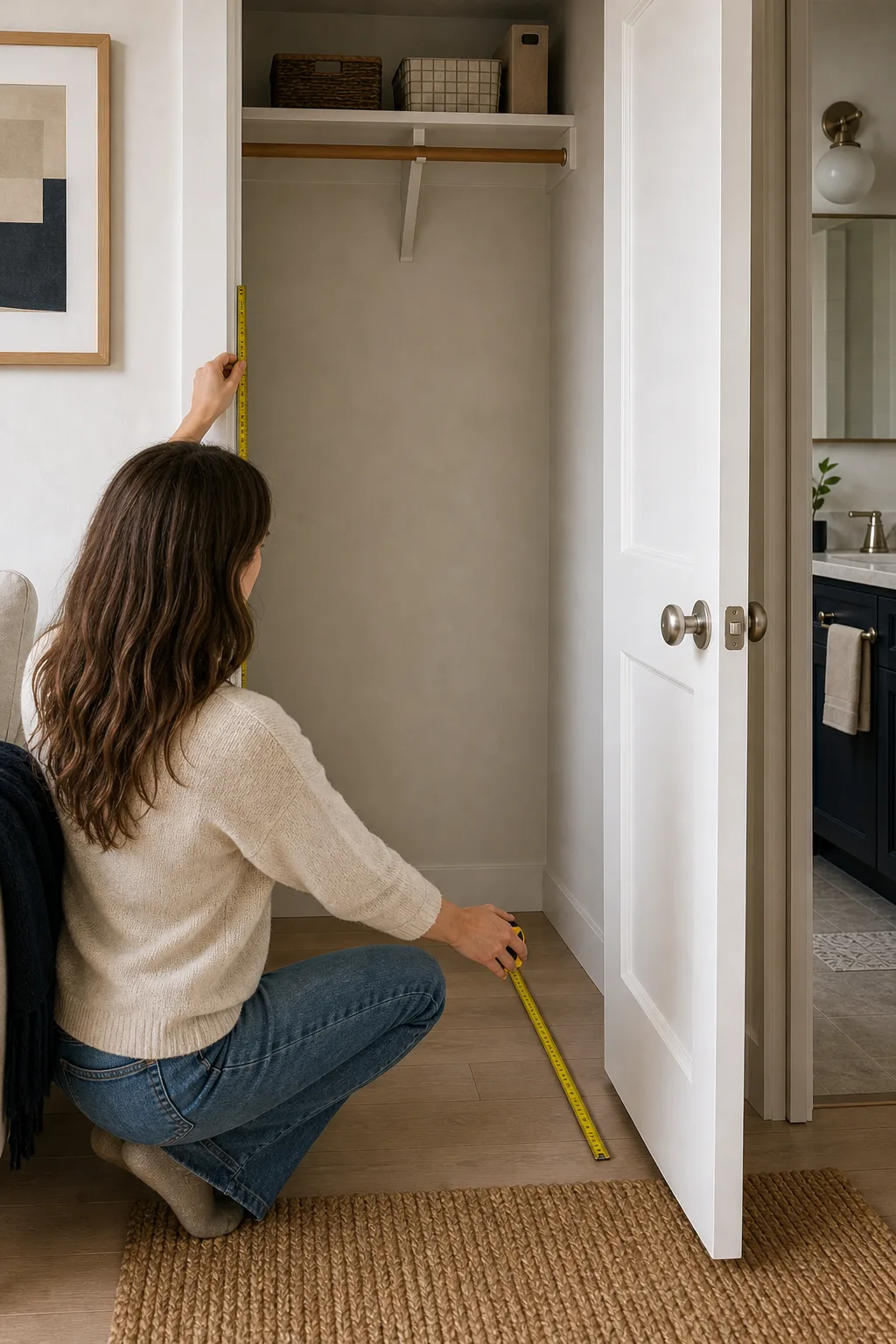
Start with width, depth, and ceiling height, then note where the outlet is relative to where you plan to sit. Many reach-in closets are only 24 inches deep, which means a standard 30-inch desk will stick out and prevent the door from closing. Knowing your exact numbers before you shop saves you from returning three things in one week. Write the measurements on a sticky note and keep it on your phone until the setup is finished.
Tip: Tape a piece of painter's tape at chair height on the closet wall to visualize your sightline before committing to shelf placement.
2. Remove the existing closet rod to open up the space

Most standard closet rods are held by simple bracket screws that come out in minutes. Taking the rod out frees up the full vertical height of the closet and gives you room to add a proper shelf or desktop at a comfortable working height. If you are renting and prefer to put the rod back when you move out, store the hardware in a labeled zip bag taped to the inside wall. This one swap is often what makes a closet feel like a real office instead of a cramped corner.
Tip: Keep the rod and all original hardware together in a bag so reinstalling on move-out day takes ten minutes instead of a stressful search.
3. Choose a freestanding desk surface that fits your depth

A floating-style desk mounted on brackets looks great but requires wall anchors that most landlords will not love. Instead, look for a narrow freestanding console table or a fold-down desk that sits on a low bookcase and can be removed without tools. For very shallow closets, a 20-inch-deep butcher block cut to size from a hardware store resting on two small filing cabinets creates a sturdy surface with built-in drawer storage. The goal is a surface that holds your laptop, a small monitor if you use one, and a cup of water without feeling cramped.
Tip: If you go the butcher block route, lightly sand any rough edges and add small rubber feet underneath so it does not shift.
Handle Power and Cables
4. Run a long power strip to solve the outlet problem
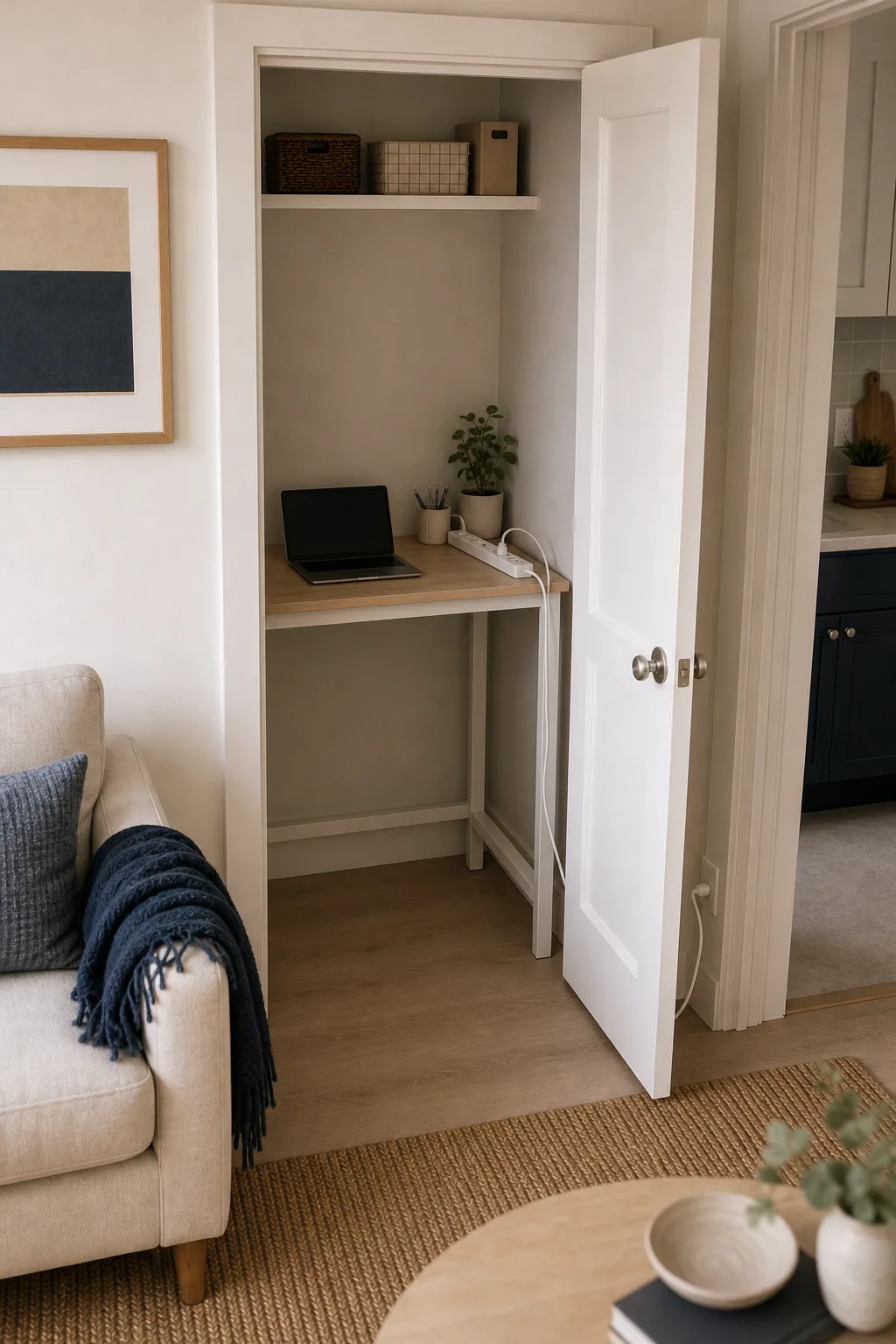
Closets rarely have outlets at desk height, and working off a single floor outlet with a tangle of cords is a hazard and an eyesore. A power strip with a 10 to 12 foot cord gives you enough reach to plug in at the nearest wall outlet and still have multiple ports at your desk surface. Clip the cord to the baseboard with adhesive cable clips to keep it off the floor. This is one of the simplest home organization tips that makes the biggest difference in how polished and usable a closet office actually feels.
Tip: Choose a power strip with a flat plug head so it tucks flush against the wall without sticking out awkwardly.
5. Use a cable management box to hide the cord clutter

Once you have your power strip in place, coil any excess cable length and tuck it into a simple cable management box placed under your desk surface or on the closet floor. These plastic or fabric boxes have a small slot for cords to exit cleanly and keep the whole setup from looking like a wiring project mid-installation. Office organization for remote work lives or dies by how visually calm the space feels during a long workday, and a cable box costs under fifteen dollars and takes five minutes to set up.
Tip: Label each cord near the power strip with a small piece of washi tape so you never yank the wrong one.
Store Supplies Without Losing Wall Space
6. Mount an over-door organizer for supply storage
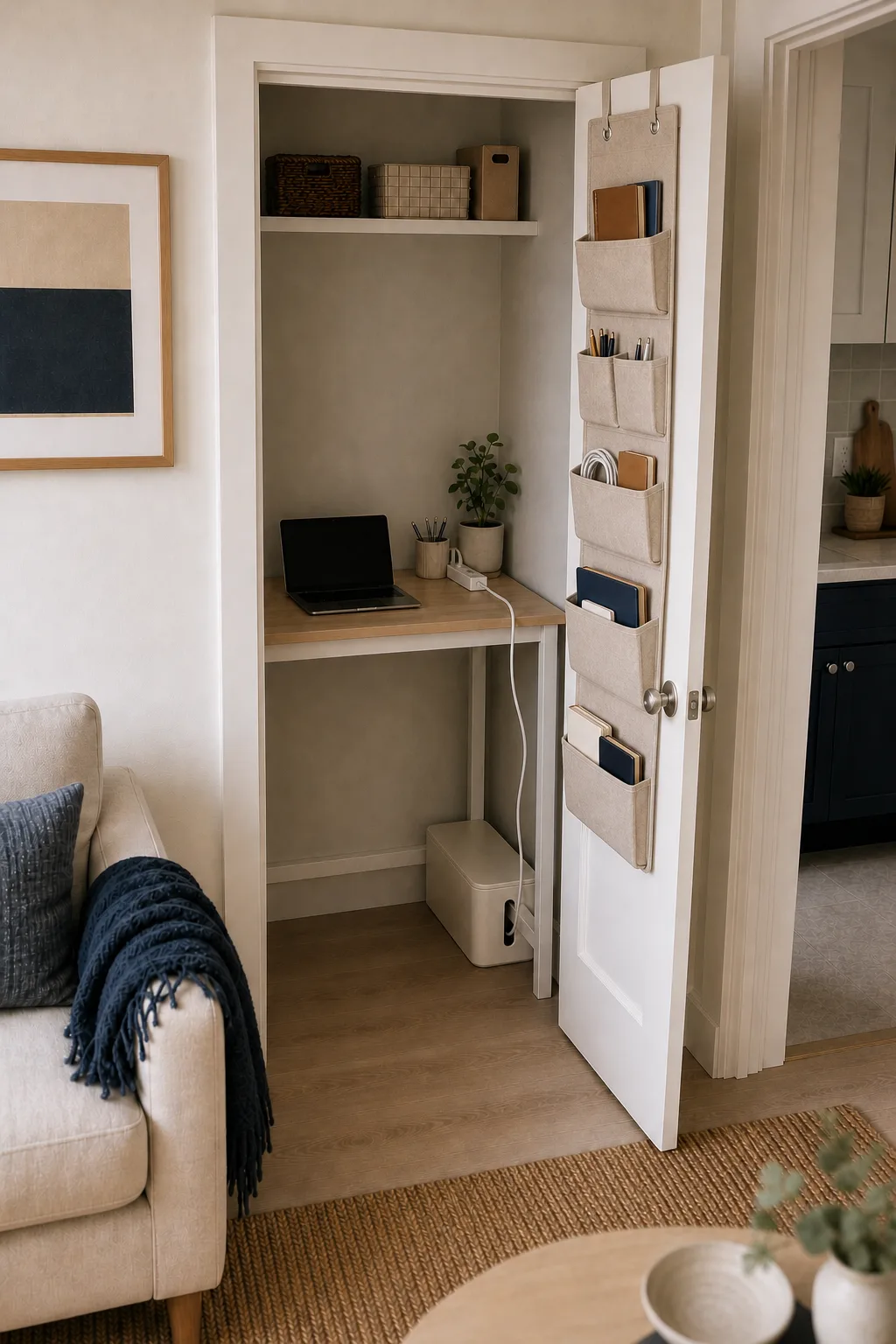
The back of the closet door is some of the most underused real estate in a small apartment. An over-door organizer with pockets or small bins holds notebooks, pens, sticky notes, charging cables, and anything else that would otherwise pile up on your desk. Because it hangs over the door rather than attaching to it, this is a fully renter-friendly storage solution that leaves no marks. For a closet office, this single addition can remove an entire category of clutter from your work surface and keep it in reach without taking up desk space.
Tip: Put the things you grab multiple times a day at eye level and rarely-used supplies in the lower pockets.
7. Add a freestanding shelf unit above the desk surface
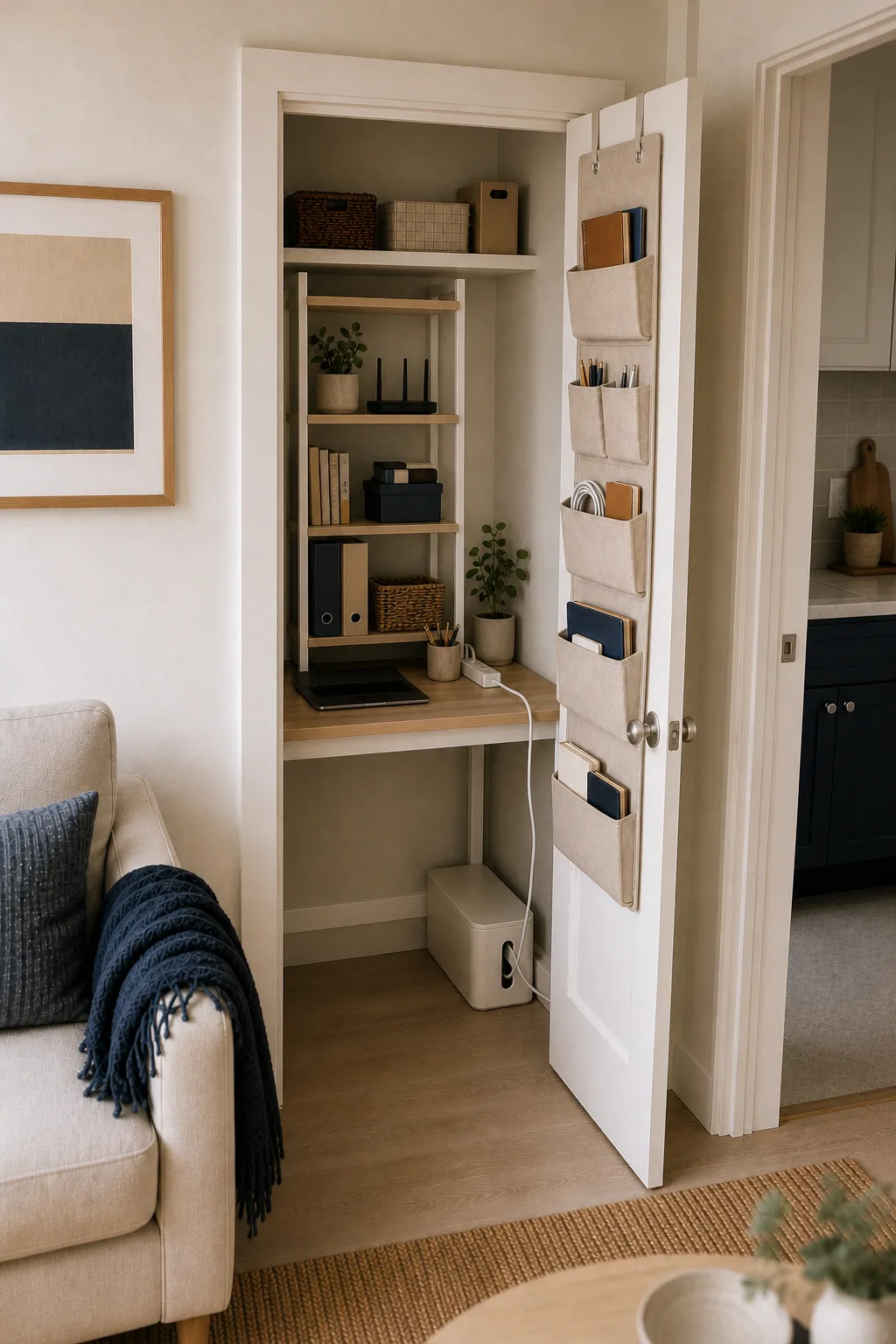
A small three-shelf bookcase or ladder shelf placed to one side of the desk adds vertical storage for books, binders, a small plant, and your router. Freestanding shelves require no wall anchors and move out cleanly when your lease ends, making them one of the best renter-friendly storage options for a closet office. Keep the shelves directly within your sightline or slightly off to one side so they do not make the space feel enclosed. Closet office organization works best when vertical space is treated as seriously as horizontal desk space.
Tip: Use shelf risers inside the bookcase to create extra tiers for smaller items like notebooks and charging blocks.
8. Use a tension rod to create an upper storage zone
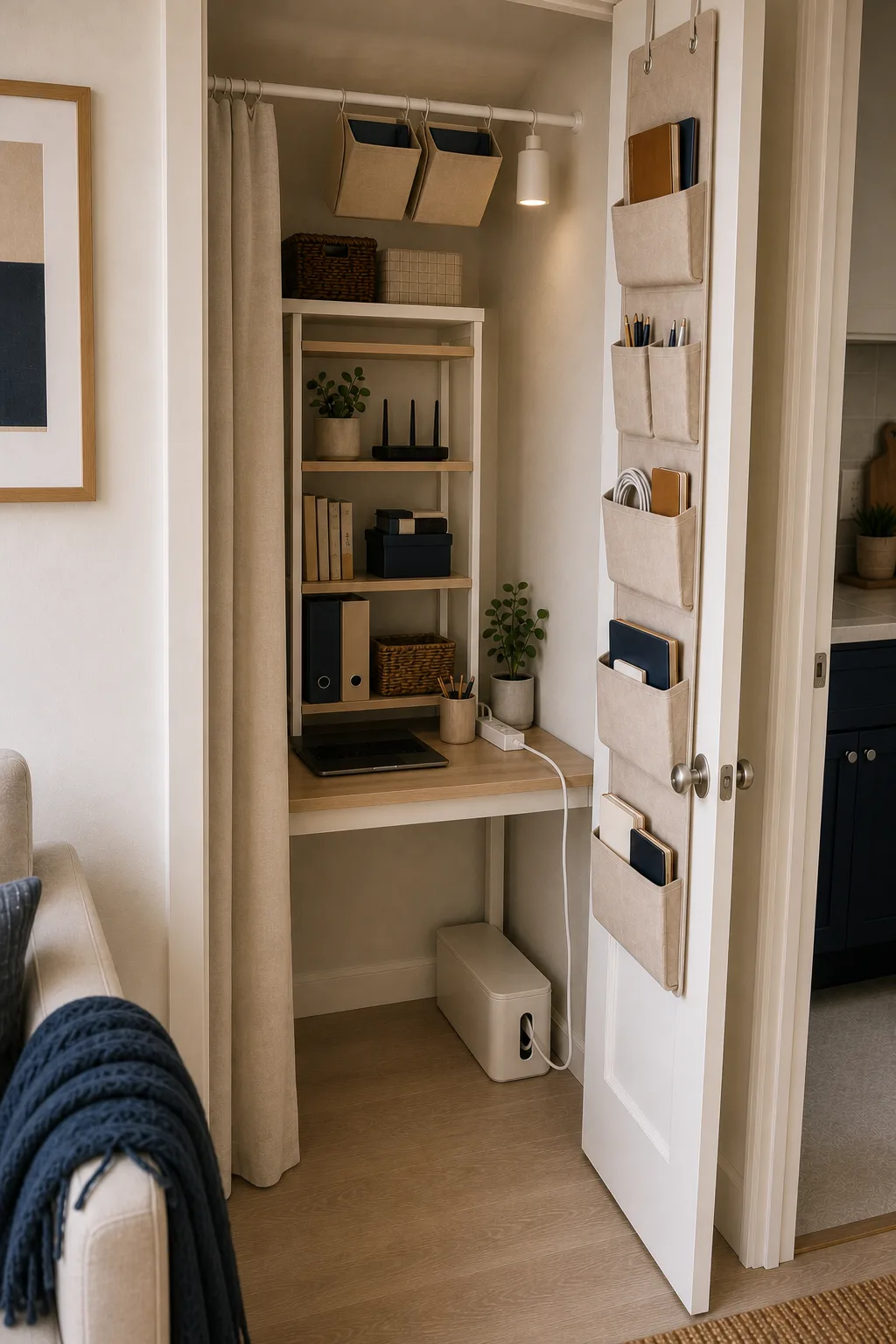
If your closet has walls on both sides, a simple spring tension rod installed near the ceiling creates a spot to hang file folders in hanging magazine holders, drape a small curtain to hide a shelf of cluttered supplies during video calls, or even suspend a small light. Tension rods hold surprisingly well for lightweight loads, require no hardware, and cost a few dollars. This is a no-drill solution that adds a full layer of usable storage without touching the walls in a permanent way. Small space organization is largely about stacking functions, and a tension rod near the ceiling is a perfect example of that.
Tip: Twist the rod tightly until it holds firm before adding any weight, and check the tension once a week the first month.
Create a Comfortable Work Environment
9. Set up proper lighting so you are not squinting on video calls

Closets are dark by nature, and overhead apartment lighting rarely reaches inside one. A small LED desk lamp with a daylight or neutral color temperature makes the space usable during the day and prevents eye strain during long work sessions. If you take video calls, position the lamp in front of you rather than behind you so your face is lit instead of shadowed. Battery-powered LED strips stuck to the underside of a shelf with their own adhesive backing add ambient light without any wiring. Good lighting is one of the most overlooked apartment organization ideas for a closet office and one of the most impactful.
Tip: Choose a lamp with a USB-A port so you can charge your phone directly from the light without using a separate outlet.
10. Add a small rug or chair mat to protect the floor and define the zone

A flat low-pile rug or a clear chair mat under your desk chair protects the flooring from rolling wear, which matters a lot when you are renting and want your security deposit back. It also visually anchors the workspace and makes the whole closet feel intentional rather than improvised. For hardwood or laminate floors, a chair mat is the more protective option. For carpet, a low-pile rug helps the chair roll smoothly. Either way, a mat under the desk is one of those small space organization details that makes the finished setup look considered.
Tip: Size the mat so the front legs of your chair land on it when you are sitting back, which keeps the mat from sliding.
Maintain the System Over Time
11. Keep a small rolling cart beside the desk for overflow storage

A narrow three-tier rolling cart fits beside most closet desks and holds the supplies that do not belong in the over-door organizer but also do not need to be on the desk surface. Think: a small printer, extra paper, your planner, hand lotion, and a pair of headphones. Rolling carts can be pulled out when you need something and tucked back in when you do not, which helps maintain the visual calm that makes closet office organization actually sustainable day to day. When you close the closet doors at the end of the workday, the whole setup disappears from view.
Tip: Label each cart tier with a simple category like tech, paper, and personal so the cart never becomes a catch-all dumping zone.
12. Close the door at the end of your workday to signal the end of work

This is the step that ties the whole closet office system together and it costs nothing. Closing the closet door at the end of your remote workday creates a physical boundary between work mode and home mode, which is one of the hardest things to maintain in a small apartment. It also keeps the mess invisible so the rest of your living space feels like a living space rather than an extension of your office. Office organization for remote work is not just about where you put things. It is about building a structure that helps your brain recognize when the workday is actually over.
Tip: Create a small closing routine: shut the laptop, tuck the chair in, close the door. Three steps that signal done for the day.
FAQ
What is the minimum closet depth needed for a home office?
A closet that is at least 20 to 24 inches deep can fit a narrow laptop desk or a custom-cut surface. Anything shallower than 20 inches works better as a standing reference station than a seated workspace. Measure your closet depth and subtract two to three inches to account for the desk legs or supports, and that gives you the actual usable surface depth.
How do I keep a closet office cool during the summer?
Closets trap heat quickly, especially with a laptop running inside them. A small USB-powered desktop fan pointed toward you helps move air. Leaving the closet doors slightly cracked during work hours rather than fully closed also helps. If your apartment gets very warm, consider a laptop cooling pad to reduce the heat your machine generates.
Can I set up a closet office without drilling any holes?
Yes. Freestanding shelves, over-door organizers, tension rods, rolling carts, and adhesive cable clips cover almost every closet office need without a single anchor or screw into the wall. The only hardware you would need to remove is the original closet rod, and that comes out with a standard screwdriver and goes back in the same way.
How do I make a closet office look professional on video calls?
Position a lamp in front of you so your face is lit rather than shadowed. Hang a simple curtain or fabric panel on a tension rod behind your screen to hide any shelving that looks cluttered. A neutral-colored wall or fabric background and good front lighting are all you need for most video calls.
What should I do if my closet also needs to hold clothing?
A closet office and clothing storage can coexist if you zone them deliberately. Keep the desk on one side and use the opposite wall or a narrow garment rack outside the closet for hanging clothes. Folded items move easily into a dresser. The key is not trying to store everything in the same closet once it becomes a workspace.
Save this guide somewhere you can find it when you are standing in front of an empty closet wondering where to start. If you want more renter-friendly organization ideas for every room in your apartment, the Nest and Narrow newsletter goes out weekly with practical small-space tips that actually work in real rentals.