

My apartment closet is narrow, short, and shared with a wardrobe rack I squeezed in from the hallway. When I moved in, everything went in at once and nothing came out easily. The real fix was not buying more storage bins. It was dividing the closet into clear zones so every category of item had a dedicated home.
Closet zones work in small closet setups because they eliminate the pile-and-dig cycle. Instead of pulling out five things to find one, you go straight to the zone. Whether you have a reach-in rental closet, a shallow coat closet, or a studio wardrobe nook, these apartment organization ideas will help you claim every inch without drilling a single hole.
Key takeaways
- Dividing a small closet into specific zones by category makes daily access faster and prevents clutter from building back up.
- Renter-friendly storage tools like tension rods, over-door organizers, and freestanding shelves can create structure without permanent changes.
- Vertical space is the most underused asset in a small closet. Stacking and layering zones upward is where you gain the most room.
Why I Finally Zoned My Closet
I spent two years in my apartment treating my closet like a storage unit, bags on top of shoes, sweaters crammed next to coats, and nothing where it should be. The day I mapped out six simple zones and moved things into them, I shaved about eight minutes off my morning routine. I did not buy a single new bin. I just gave everything an address.
Step-by-step
Before You Begin
1. Empty the Entire Closet Before You Zone Anything

You cannot plan zones around things that should not be there. Pull everything out onto your bed or floor and sort into three piles: keep, relocate, and donate. Once you see only what belongs in the closet, you can assign zones based on actual volume, not guesswork. This step also shows you how much of your closet space was taken up by items that belong somewhere else entirely. Home organization tips always say start fresh, and in a small closet, that is especially true.
Tip: Take a photo of the empty closet before putting anything back so you can reference the space dimensions while you shop for organizers.
2. Map Out Your Zones on Paper Before Touching a Single Bin
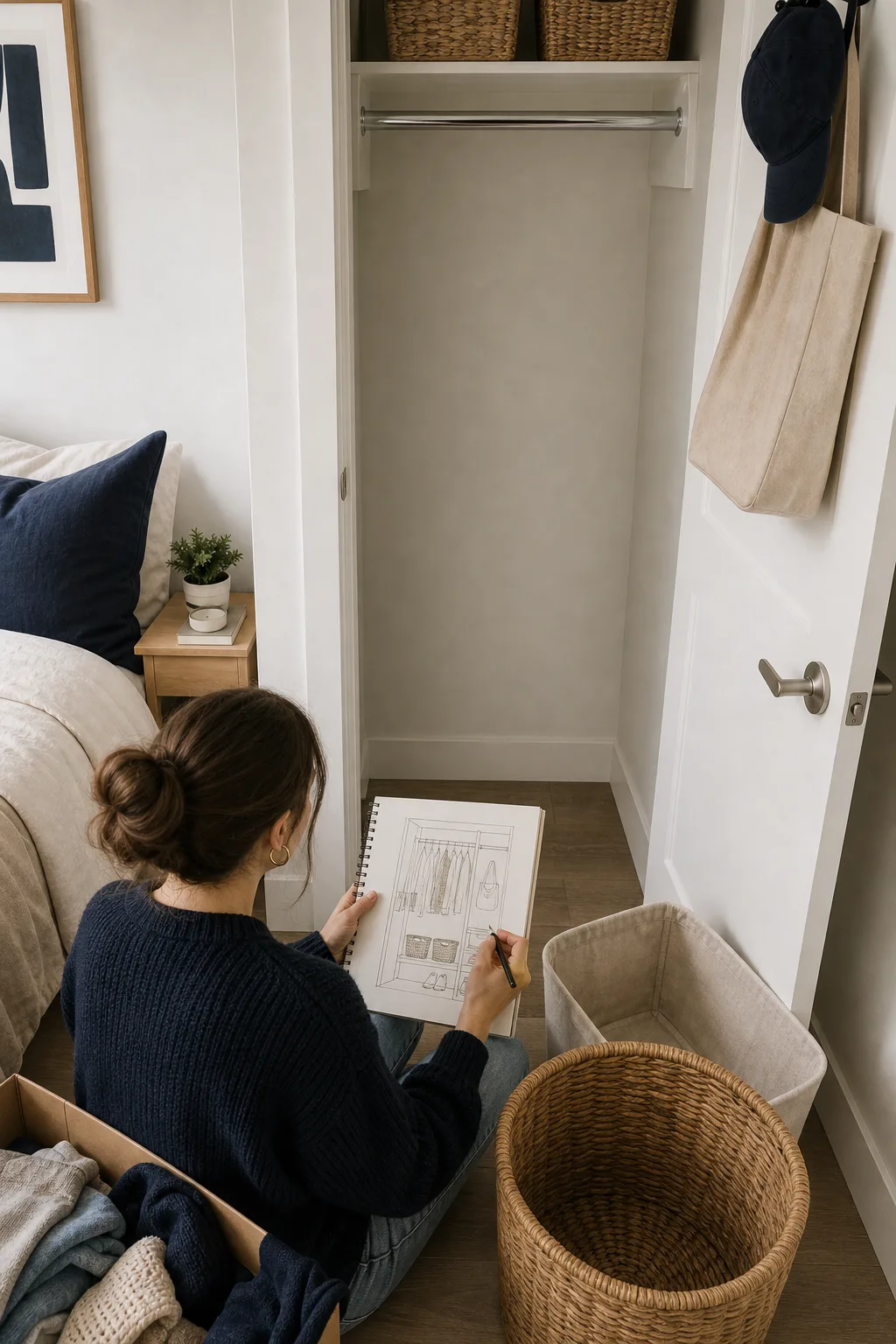
Sketch a rough outline of your closet and label where each category will live. Common zones for apartment closets include hanging clothes, folded items, shoes, bags, and seasonal storage. Writing it out first keeps you from buying a shelf unit that does not fit or placing shoes where bags should go. Closet zones for small closet planning work best when you match the zone to the natural shape of that area, hanging rods for tall items, floor space for bulky shoes, and upper shelves for rarely used gear.
Tip: Measure your closet height, width, and depth before sketching so your plan reflects real dimensions, not approximate ones.
Vertical Zones
3. Claim the Upper Shelf as Your Seasonal and Rarely Used Zone

The top shelf in most apartment closets is deep and awkward to reach, which makes it ideal for things you access only a few times a year. Store off-season clothing in flat zippered bags, extra bedding in vacuum compression bags, or specialty items like luggage on this shelf. Use a lightweight step stool stored nearby so the shelf stays usable, not just visually organized. Labeling bins up here is especially helpful because you cannot see inside them at eye level.
Tip: Cube-shaped fabric bins with labels are easier to slide in and out of upper shelves than rigid plastic totes with lids.
4. Use a Second Hanging Rod to Create a Lower Hanging Zone
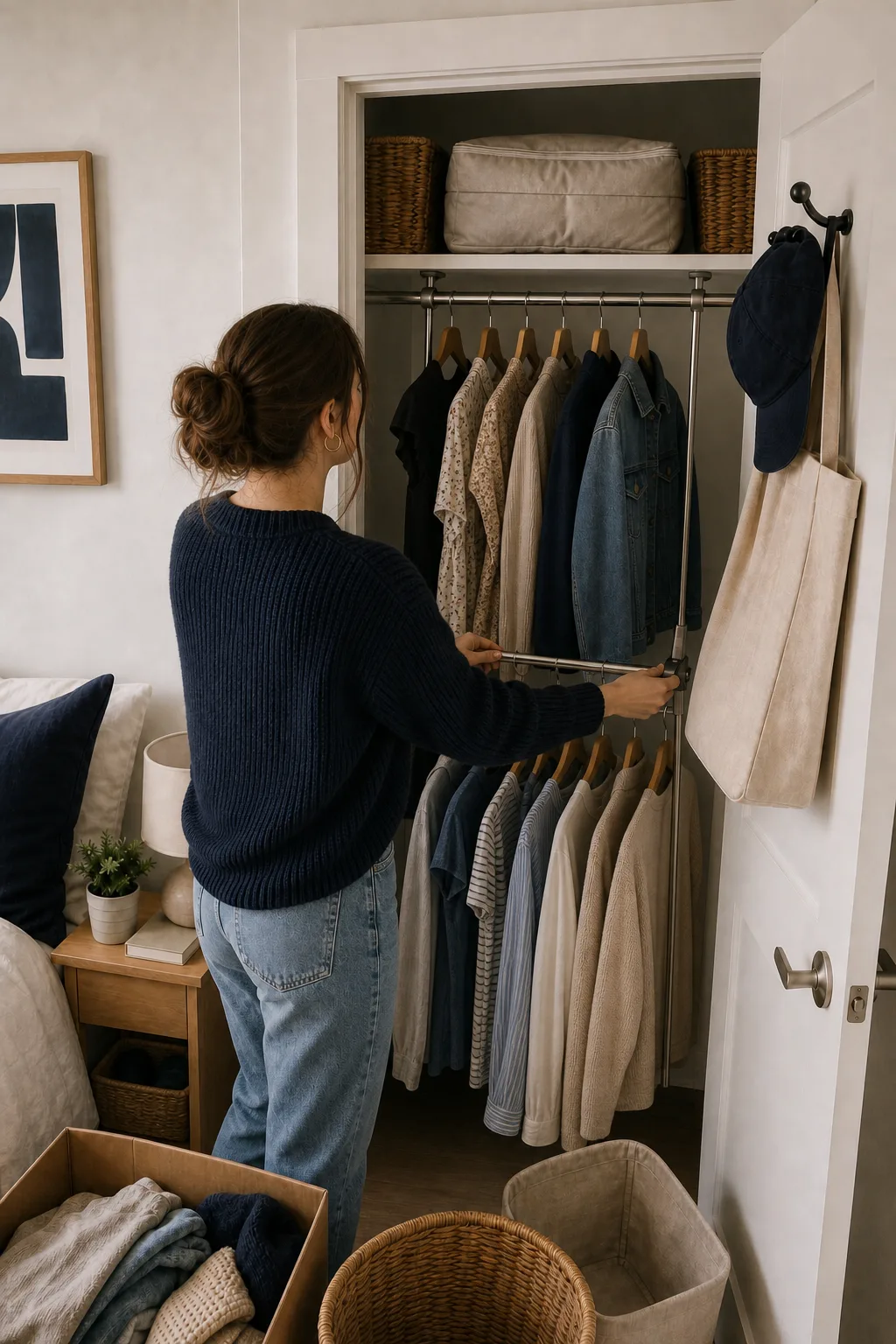
Most rental closets come with one high rod and a shelf above it, leaving the lower half of the closet completely open. A hanging closet doubler rod clips onto the existing rod and drops a second rod below it. Use the top rod for full-length items like dresses and coats, and the lower rod for shorter pieces like folded pants on hangers, jackets, and button-down shirts. This is one of the best renter friendly storage moves for small closets because it requires no drilling and doubles your hanging capacity overnight.
Tip: Hang all tops on the lower rod and all pants on the upper rod if you have mostly separates. It keeps the zones visually clean.
Floor-Level Zones
5. Build a Floor Zone for Shoes Using a Tiered Rack

The floor is valuable real estate that often gets buried under shoes tossed in at random. A tiered shoe rack, either three-tier or stackable, corrals shoes into one defined zone and lifts them off the floor in layers. Keep daily shoes on the most accessible tier and less-worn pairs toward the back or bottom. If your closet floor also holds a laundry basket or vacuum, position the rack to one side so both zones coexist without overlapping. This is a no-drill, apartment-friendly approach that works in almost any footprint.
Tip: Angled tiered racks take up less depth than flat shelves and let you see every pair at a glance.
6. Designate a Bag and Accessory Zone on One Wall or Door
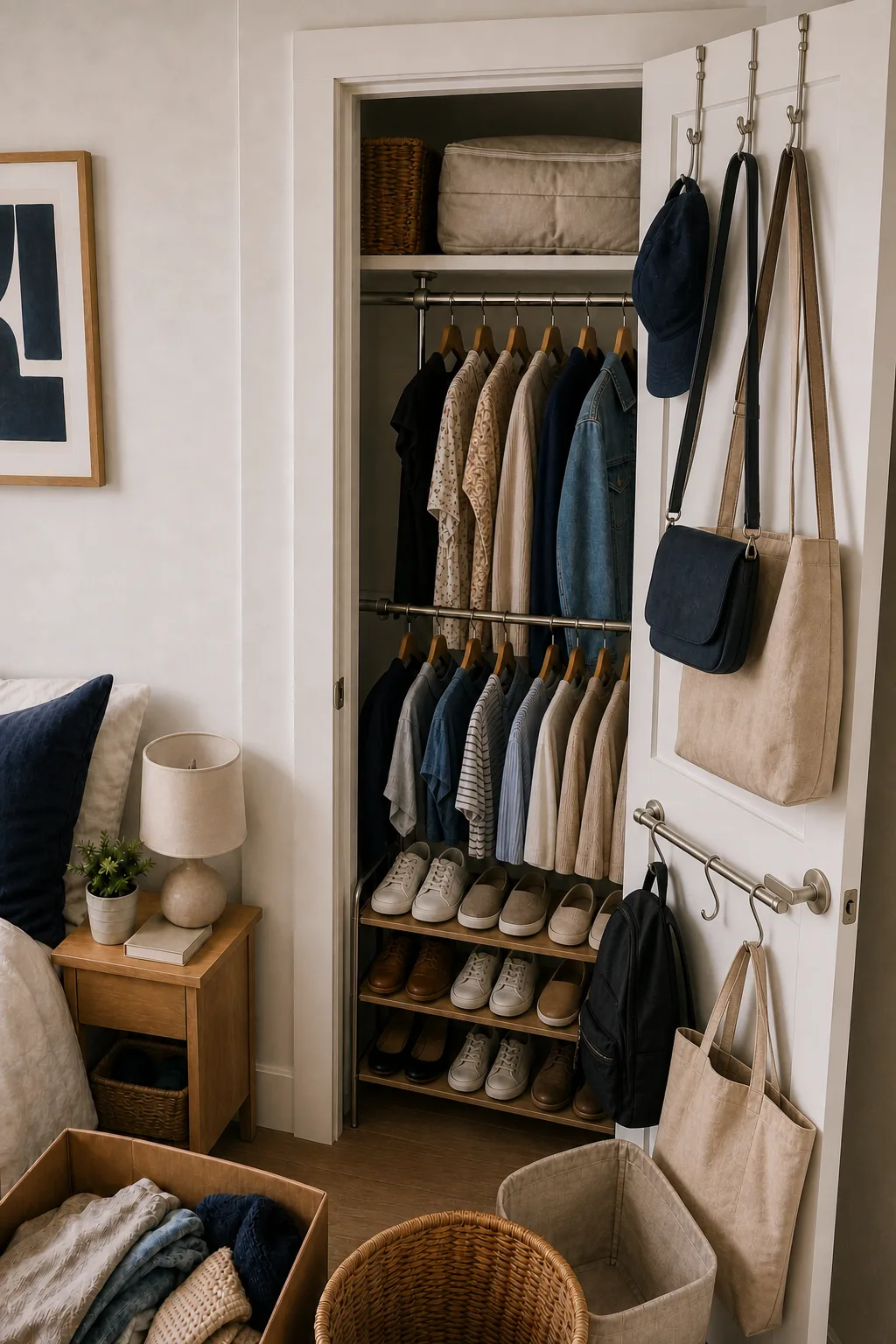
Bags piled on a shelf or shoved in a corner get crushed and forgotten. Giving them a dedicated zone solves both problems. Use over-door hooks on the inside of your closet door to hang totes, crossbody bags, and backpacks. A tension rod mounted low inside the closet also works for hanging bag straps. If your closet has an interior wall with a little room, a few S-hooks on a tension rod create a dedicated handbag zone that keeps shapes intact and everything visible. This is a practical apartment organization idea that also protects your bags.
Tip: Stuff lightly used bags with a small pillowcase or tissue paper to help them hold their shape while stored.
Shelf Zones
7. Stack Folded Items in the Center Shelf Zone Using Shelf Dividers

If your closet has a built-in shelf or you have added a freestanding shelving unit, this becomes your folded clothing zone. Jeans, sweaters, and workout gear stack well here when shelf dividers keep piles from toppling sideways. Assign one divider section per category so sweaters do not migrate into the leggings pile. Clear acrylic dividers clip onto most standard shelves and require no tools. Small space organization benefits most from visible, separated stacks because you can grab one item without disturbing the rest.
Tip: Fold sweaters file-style so they stand upright rather than stacking flat. It makes every piece visible from the front.
8. Create a Dedicated Everyday Essentials Zone at Eye Level
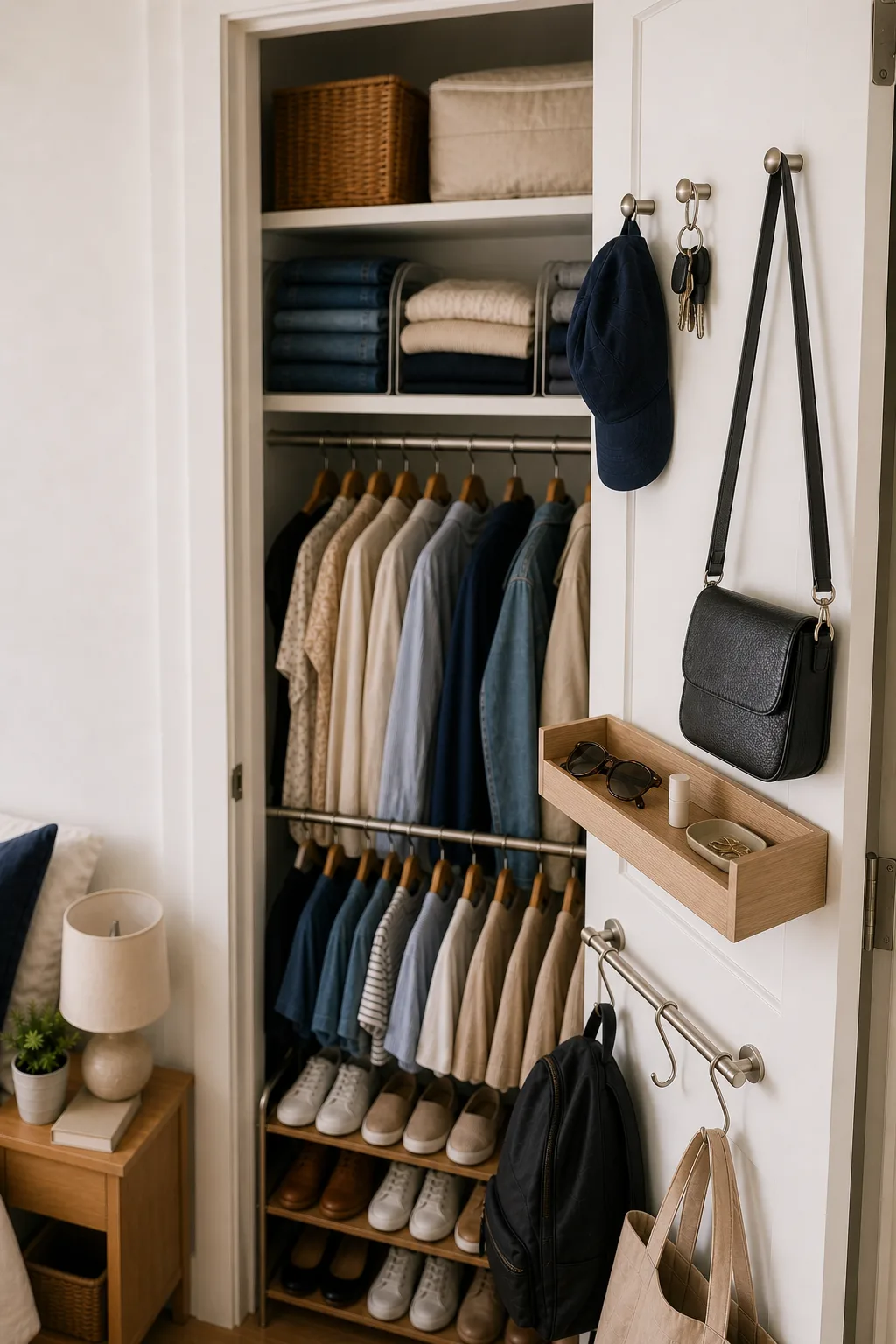
The zone at eye level inside your closet door or directly in front of you when you open it should hold only what you reach for every single day. This might be your most-worn shoes, a hook for your keys or work bag, or a small tray for sunglasses and a lip balm. Keeping everyday items together in one accessible spot means you never dig through the whole closet in the morning. For studio apartment renters, this zone often doubles as an entryway function since there may be no separate entryway closet at all.
Tip: Reassess this zone every few weeks. If something is in the everyday zone but you have not touched it in ten days, it belongs elsewhere.
No-Drill Add-Ons
9. Add a Door Organizer to Create a Bonus Storage Zone

The inside of your closet door is a free zone most renters ignore. An over-door organizer with clear pockets holds small accessories like scarves, belts, socks, and jewelry. Deeper over-door pocket organizers work for bulkier items like hats or folded workout gear. Because these organizers hang without tools, they qualify as renter friendly storage and can move with you. For a small closet, the door zone can genuinely replace an entire drawer.
Tip: Put the items you use most in the middle pockets where they are easiest to reach without stretching or crouching.
10. Use a Tension Rod to Build a Low Divider Zone for Bulky Items
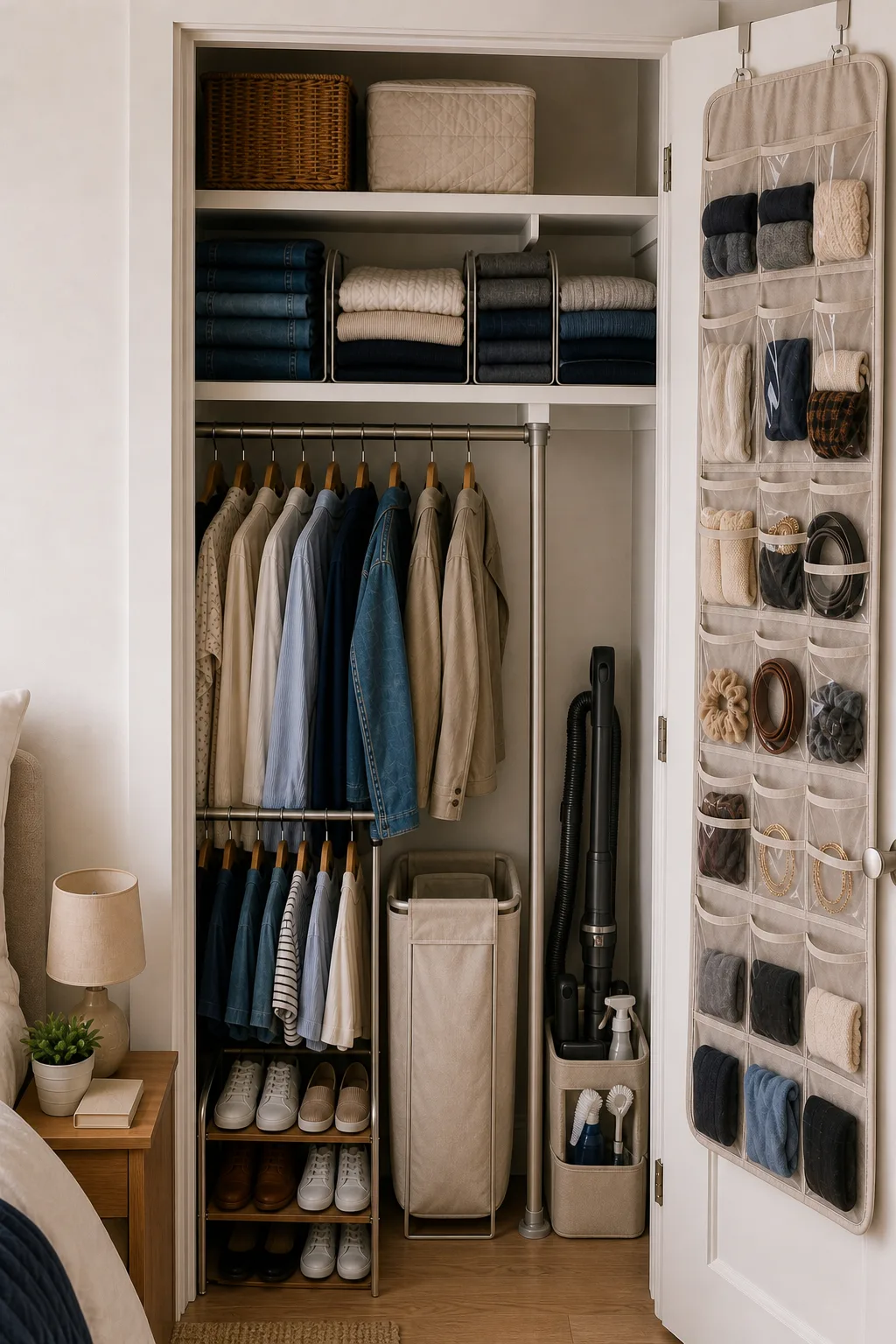
A tension rod positioned vertically inside the closet, wedged floor to shelf, creates a simple partition that divides one large floor area into two separate zones. Use one side for a laundry hamper and the other for a small vacuum or cleaning caddy. This works especially well in studio apartments where the bedroom closet has to handle more than just clothes. Tension rods hold firmly without hardware and can be repositioned any time your storage needs shift. This is one of the most underrated no-drill apartment organization ideas for oddly shaped closets.
Tip: Wrap the ends of the tension rod in non-slip shelf liner tape to keep it from sliding on smooth walls.
Maintaining Your Zones
11. Label Every Zone So the System Sticks Over Time

A closet zone system only works long-term if every person using it knows where things go without thinking. Label bins, baskets, shelves, and hooks clearly so the system does not collapse after a busy week. Simple adhesive labels or a label maker work well. Even if you live alone, labels prompt the automatic habit of returning items to their zone. This is a home organization tip that applies equally to a studio closet and a shared apartment wardrobe.
Tip: Use the same label format throughout, either all handwritten or all printed, so the closet looks cohesive rather than patched together.
12. Schedule a Monthly Ten-Minute Zone Reset to Keep Things from Drifting

Even a well-zoned small closet drifts over time. Shoes end up in the bag zone. A hoodie migrates to the shelf meant for jeans. A monthly ten-minute reset, just moving things back to their assigned zones, prevents the full collapse that makes a closet feel chaotic again. Set a recurring reminder on your phone for the first weekend of each month. Small space organization is not a one-time fix; it is a light, repeating habit that keeps your closet zones small closet setup working the way you built it.
Tip: While you reset, check if anything new needs a zone of its own. If it does not have a home, it will always cause drift.
FAQ
How do I create closet zones in a very small closet with just one rod and one shelf?
Start by adding a hanging closet doubler to split the rod into two levels, then assign each level a category. Use an over-door organizer on the closet door for small accessories. Place a tiered shoe rack on the floor and use the single shelf for folded items with shelf dividers keeping piles separated. You can get four distinct zones, hanging, folded, shoes, and accessories, from even the most basic rental closet setup.
What are the best renter-friendly storage tools for small closet zones?
The most useful renter friendly storage tools for closet zoning are: hanging doubler rods (clip-on, no drilling), over-door organizers (hook over the door top), tension rods (pressure-mounted between walls), tiered shoe racks (freestanding), and shelf dividers (clip-on). All of these are easy to remove when you move out and leave no wall damage behind.
How many zones should a small closet have?
Most small apartment closets work well with four to six zones. A good starting set is: everyday hanging clothes, seasonal or rarely used items, shoes, bags and accessories, folded clothing, and a miscellaneous catch zone for things like a laundry basket or cleaning tools. The key is that every zone has a clear category and a defined boundary, even if that boundary is just a labeled bin.
Can closet zoning work in a studio apartment with no dedicated bedroom closet?
Yes. In a studio apartment, your closet often has to serve multiple purposes, wardrobe, entryway, and sometimes even cleaning storage. The zoning approach still applies. Assign each function its own section of the closet and use vertical space aggressively. An over-door organizer on the studio closet door can handle everyday items like keys and bags, while the interior holds clothes and shoes in their own zones.
Save this guide now so your next closet reset is already planned. If you want more practical small space organization ideas sent straight to your inbox, the Nest & Narrow newsletter is where I share what is actually working in my apartment every week.