

My galley kitchen is exactly seven feet wide. There is one stretch of counter on each side, and if anything lands without a real home, the whole space feels like it is closing in. I used to think the kitchen just needed a good clean, but what it actually needed was a reset. Not a renovation, not new cabinets, just a clear plan for what stays on the counter, what moves to a cabinet, and what needs a smarter storage solution.
A countertop reset in a galley kitchen is one of the highest-impact apartment organization ideas you can do in a single afternoon. It costs very little, requires no drilling, and the results change how the whole kitchen feels to cook and move in. These 12 steps cover everything from zoning your surfaces to renter-friendly storage swaps that keep your deposit intact.
Key takeaways
- Treat your galley countertops as prime real estate: only daily-use items earn a permanent spot on the surface.
- Vertical and wall-adjacent storage (tension rods, over-cabinet hooks, freestanding shelves) adds capacity without touching the countertop footprint.
- A countertop reset is not a one-time event: a five-minute weekly surface scan keeps the galley kitchen from creeping back into chaos.
Why I Finally Did the Reset
I avoided my galley kitchen countertop reset for months because I kept thinking I needed more storage solutions first. Turns out I needed fewer things on the counter, not more places to put them. Clearing the surface first and asking hard questions second changed everything about how the space actually functions.
Step-by-step
Phase 1: Clear the Deck
1. Clear Every Surface Before You Put Anything Back
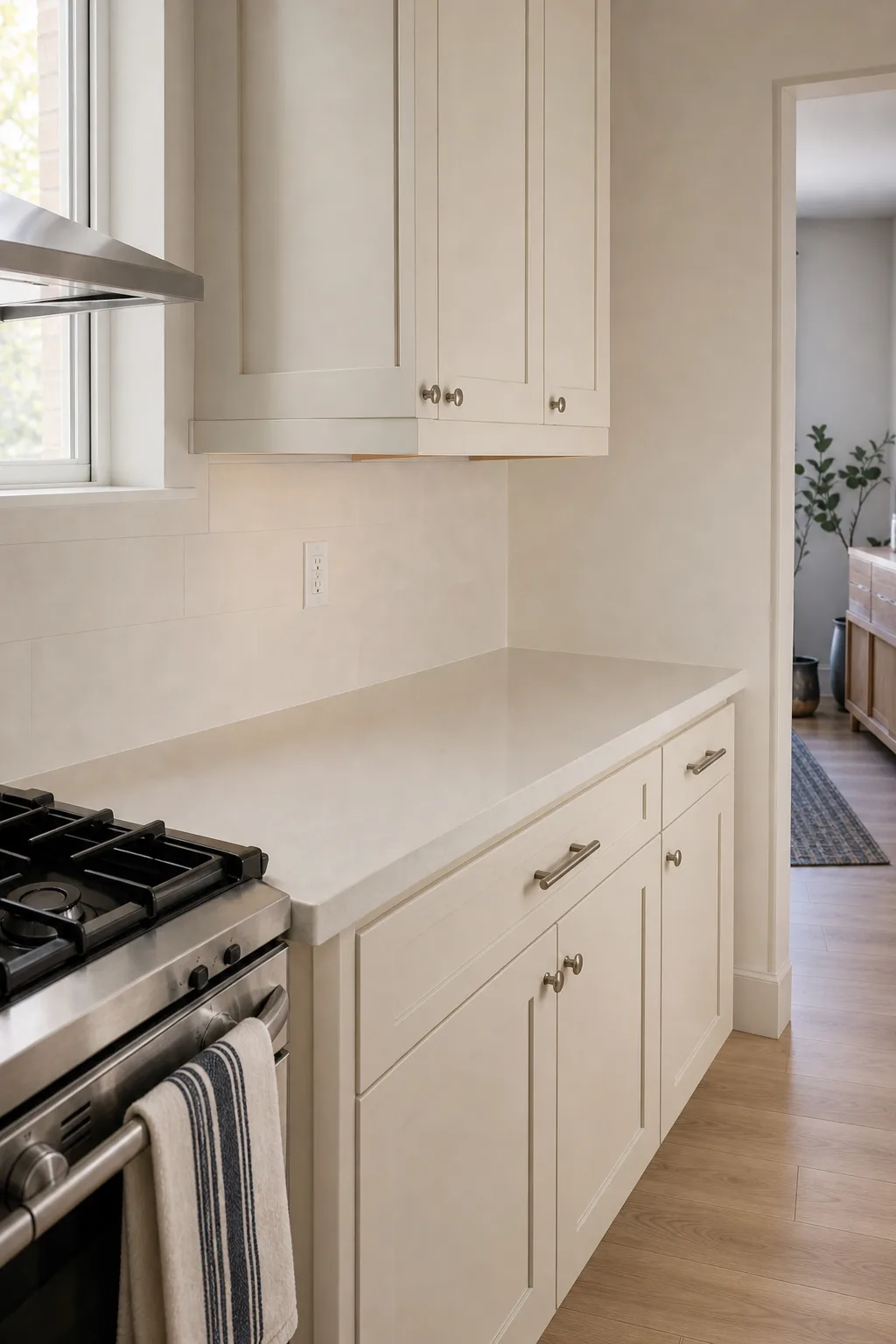
Start with a completely bare countertop so you can see the actual space you are working with. Pull everything off both sides of the galley, including the stuff tucked against the backsplash. Wipe the counters down while they are empty. This blank-slate moment is the only way to make honest decisions about what actually needs to live on the surface versus what has just accumulated there over time.
Tip: Group everything you removed into three piles: daily use, occasional use, and rarely touched. Only daily-use items should even be candidates for counter space.
2. Audit What You Actually Reach for Every Day
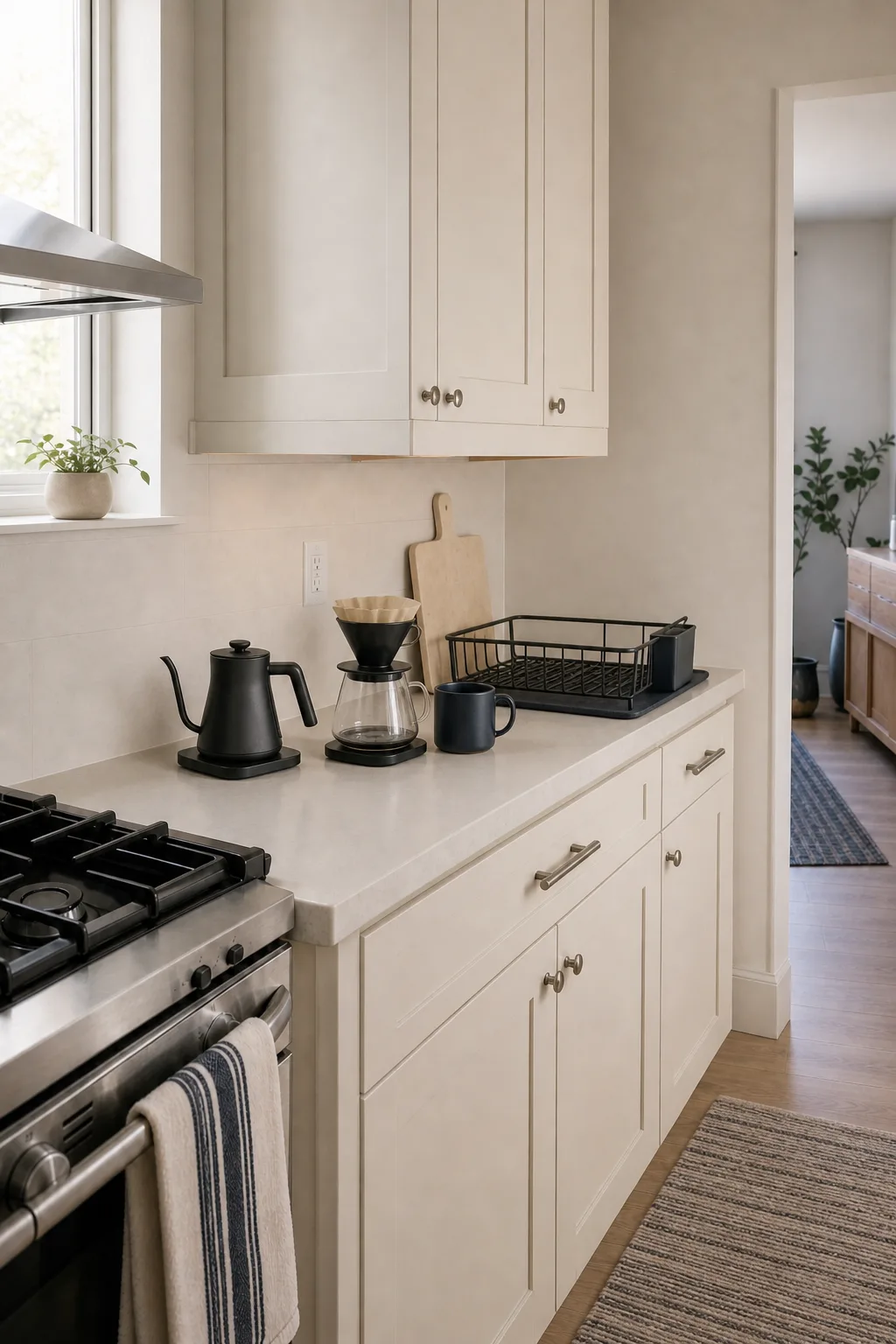
Walk through a typical morning and evening in your kitchen. What do you actually touch every single day? For most renters in a small space, that list is shorter than you think: a coffee maker or kettle, one cutting board, maybe a dish drying rack. Everything else is a visitor, not a resident. This audit is the foundation of any countertop reset in a galley kitchen because the narrow layout simply does not forgive excess.
Tip: If you have not touched something in seven days, it does not belong on the counter. Give it a cabinet or a donation box.
Phase 2: Zone and Plan
3. Map Your Two Countertop Zones Before Returning Items
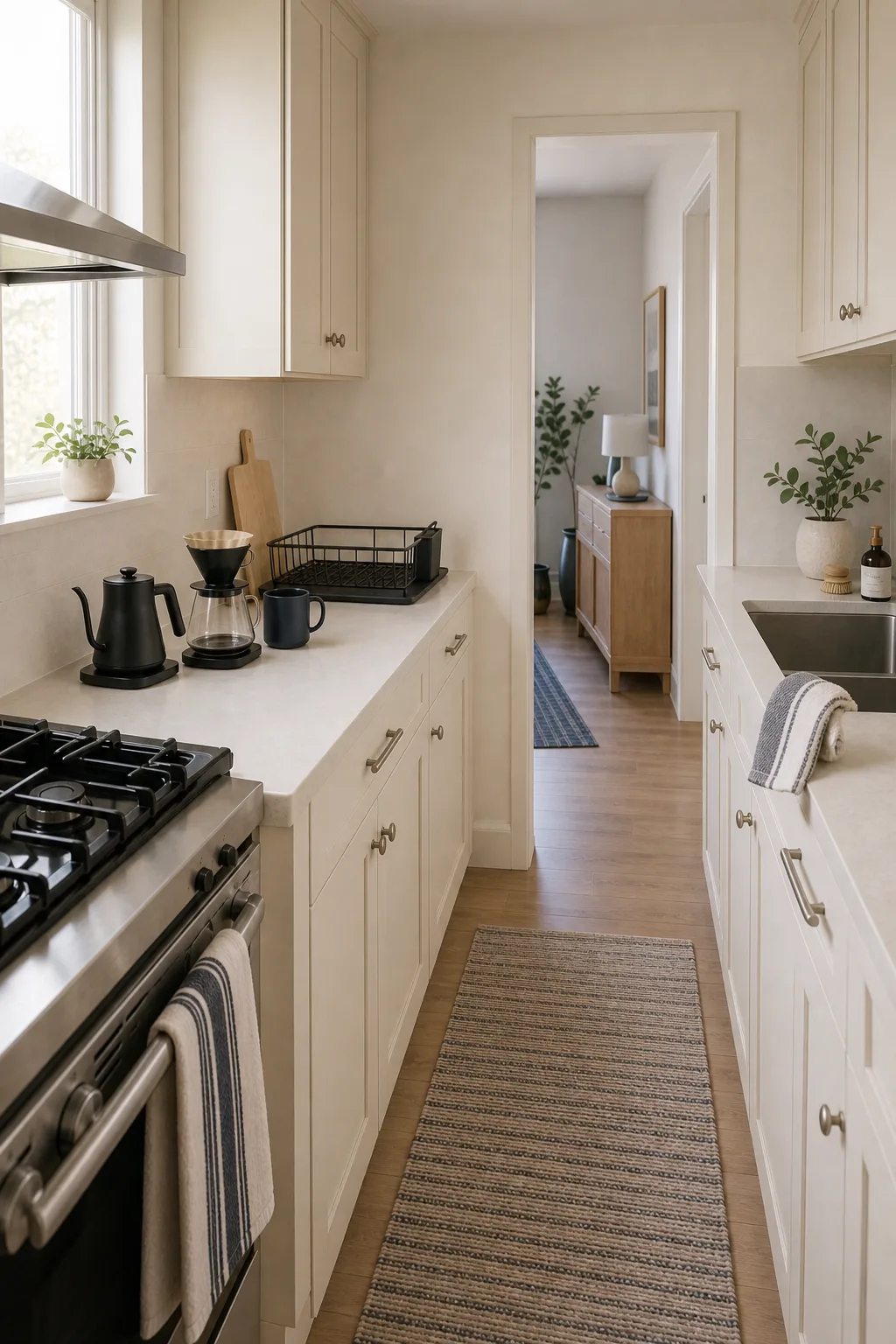
In a galley kitchen you have two narrow runs of counter facing each other. Treat them as two distinct zones rather than one big workspace. One side works well as a prep and cooking zone, positioned near the stove. The opposite side works as a clean-up and landing zone, positioned closer to the sink. Assigning a job to each side before you put anything back prevents the random pile-up that tends to happen in small space kitchens.
Tip: Sketch your two zones on a sticky note first. Visual planning for a galley countertop reset takes two minutes and prevents three rounds of rearranging.
4. Move Rarely Used Appliances Into a Cabinet or Closet
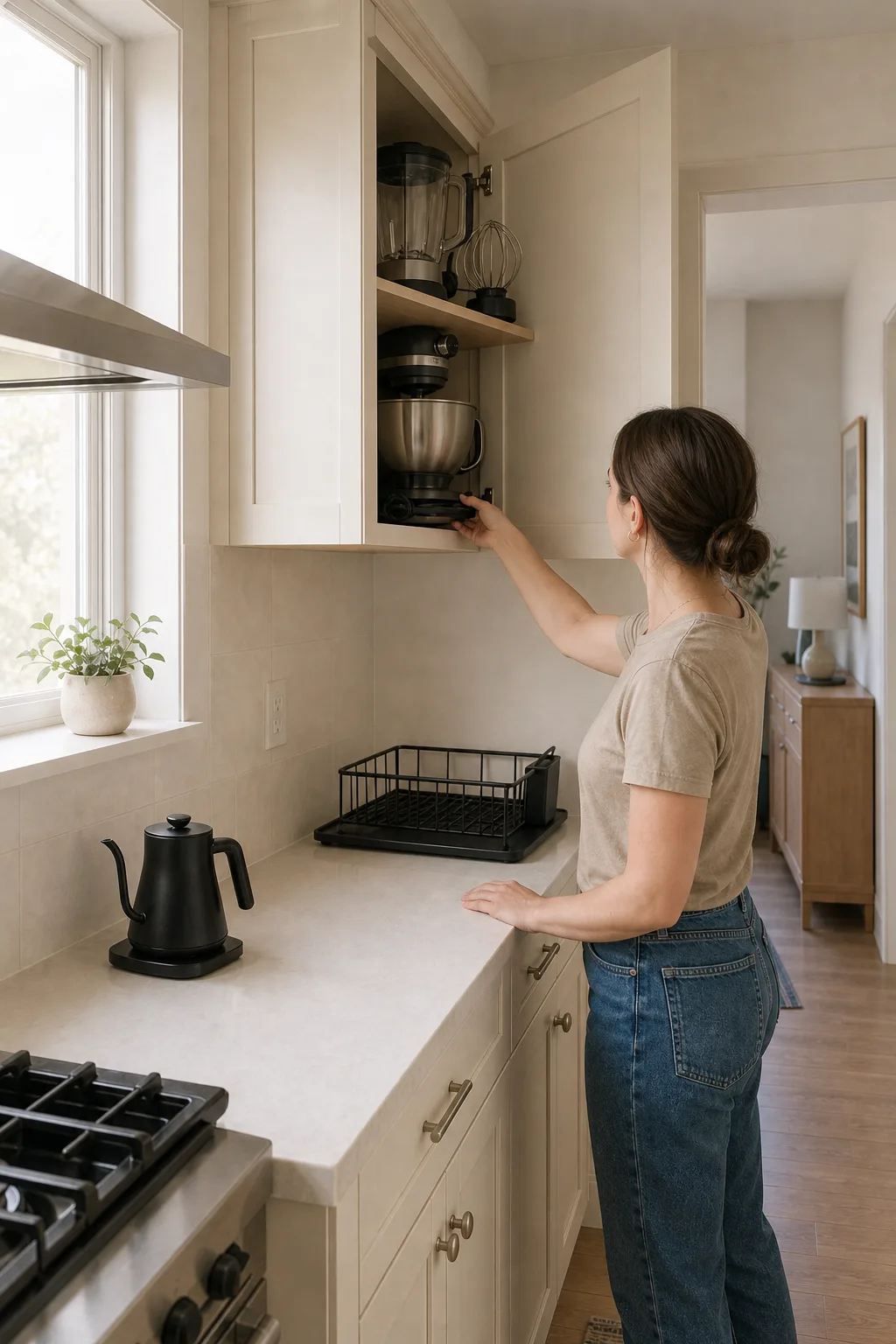
The blender, the stand mixer, the waffle iron: these are the biggest counter-space offenders in an apartment kitchen. If you use an appliance fewer than three times a week, it belongs in a cabinet. Wrap the cord around the base, set it on a low shelf, and pull it out only when you need it. This single swap frees up more linear counter space than almost any other step in a galley kitchen countertop reset.
Tip: Store heavy appliances at or below shoulder height so lifting them in and out stays safe and easy.
Phase 3: Add Renter-Friendly Storage
5. Use a Freestanding Shelf to Stack Up Instead of Out
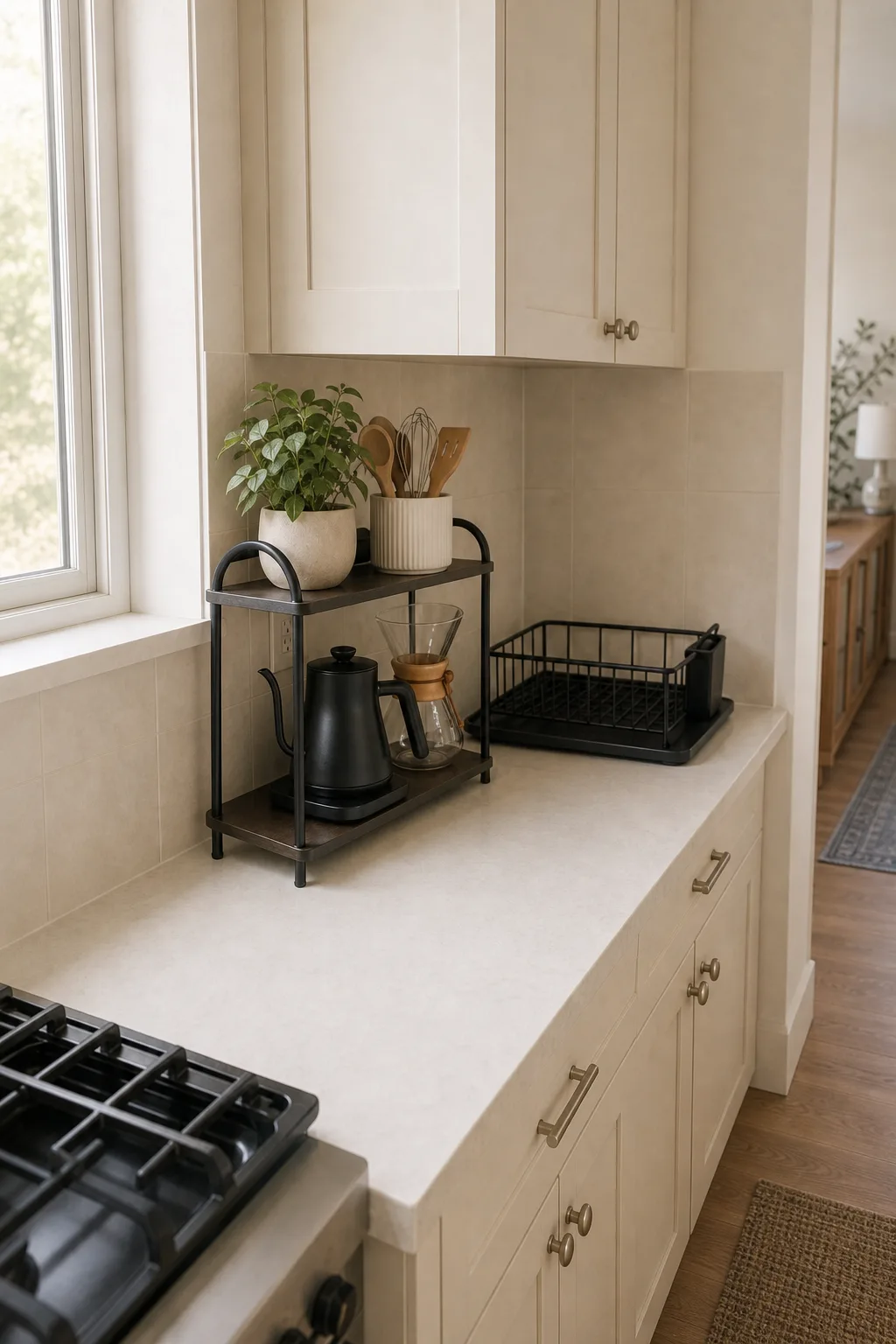
When counter space is measured in inches, going vertical is the most practical apartment organization idea available to you. A slim two-tier freestanding shelf can sit at the back of the counter and hold your coffee station, a small plant, or a container of utensils without eating into your actual prep area. Look for shelves with an open bottom so the countertop space underneath still counts as usable surface.
Tip: Measure the depth of your counter before buying any shelf. Galley kitchen counters are often shallower than standard, so a 10-inch-deep shelf fits better than a 14-inch one.
6. Install an Over-Cabinet Hook Rail for Mugs and Utensils
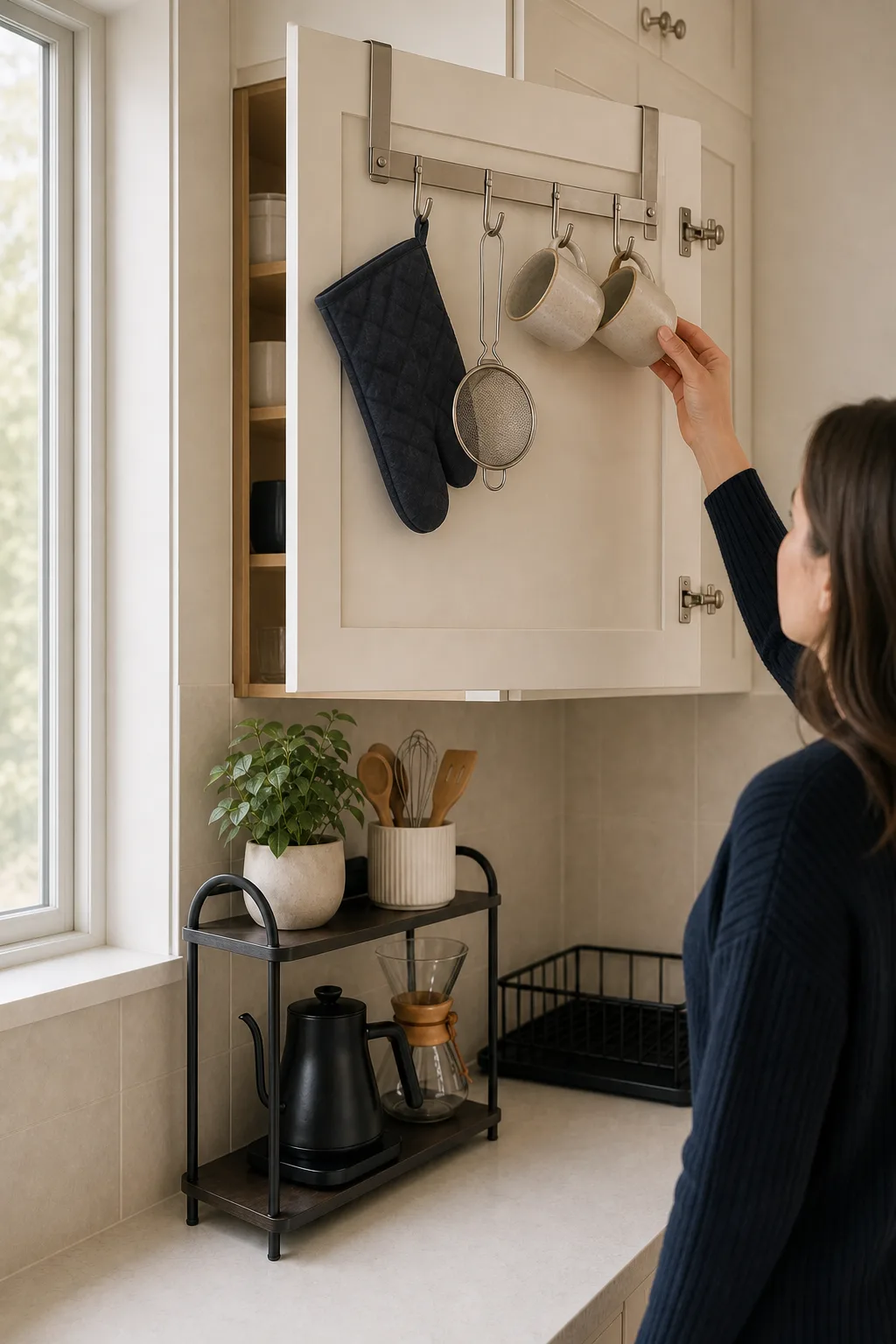
A hook rail that hangs over the top of a cabinet door requires zero drilling and gives you instant hanging storage. Use it to hang mugs, oven mitts, or a small colander. Getting these items off the countertop and onto a door is one of the most effective renter-friendly storage moves in a galley kitchen. The rail presses against the door and the cabinet frame; no adhesive, no screws.
Tip: Check the weight limit on any over-door rail before hanging anything heavier than a mug. Cast-iron pans are a no.
7. Corral Your Countertop Coffee Station Into One Tray
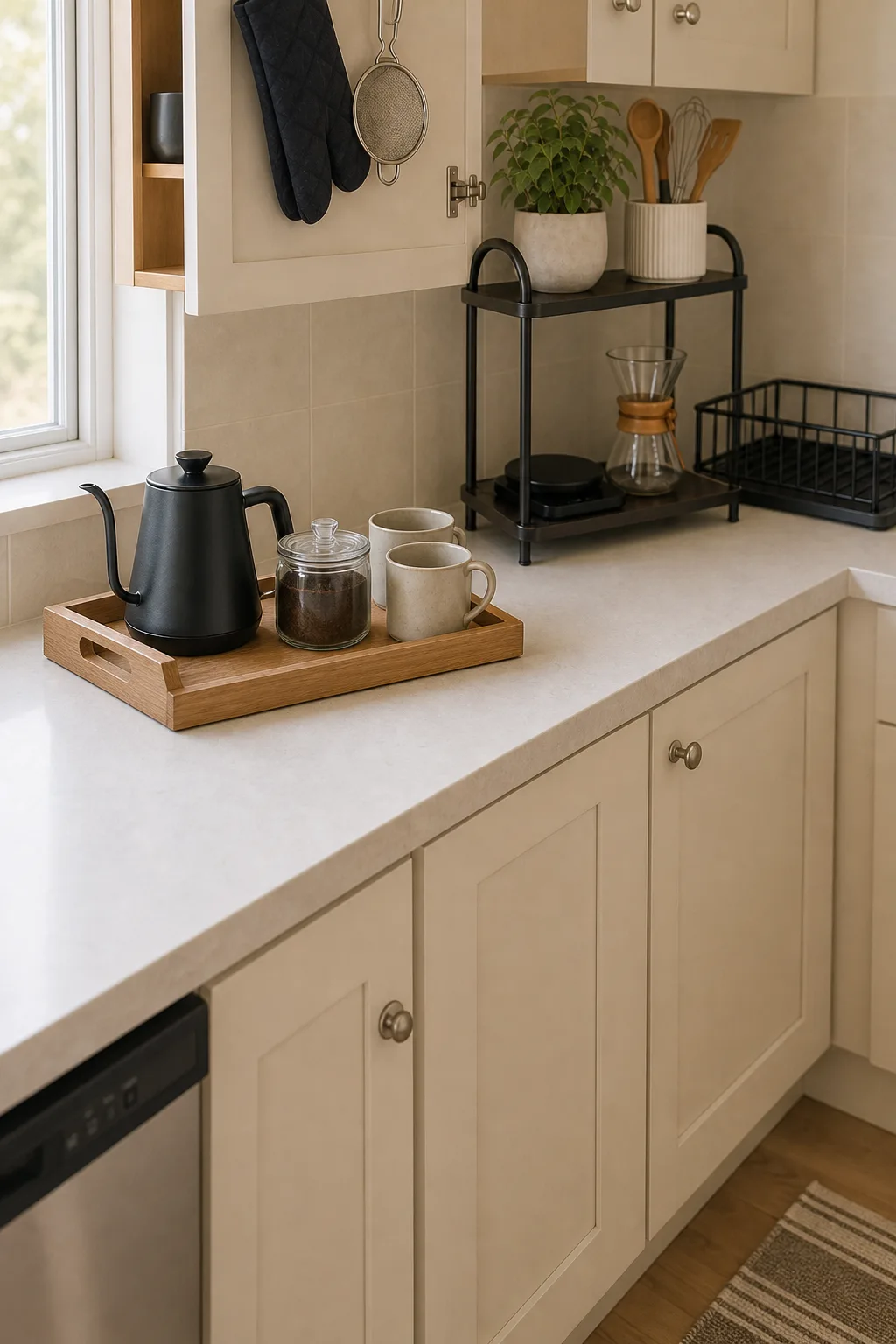
If coffee is your daily ritual, it earns a counter spot, but it should be contained. A small tray, a wooden board, or even a round cutting board works as a boundary. Place the kettle or coffee maker, a small jar of pods or grounds, and your mugs-in-use all on the tray. Now your coffee zone has an edge and does not sprawl. This is one of those home organization tips that looks styled but is really just about containment.
Tip: A tray also makes it easy to slide the whole station to one side when you need the full counter for something else.
Phase 4: Relocate the Clutter
8. Relocate Paper Towels and Cleaning Supplies Off the Counter

Paper towel holders and spray bottles are among the most common things sitting on galley kitchen counters that have no real reason to be there. A freestanding paper towel holder can move to the inside of a lower cabinet door using an over-door mount. Cleaning sprays can live under the sink. Removing these two categories alone clears a surprising stretch of the counter in a small apartment kitchen.
Tip: A small tension rod installed inside a cabinet creates a spray bottle parking spot: just loop the trigger handle over the rod.
9. Move Your Knife Block to a Magnetic Strip Inside a Cabinet Door
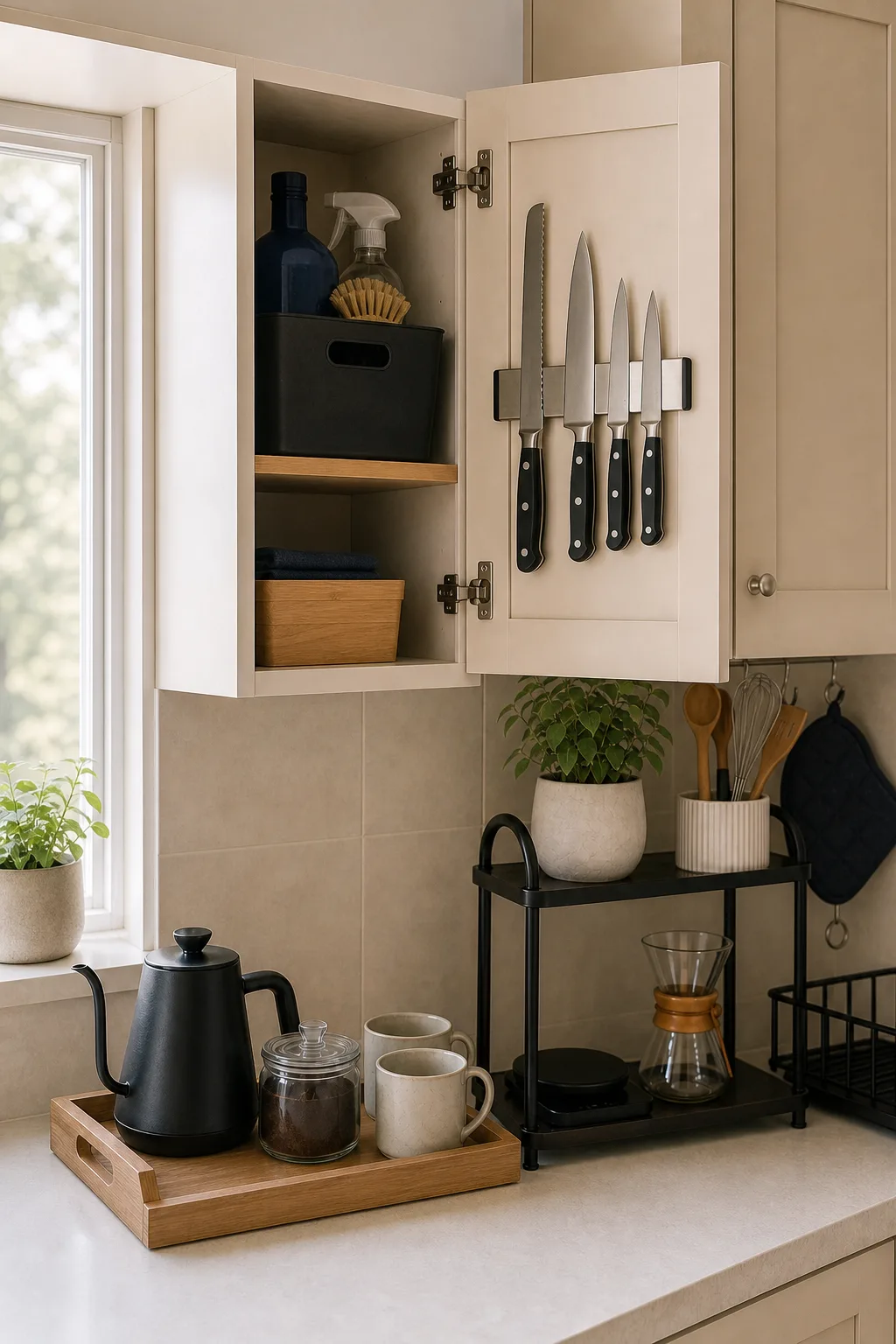
A knife block takes up a meaningful chunk of galley counter real estate. A magnetic knife strip adhered to the inside of a cabinet door with strong removable adhesive strips keeps your knives accessible without any sacrifice of counter space. This is a no-drill solution that works well for renters and makes a real visual difference during a countertop reset. The inside of a tall upper cabinet door works especially well.
Tip: Test the adhesive strips with a light item for 24 hours before loading knives. Cabinet surfaces vary and some need a light cleaning first.
10. Create a Drying Zone That Does Not Eat the Whole Counter
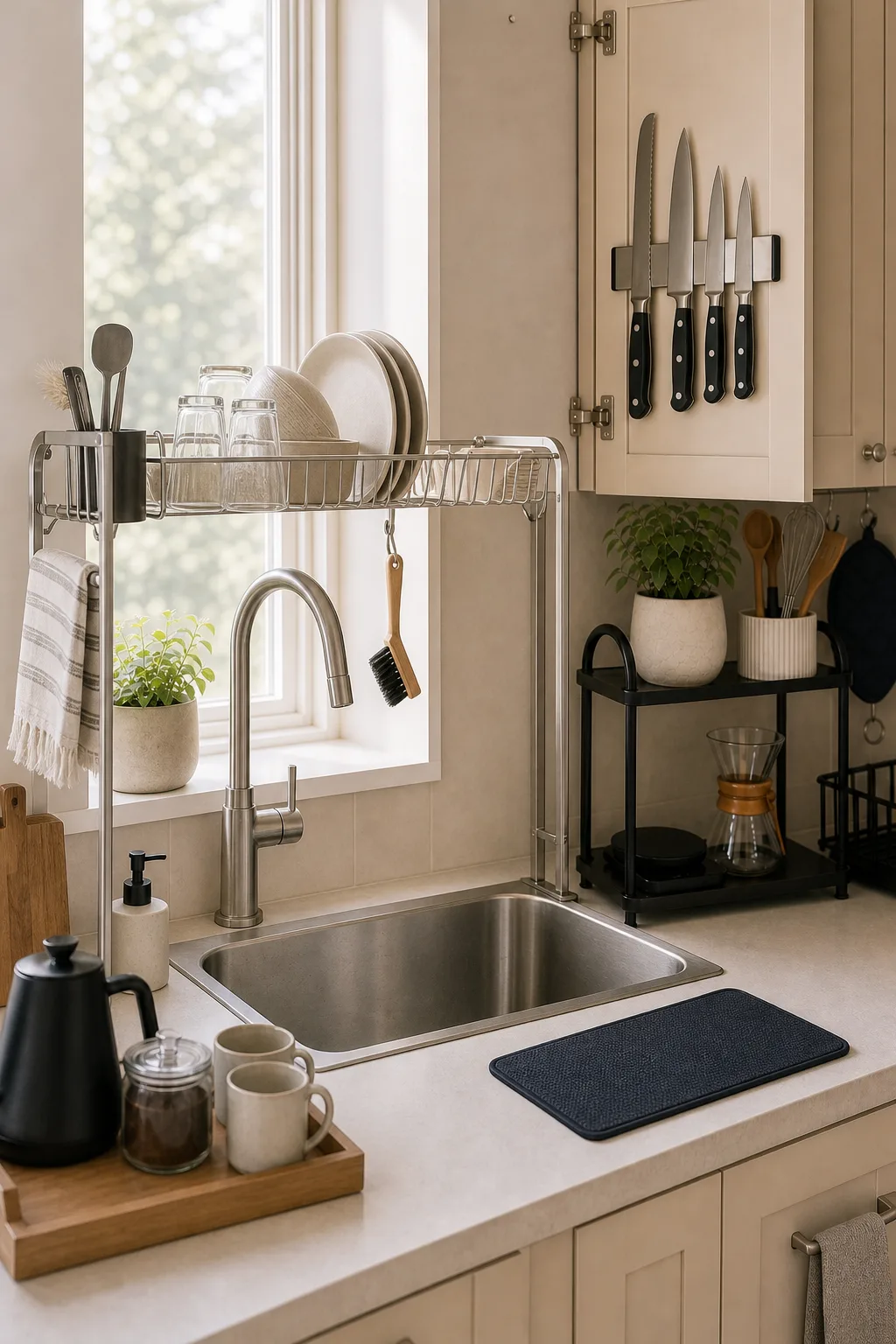
A dish drying rack often colonizes a third of the counter in a galley kitchen. A compact over-the-sink drying rack shifts that footprint off the counter entirely and uses dead air space above the basin. If your sink is not positioned for that style, a slim fold-flat mat works as a temporary drying surface that you can roll up and store in a drawer when not in use. Small space organization in a galley kitchen is often about rethinking timing and placement rather than buying more stuff.
Tip: Dry dishes more quickly by propping them at an angle so water drains down rather than pooling. Fewer dishes sitting means the rack clears faster.
Phase 5: Maintain the Reset
11. Set a One-In-One-Out Rule for the Counter Going Forward
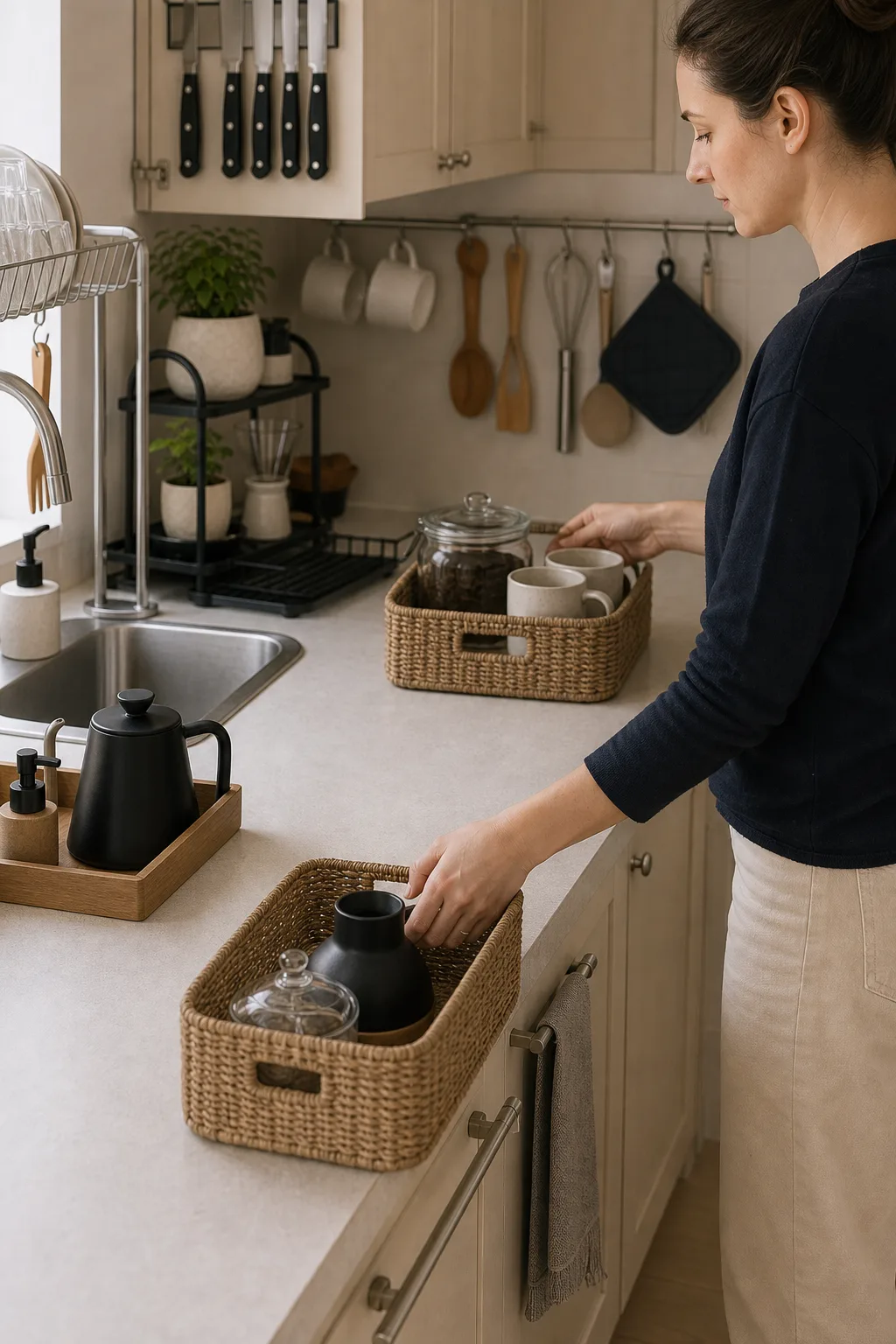
A countertop reset only holds if there is a maintenance habit behind it. The simplest one is the one-in-one-out rule: before anything new lands on the counter permanently, something else has to earn a new home elsewhere. This is especially useful in a galley kitchen where the narrow footprint makes clutter feel immediate. Post a small note inside a cabinet as a reminder if it helps you build the habit.
Tip: Do a five-minute counter scan every Sunday. It takes less time than you think and keeps the reset from unraveling.
12. Do a Seasonal Reassess Every Three Months
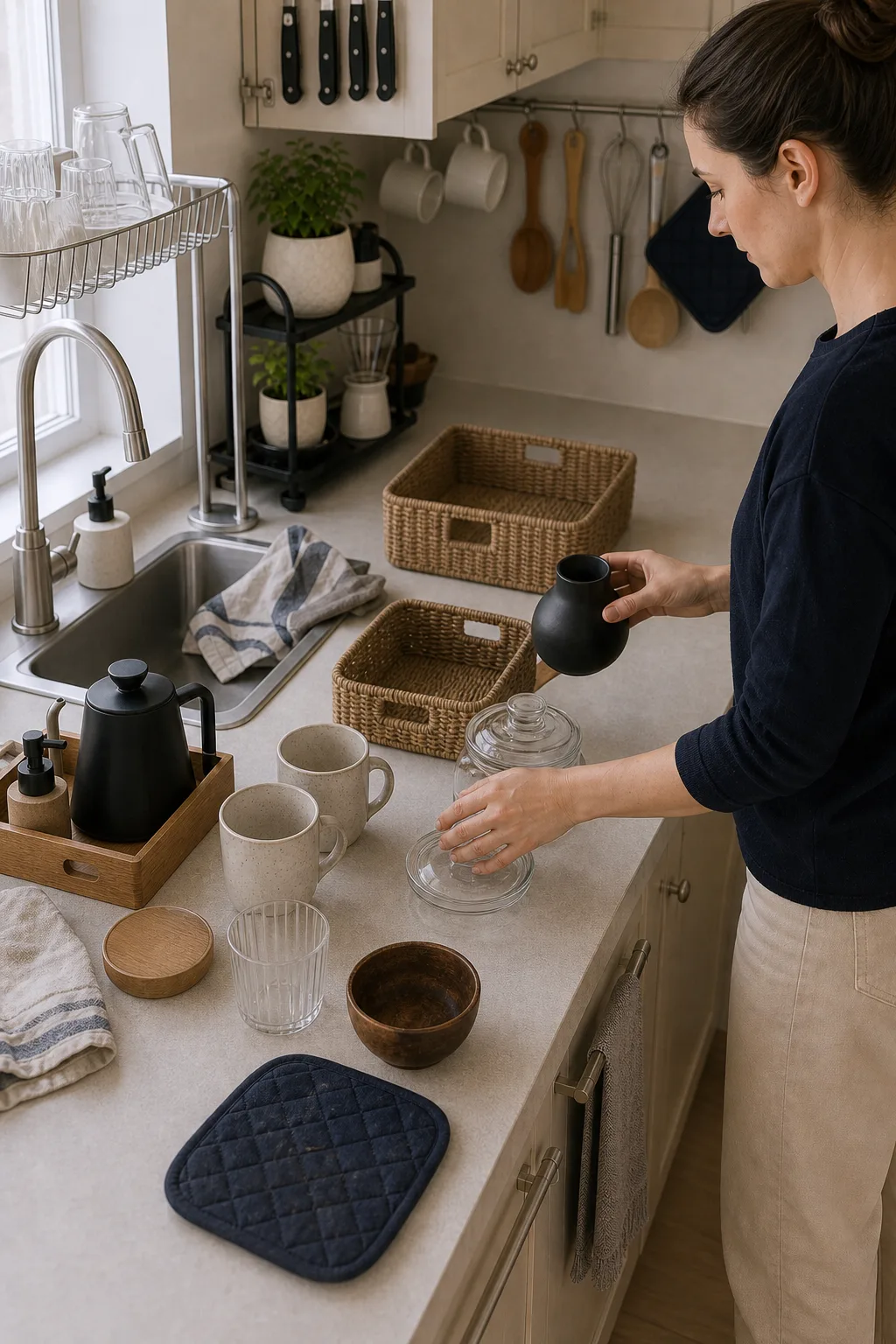
Galley kitchens shift with seasons and routines. What you reach for every day in winter is not always what you need in summer. A quick quarterly reassess, where you pull countertop items off and re-evaluate them just as you did in step one, keeps the space honest. This is one of the most underrated countertop reset home organization tips because it treats the kitchen as a living system rather than a finished project. About 20 minutes every three months is all it takes.
Tip: Use a seasonal reassess to check whether anything on the counter has expired, broken, or been replaced and forgotten.
FAQ
What counts as a countertop reset in a galley kitchen?
A countertop reset means clearing all surfaces completely, deciding what actually earns counter space based on daily use, finding renter-friendly homes for everything else, and setting up a simple system to keep it that way. It is not a renovation. You are reorganizing what you already have.
How do I add storage in a galley kitchen without drilling?
Over-cabinet-door hooks and rails, tension rods inside cabinets, freestanding shelves, removable adhesive strips for magnetic strips, and over-the-sink drying racks are all no-drill options that work well in rental kitchens. They move when you move and leave no damage behind.
How long does a galley kitchen countertop reset take?
Most renters can complete a full countertop reset in two to four hours on a single afternoon. The clearing and auditing steps move quickly. The slower part is finding good cabinet homes for items you relocate, which is worth doing carefully so the reset actually sticks.
Is a countertop reset different from decluttering?
Related but not the same. Decluttering focuses on reducing what you own. A countertop reset focuses on where things live, specifically getting daily-use items to their most practical location so the counter stays functional and clear. You might not get rid of anything during a reset.
What should I never store on a galley kitchen counter?
Appliances used less than three times a week, cleaning sprays, a full knife block, extra paper towels, and mail or keys are the biggest space wasters on a galley counter. These all have better homes in cabinets, drawers, or other rooms, and removing them makes the biggest visual and functional difference.
Save this guide so it is ready when you carve out a reset afternoon. If you want more practical small-space organization ideas sent straight to your inbox, the Nest and Narrow newsletter is a good place to start.