

My fridge is not large. It is a standard apartment refrigerator with two narrow crisper drawers, a deli tray that slides halfway out, and door bins that cannot decide what size bottles they want to hold. For a long time I treated it like a game of Tetris where everything just got shoved in and hoped for the best. Leftovers got buried, produce wilted before I remembered it existed, and I bought a second jar of mustard at least three times.
What changed things was treating fridge organization the same way I treat the rest of small space organization: assign every zone a job, keep like things together, and use the vertical height you already have. You do not need a bigger fridge or a Pinterest-perfect spread of matching containers. You need a clear system and a few honest habits. This guide walks through exactly that, one step at a time.
Key takeaways
- Zone your fridge by food category first, then adjust containers to fit those zones rather than the other way around.
- Door bins are for shelf-stable condiments, not dairy or eggs, which need the more consistent cold of interior shelves.
- A quick weekly five-minute reset before grocery day prevents the buried-and-forgotten cycle that wastes food and money in a small kitchen.
Why I Finally Got My Fridge Under Control
I used to open my fridge, stare at it for thirty seconds, and close it without finding what I wanted. Then I realized I had three half-empty bottles of the same salad dressing hiding behind each other on the door. Mapping my fridge into zones before reloading it was the one change that made everything else click.
Step-by-step
Before You Organize
1. Pull everything out and start with a clean slate

Before any fridge organization strategy works, you need to see what you actually have. Take everything out, wipe down each shelf with a damp cloth and a small splash of white vinegar, and check expiration dates as you go. Toss anything expired, dried out, or that you genuinely cannot remember buying. Doing this reset first means you are organizing real food, not mystery jars from six months ago. In a small kitchen where counter space is limited, work in batches so you are not juggling a tower of condiments.
Tip: Group items on your counter by category as you pull them out so the re-loading process is faster.
2. Map your fridge zones before you put anything back

Think of your fridge in horizontal bands: top shelf, middle shelf, bottom shelf, crisper drawers, deli tray, and door bins. Each zone has a different temperature and a different purpose. Mapping them before you reload is the foundation of good fridge organization, especially in a small kitchen where you cannot afford to waste a single shelf. Cold air sinks, so the bottom shelf stays coldest and is best for raw proteins. The top shelf is warmest and works well for ready-to-eat foods and leftovers. Middle shelves are your everyday workhorses.
Tip: Tape a small sticky note inside the fridge for two weeks listing what belongs in each zone until the habit sticks.
Shelf by Shelf
3. Assign your bottom shelf to raw proteins and meal prep

The bottom shelf is the coldest and most contained spot in your fridge, which makes it the right home for raw meat, fish, and anything you have prepped ahead. Keeping proteins here also prevents any drips from contaminating other food below, which matters a lot in a small fridge where shelves sit close together. If you do not eat meat, use the bottom shelf for items that need the most consistent cold, like soft cheeses or opened deli meats. A small rimmed tray or a shallow bin on this shelf catches any leaks and makes the whole shelf easier to wipe down.
Tip: A silicone mat cut to shelf size is easy to rinse and keeps the shelf itself cleaner between deep cleans.
4. Use the top shelf for leftovers and grab-and-go items
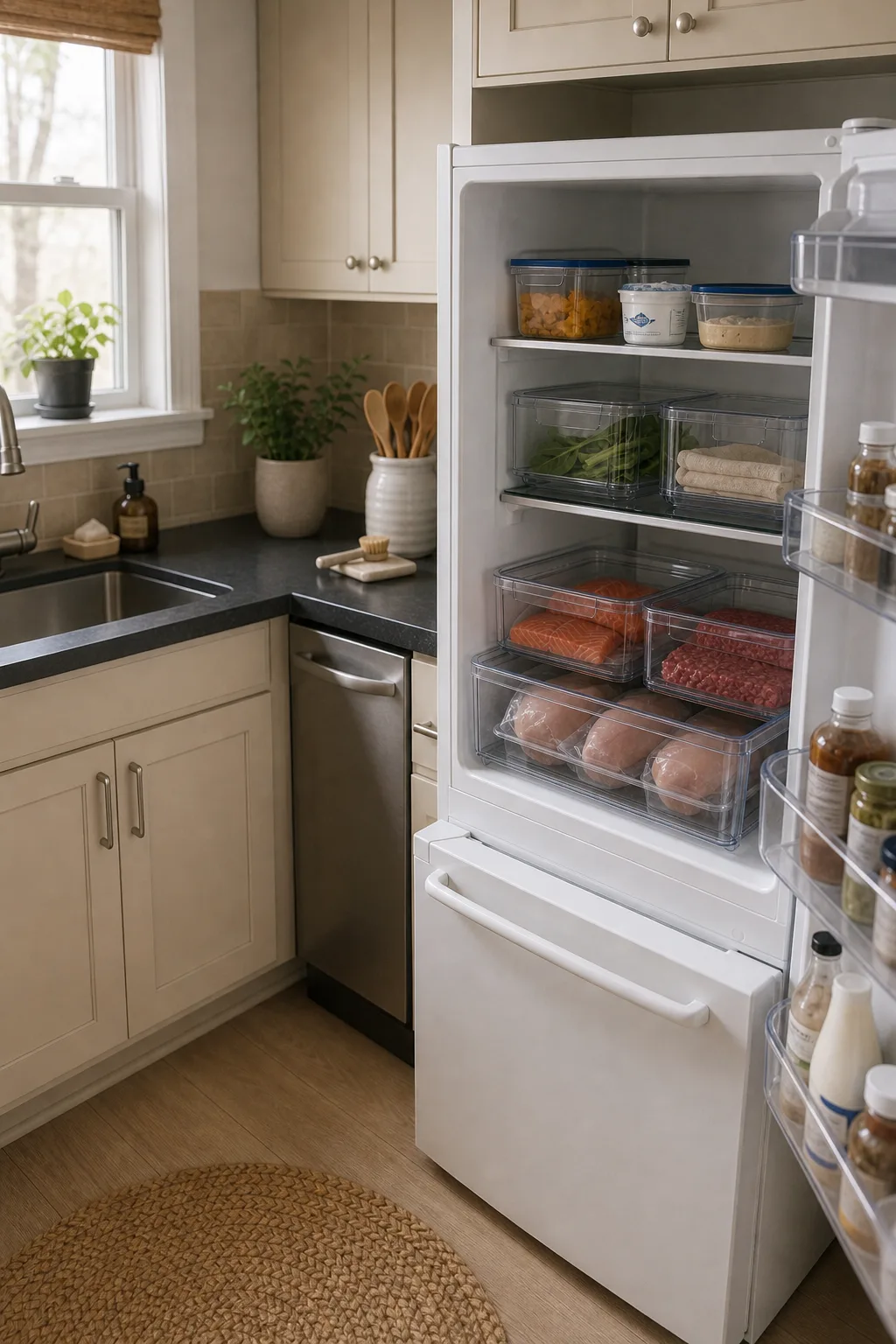
The top shelf is at eye level for most people, which means it is prime real estate for visibility. Use it for leftovers in clear containers, yogurt, hummus, and anything you want to eat within the next two or three days. Because you see it immediately every time you open the fridge, food here is far less likely to get forgotten. This is one of the most effective home organization tips for reducing food waste in a small apartment: visible food gets eaten. Keep containers clear and label them with the date using a piece of tape and a marker.
Tip: Limit the top shelf to a single row of items so nothing gets pushed to the back and lost.
5. Set up your middle shelf as the everyday staples zone

The middle shelf is where your most-reached-for items should live: eggs, butter, opened beverages, block cheese, and anything you use almost every day. Keeping everyday staples in a consistent spot means you stop rearranging the whole fridge every time you need something. For apartment organization ideas that actually reduce friction, consistency is the key, not perfection. If your fridge has two middle shelves, dedicate one to drinks and one to dairy and deli items. Adjust shelf height if your fridge allows it to fit taller items without wasting vertical space.
Tip: A small lazy susan on the middle shelf lets you spin items to the front instead of digging to the back.
Drawers and Hidden Zones
6. Sort your crisper drawers by humidity, not habit

Most fridges have two crisper drawers with a humidity slider or vent, and most people just pile vegetables in both without thinking about it. The high-humidity drawer is meant for leafy greens, herbs, and thin-skinned vegetables that wilt quickly. The low-humidity drawer is for fruits and thick-skinned vegetables like peppers, cucumbers, and zucchini. Separating produce this way genuinely extends how long things stay fresh, which is a real win for small space organization where you shop in smaller quantities. If your drawers have no slider, keep fruits in one and vegetables in the other as a simple default.
Tip: Line crisper drawers with a dry paper towel to absorb excess moisture and swap it out weekly.
7. Reclaim your deli drawer as a dedicated snack or cheese zone

The deli tray is often the most underused and most cluttered part of a small apartment fridge. It sits at a slightly warmer temperature than the main shelves, which makes it appropriate for cured meats, hard cheeses, and snacks rather than raw proteins. If you do not buy deli meat regularly, repurpose this drawer as your snack zone: individually portioned items, cheese slices, or small containers of olives and pickles. Having one clear zone for grab-and-go snacks reduces the amount of time you spend hunting through the fridge with the door hanging open, which also helps your fridge run more efficiently.
Tip: Keep the deli drawer edited to five or six items maximum so it stays functional rather than a catch-all.
Door Bin Strategy
8. Move eggs and dairy off the door and onto a shelf
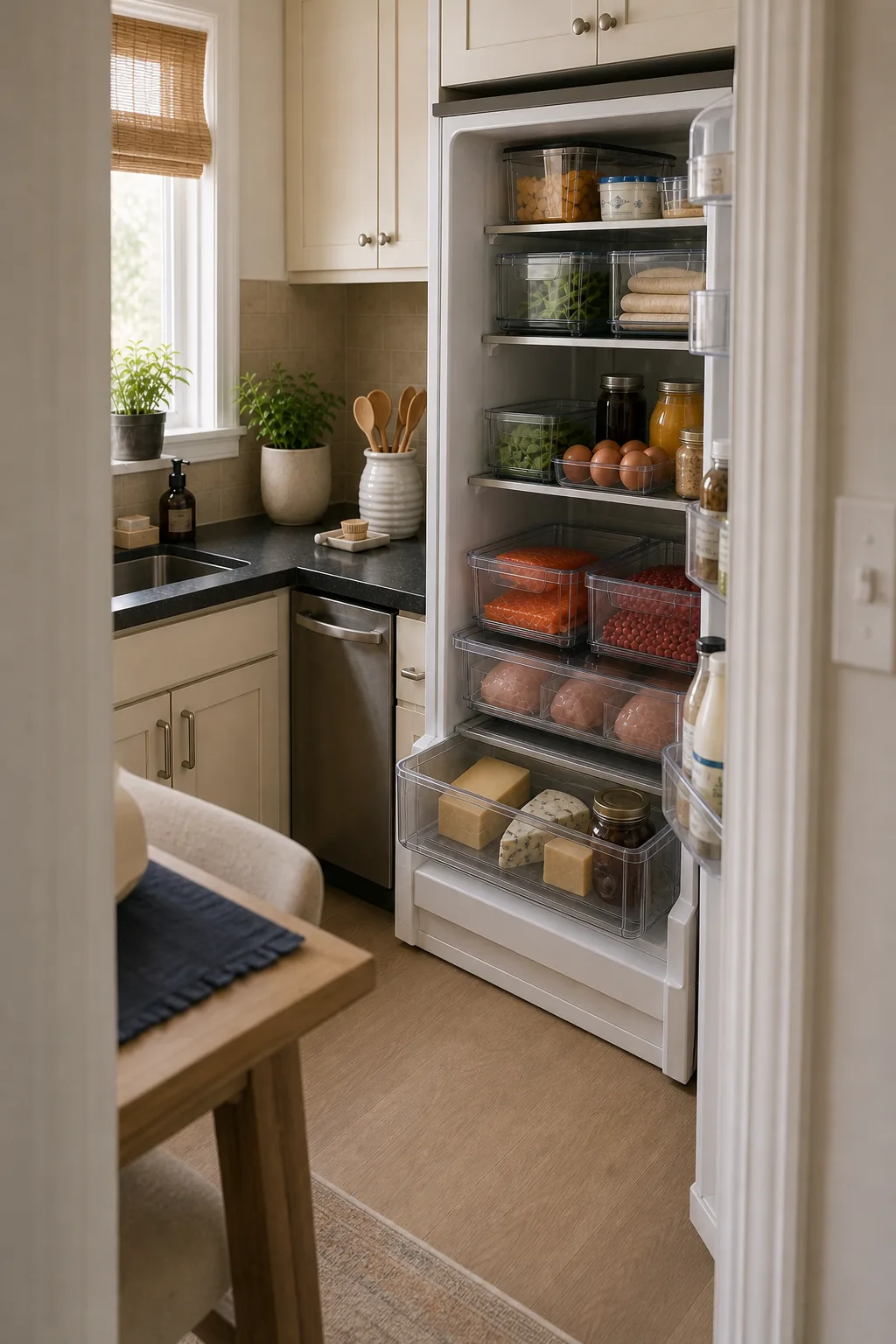
Door bins are the warmest part of the fridge because they are exposed to room temperature every time you open the door. Eggs, milk, and soft cheeses need a consistent cold temperature to stay safe and fresh longer, so they belong on an interior shelf, not the door. This is one of the most common fridge organization mistakes in small kitchen setups where the door gets loaded up fast. Relocating dairy to the middle or top shelf is a simple swap that extends freshness without any extra products. Use your freed-up door space for condiments that are shelf-stable and not temperature-sensitive.
Tip: If your door has a designated egg holder, use it for small condiment packets or single-serve items instead.
9. Organize door bins by frequency of use from top to bottom
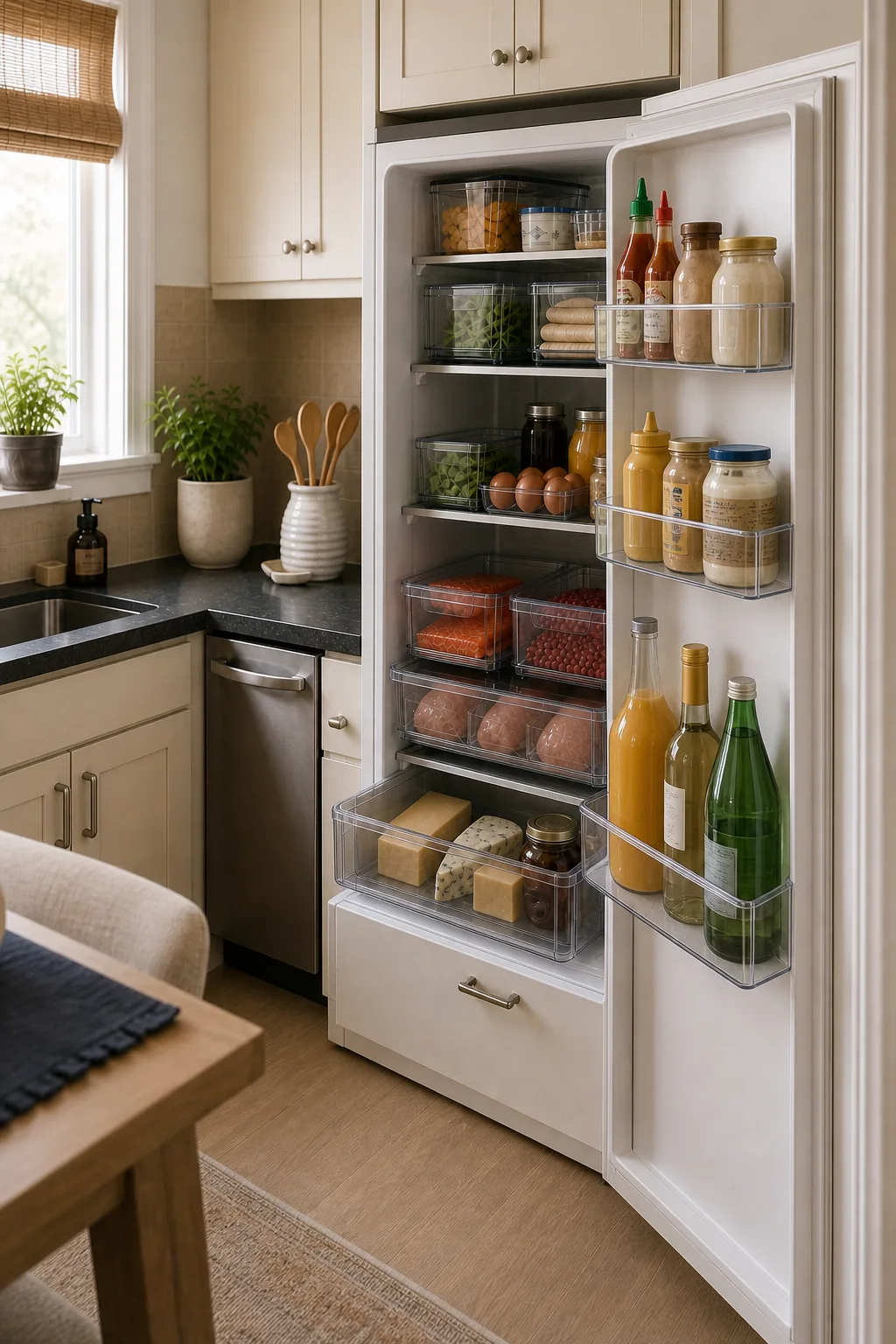
The top door bins are easiest to see and reach, so fill them with condiments you use constantly: hot sauce, salad dressing, mustard, mayo. The lower bins, which are deeper and harder to see into, are better for taller bottles like juice, sparkling water, or wine that do not need to be fished out by hand. This top-to-bottom frequency approach is a core principle of fridge organization for small kitchens because it removes the need to unload the entire door to find the ketchup. Group similar condiments together so the door reads in sections rather than a random assortment of bottles.
Tip: A binder clip or a small rubber band keeps two similar bottles together so they stay as a unit and do not scatter.
Smart Storage Additions
10. Add a small stackable bin to double your shelf capacity

One of the best apartment organization ideas for a small fridge is using a simple stackable bin or pull-out drawer insert to create a second level on a single shelf. This works especially well on the middle shelf where you have items of different heights taking up flat space. Slide shorter items like yogurt cups, small jars, or condiment bottles under a raised bin, and use the top of the bin for flat items or taller containers. It is a renter-friendly storage solution because nothing is drilled, glued, or permanently attached. Look for clear bins so you can see everything at a glance without moving things around.
Tip: Measure your shelf height before buying any bin insert so you know the exact clearance you are working with.
11. Use a lazy susan for condiments you have too many of

If your condiment collection has quietly taken over an entire shelf, a small turntable lazy susan is a practical fix for fridge organization in a small kitchen. It lets you spin to the back without pushing everything forward, which means nothing gets buried and forgotten. A six-inch or eight-inch round lazy susan fits easily on most apartment fridge shelves without taking over the whole shelf. Keep it dedicated to one category: sauces, Asian condiments, pickled items, whatever your collection leans toward. This kind of small space organization tool costs very little and creates a noticeable amount of daily order.
Tip: Wipe the lazy susan down each time you do your weekly fridge reset so residue from bottles does not build up.
Maintenance Habits
12. Do a five-minute fridge reset before every grocery trip

The best fridge organization system in a small kitchen only works if you maintain it, and maintenance does not need to be a project. Set a five-minute reset as a habit before you shop: pull out anything that needs to be used up soon and put it at the front, compost or toss anything that has gone off, and wipe down any sticky rings or drips. This one habit prevents the buried-and-forgotten cycle that leads to wasted food and duplicate purchases. Renter-friendly storage solutions get the most out of your space only when the space stays relatively clear to begin with. Five minutes weekly beats two hours of deep cleaning monthly every time.
Tip: Take a quick phone photo of your open fridge before leaving for the grocery store so you know what you already have.
FAQ
What is the best way to organize a small apartment fridge?
Start by assigning each zone a category before you put anything back. Bottom shelf for proteins, top shelf for leftovers and ready-to-eat food, middle shelf for everyday staples, door bins for condiments only, and crisper drawers sorted by humidity. This zone-first approach is the foundation of fridge organization for small kitchen setups because it removes daily decision-making and keeps things visible.
What should not go in the fridge door bins?
Eggs, milk, soft cheeses, and anything that needs a consistent cold temperature should not live in the door bins. The door is the warmest part of the fridge because it is exposed to room air every time you open it. Stick to shelf-stable condiments, hot sauces, and tall bottles in the door, and move dairy to an interior shelf.
How do I keep my small fridge from getting cluttered again?
A five-minute reset before every grocery trip is the most effective maintenance habit for small space organization. Pull anything close to expiring to the front, toss what has gone off, and wipe down any drips. It takes less time than you think and prevents the pile-up that makes fridge organization feel like a constant chore.
Do I need special containers for fridge organization?
You do not need matching sets or a full container overhaul to get your fridge organized. Clear bins, a small lazy susan, and a few stackable inserts can make a real difference without a big investment. The most important thing is consistency in where things live, not the containers themselves.
How do I organize produce in a small fridge with limited crisper space?
Sort by humidity: leafy greens and herbs in the high-humidity drawer, fruits and thick-skinned vegetables in the low-humidity drawer. If your drawers are small, prioritize what wilts fastest and store heartier produce like apples or bell peppers on a shelf instead. Lining drawers with a dry paper towel helps absorb moisture and extends freshness.
Save this guide somewhere you can find it before your next grocery trip, because fridge organization is one of those things that is easiest to maintain when the system is fresh in your mind. If you want more practical small-space organization ideas for your apartment, the Nest and Narrow newsletter delivers them straight to your inbox, no clutter, no fluff.