

My bathroom medicine cabinet is about the size of a legal envelope turned sideways. When I moved into my current apartment, I opened it and immediately thought: this is not going to work. Three shelves, shallow depth, a wobbly hinge, and a mirror that fogs up before I even finish brushing my teeth. But a year later, it holds everything I reach for every morning without anything falling out or getting lost behind something else.
Medicine cabinet organization for small spaces is less about buying a bunch of products and more about being honest with what you actually use daily versus what belongs somewhere else entirely. These 12 steps walk you through a process that works in rental bathrooms, studio apartments, and any situation where the cabinet is the only real storage you have.
Key takeaways
- Audit the cabinet first and relocate items that do not belong in a bathroom mirror cabinet before buying any organizers.
- Shallow, stackable, and magnetic accessories are the most effective tools for small medicine cabinet organization in rental apartments.
- Grouping items by use frequency, not category, makes a small cabinet feel bigger and reduces the daily rummaging that leads to clutter.
Why I Finally Dealt With My Medicine Cabinet
I avoided organizing my medicine cabinet for almost a year because it felt too small to bother with. Then one morning a bottle of eye drops fell out and hit the sink and I decided that was enough. Two hours later it was done, and I genuinely cannot believe how much easier my mornings feel now.
Step-by-step
Start Here: Audit First
1. Pull Everything Out Before You Organize Anything
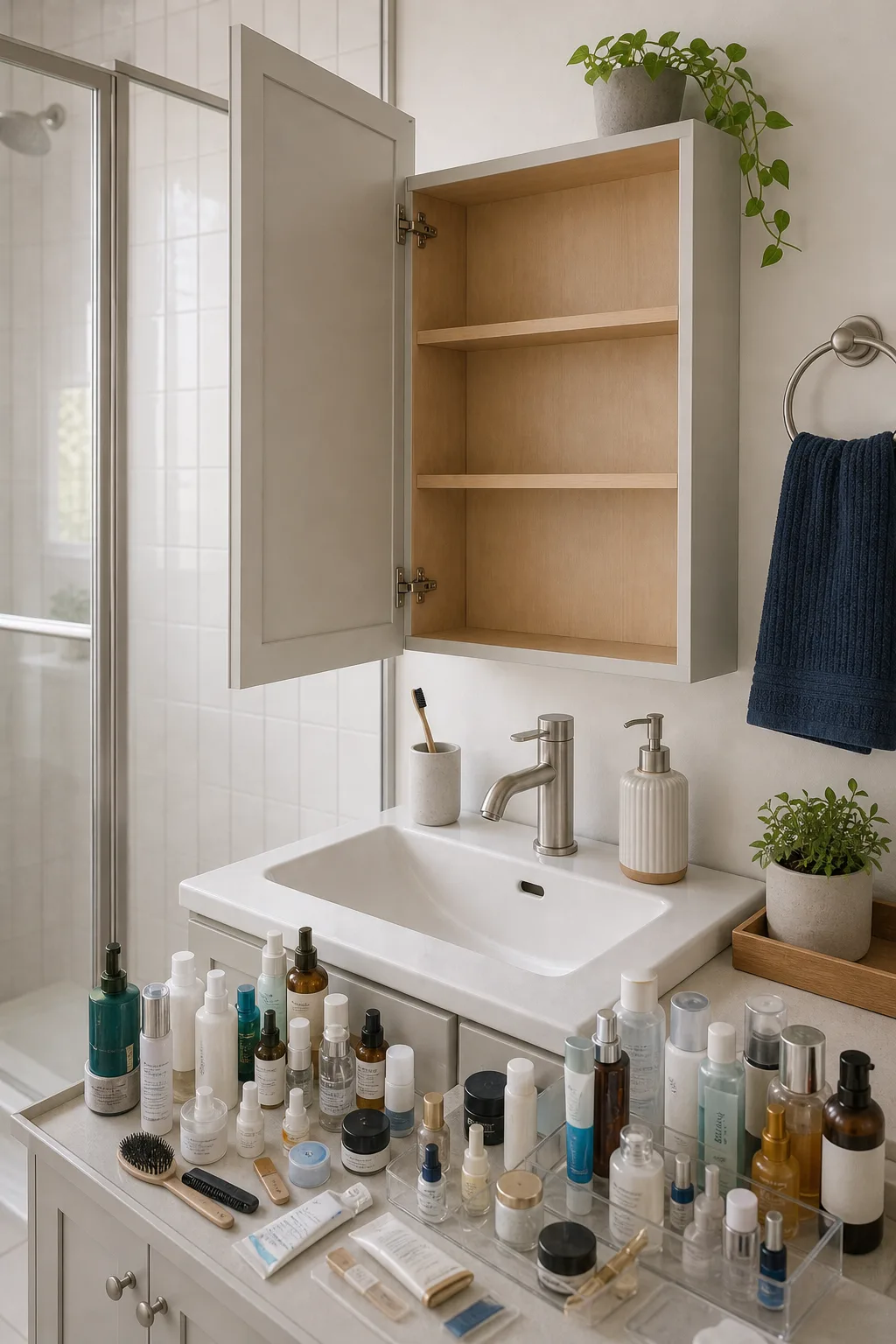
Start with a completely empty cabinet. Set everything on the bathroom counter or a small tray so you can see the full picture at once. This step sounds obvious but most people skip it and try to organize around whatever is already in there, which never works. You cannot make good decisions about small space organization when items are still stuffed into shelves. Give yourself ten minutes and take it all out.
Tip: Wipe the shelves with a damp cloth while they are empty. It takes thirty seconds and you will not want to do it later.
2. Sort Into Three Groups: Daily, Weekly, and Rarely

Once everything is out, sort it into three honest piles. Daily items are things you touch every single morning or night, like your toothpaste, face wash, or vitamins. Weekly items are things you use a few times a week but not every day. Rarely means it has been sitting there for months. This sorting step is the foundation of any effective medicine cabinet organization system because it tells you exactly what needs prime real estate and what does not.
Tip: If you cannot remember the last time you used something, move it to the rarely pile without overthinking it.
3. Remove Everything That Does Not Belong in a Medicine Cabinet
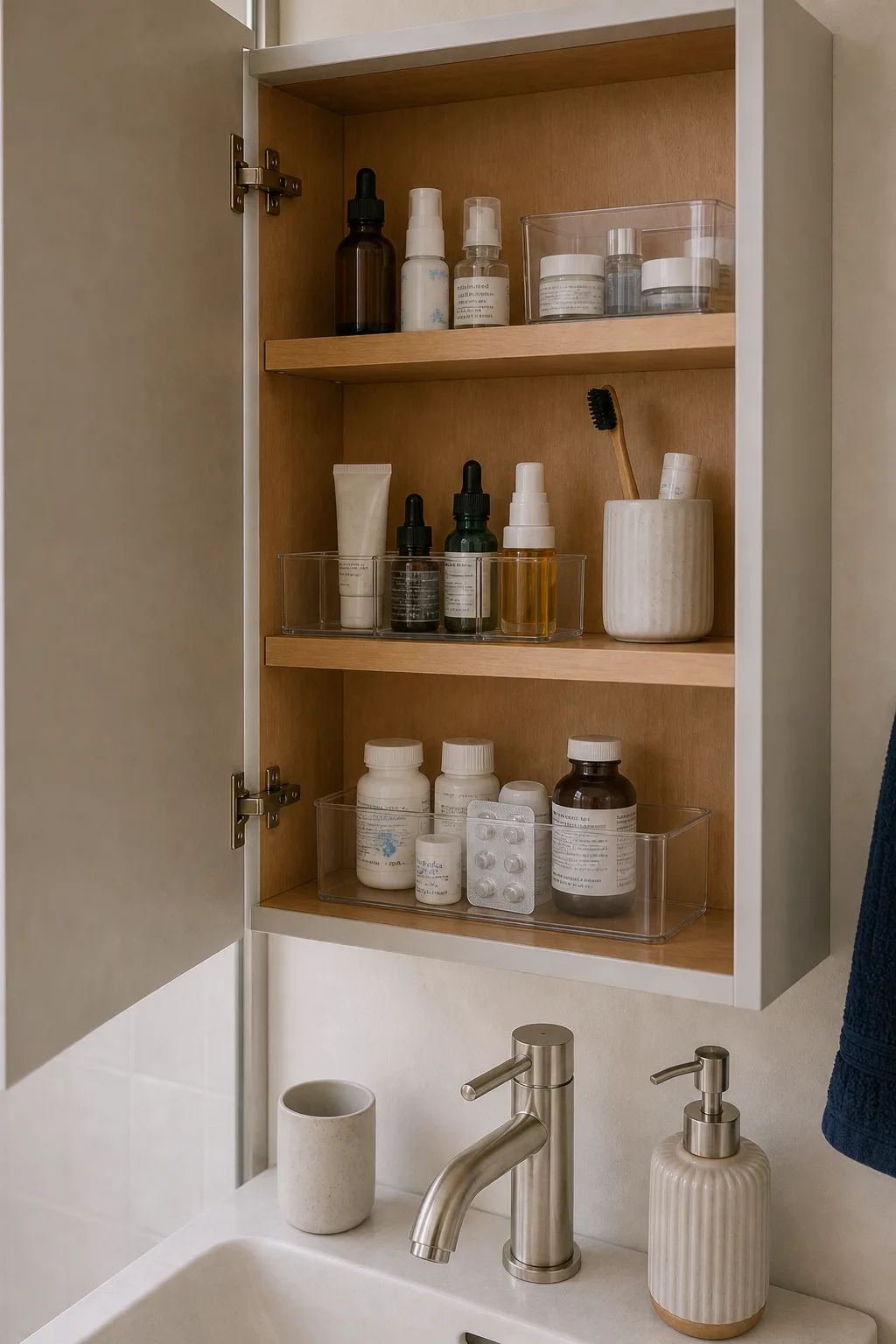
Medicine cabinets in small apartments get used as a catch-all because there is nowhere else to put things. But heat and humidity from showers degrade medications, nail polish, and certain skincare products faster than you expect. Move expired items to the trash immediately. Relocate backup stock, nail tools, and anything you use less than once a month to a different spot, even if that is a bin under the sink or a small basket on a shelf. Cabinet organization in small spaces depends entirely on this edit step.
Tip: Check expiration dates on all medications and sunscreens while everything is out. Toss anything past its date.
Plan Your Layout
4. Measure Your Shelf Depth Before Buying Any Organizers

Most apartment medicine cabinets are only three to four inches deep, which eliminates most standard drawer organizers from consideration. Measure the depth, width, and height of each shelf before you order anything. Many small cabinet organizers are sized for deeper bathroom vanities and will simply hang over the front edge or not fit at all. Knowing your exact measurements saves you two return trips and a lot of frustration. This is one of the most overlooked home organization tips for small bathrooms.
Tip: Write the measurements on a sticky note and keep it in your wallet or save a photo of it on your phone while you shop.
5. Assign Each Shelf a Single Use Category

Now that you know what stays and you have your measurements, assign one category to each shelf before anything goes back in. For a three-shelf cabinet, a practical breakdown is: top shelf for medications and first aid, middle shelf for daily face and dental care, bottom shelf for backup supplies or items used every few days. This zoning approach is the same logic used in kitchen cabinet organization and it works just as well in a bathroom. When every shelf has a job, nothing gets shoved in randomly.
Tip: Put your most-used shelf at eye level so you are not hunting or reaching every morning.
Renter-Friendly Add-Ons
6. Use Magnetic Strips or Magnetic Containers on the Inside Door

The inside door panel of a medicine cabinet is often completely blank, and that is wasted space in a small bathroom. Magnetic spice tins or small magnetic organizer pods can hold bobby pins, hair ties, lip balm, tweezers, nail clippers, and other small items that always seem to disappear into the back of a shelf. This is one of the best renter friendly storage solutions because magnetic strips go on with adhesive and leave no damage when you remove them. No drilling, no wall anchors, no landlord conversations needed.
Tip: Clear magnetic containers let you see what is inside without opening each one, which keeps your morning routine faster.
7. Add a Stackable Riser to Double Your Shelf Capacity
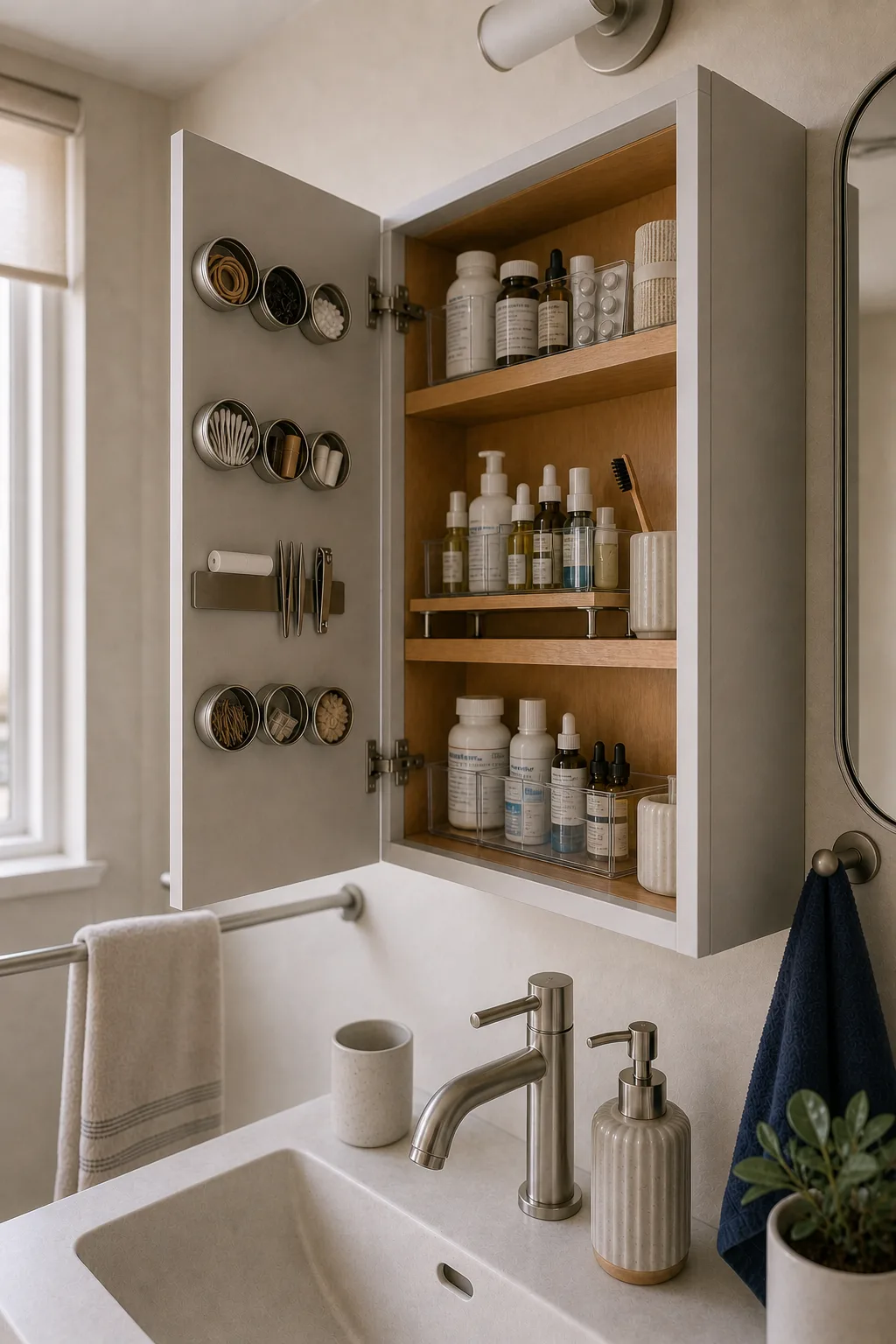
A small acrylic or bamboo riser that fits within your shelf depth can effectively double the usable space on a single shelf by creating a front row and a back row at different heights. This works especially well for small bottles, eye drops, and roll-on products that tend to tip over and get lost behind taller items. Risers designed for spice racks often fit medicine cabinet shelves better than bathroom-specific ones because they tend to be narrower. This is one of the most practical apartment organization ideas for a shallow cabinet.
Tip: Put taller items in the back row and shorter items in the front so you can see and grab everything without moving things around.
8. Decant or Downsize Products to Free Up Shelf Space
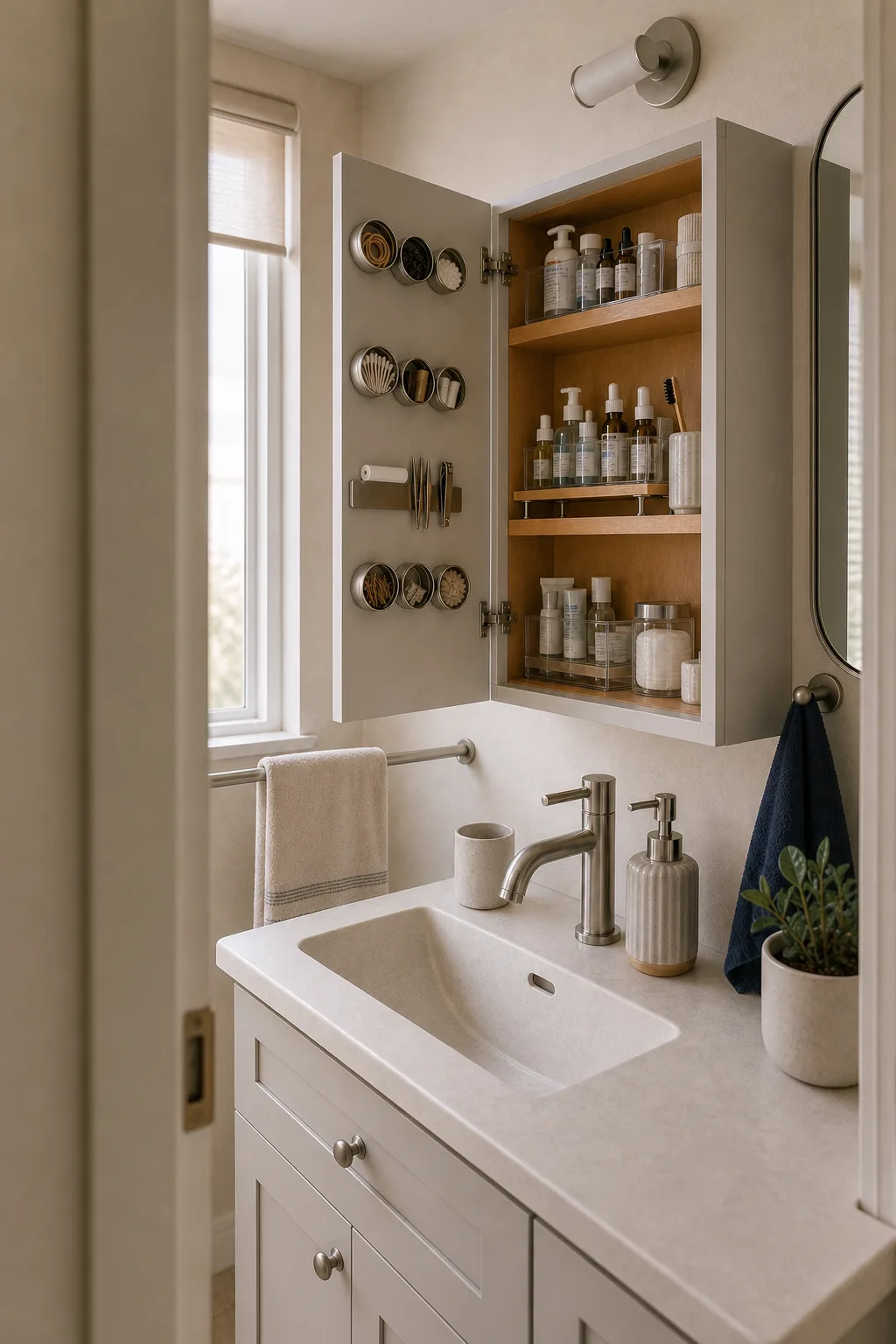
Full-size bottles and bulky packaging take up significantly more room than the product itself actually requires. Transferring things like cotton rounds into a small lidded jar, or moving a large tube of face wash into a travel-size refillable tube for the cabinet, can free up a surprising amount of shelf space. Keep the original packaging in a bin under the sink or in a closet as your backup. This kind of small space organization is about fitting your life into the space, not the other way around.
Tip: Label any decanted containers with a small piece of painter's tape and a marker so you always know what is inside.
Keep It Organized Long-Term
9. Contain Loose Small Items With Mini Trays or Bins
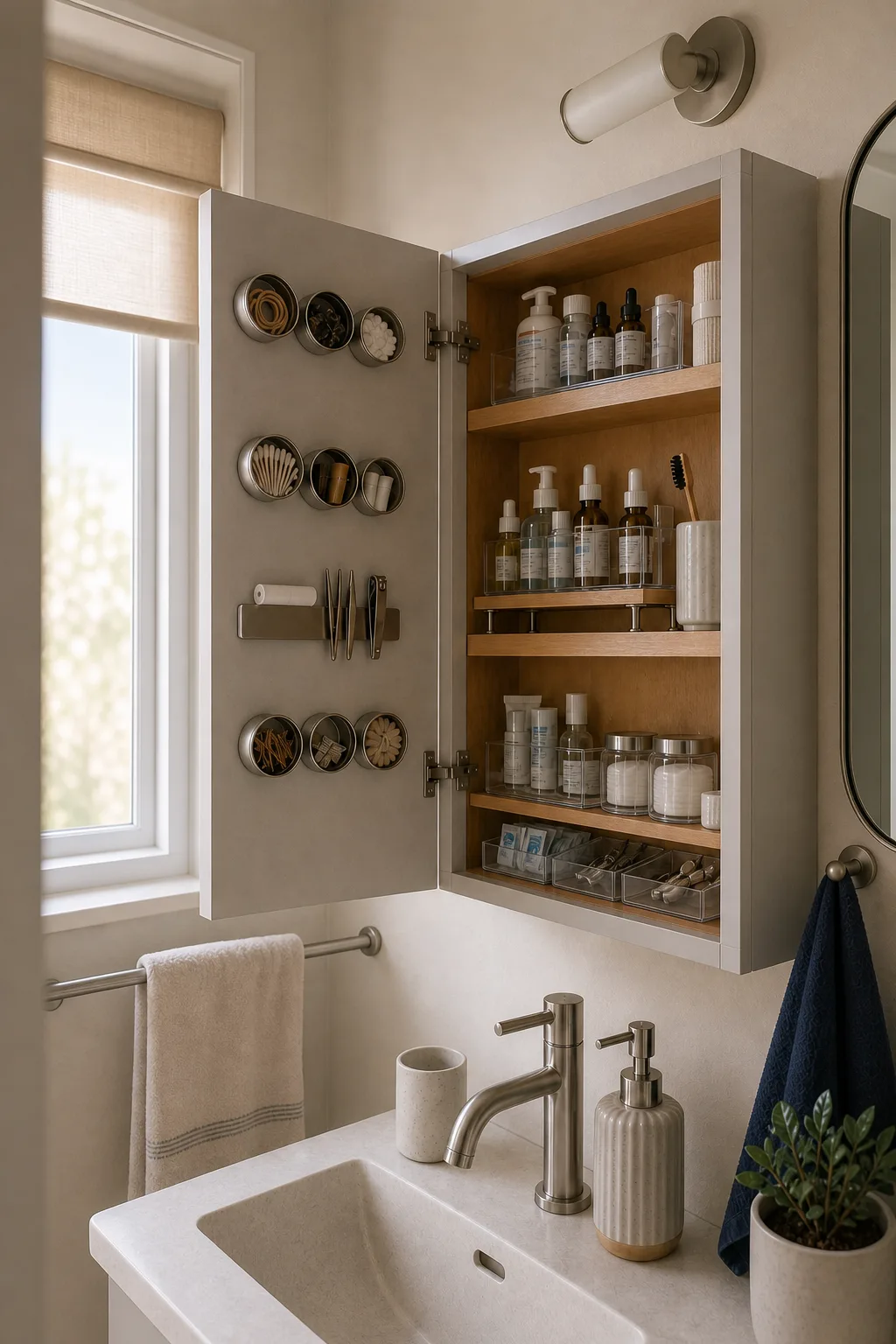
Loose items like individual bandages, vitamin packets, tweezers, and nail clippers are the reason medicine cabinets get disorganized within a week of being cleaned. Small silicone or acrylic trays with low walls keep these items corralled without taking up much depth. Think of it the same way you would organize a junk drawer: bins prevent drift. For a medicine cabinet, trays that are one to two inches tall work best because they do not eat into your vertical clearance between shelves.
Tip: Group first aid items together in one small bin so you are not hunting for a bandage when you actually need one.
10. Put a Small Label on Each Shelf or Zone

Labels sound like overkill for a cabinet you use every day, but they are genuinely useful when you share a bathroom or when you are tired and reaching for something half-awake. A simple label maker strip or a small piece of washi tape with handwriting on the front edge of each shelf takes about two minutes and means things actually get put back in the right place. This is one of those home organization tips that feels minor but significantly extends how long the system holds up.
Tip: Use washi tape labels if you want something removable and renter-safe that does not leave adhesive residue.
11. Do a Two-Minute Reset at the End of Each Week
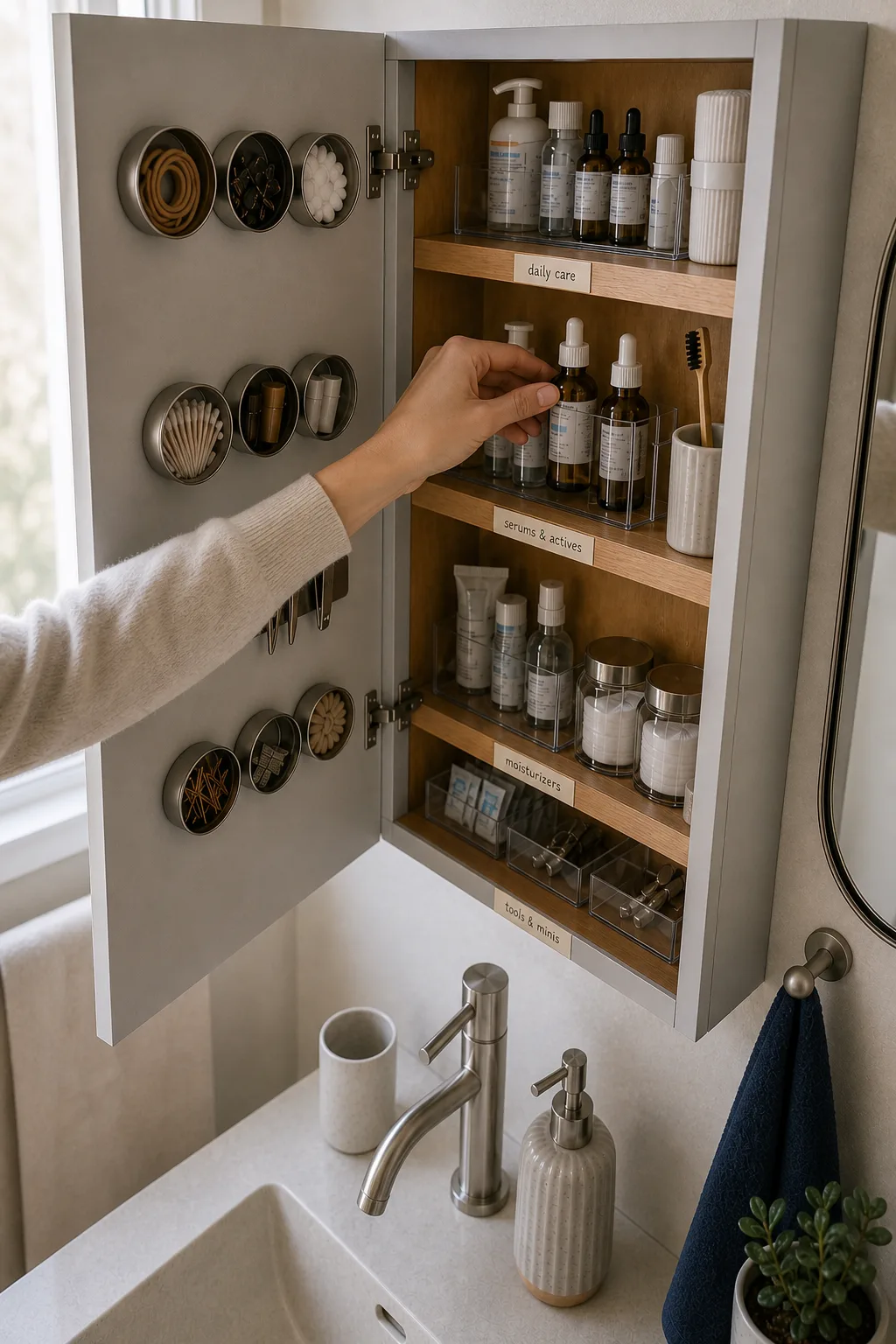
A well-organized medicine cabinet will stay that way for about two to three weeks before small things start to drift. Building a two-minute weekly habit of straightening items, tossing empty packaging, and returning anything that wandered to the wrong shelf is what makes the whole system sustainable. Set a reminder on your phone tied to something you already do, like cleaning the bathroom mirror. The goal is not a perfect cabinet every day but a functional one that never gets bad enough to require a full redo.
Tip: Toss empty packaging immediately when you notice it rather than waiting for your weekly reset. That one habit prevents most of the clutter.
Studio Apartment Solutions
12. Expand Storage to the Wall or Door If the Cabinet Maxes Out

If your medicine cabinet is genuinely too small for what you need daily, there are renter-friendly ways to extend your storage without installing anything permanent. An over-the-door organizer on the bathroom door, a small suction-cup shelf on the mirror or tile, or a narrow floating shelf held up with adhesive strips can all add surface area without touching the walls in a way your landlord would notice. These no-drill solutions work especially well in studio apartments where the bathroom has to do a lot of heavy lifting. Focus the medicine cabinet on true daily essentials and let the add-on storage handle the rest.
Tip: Adhesive wall strips rated for tile or smooth surfaces work best in bathrooms. Check the weight rating before hanging anything on them.
FAQ
How do I organize a medicine cabinet that is really shallow?
Measure the depth first, then shop specifically for shallow organizers like spice-rack risers or narrow acrylic trays. Use the inside door panel for small magnetic containers to hold flat items like bobby pins and bandages. Decant large products into smaller travel-size containers so they fit without hanging over the shelf edge.
What should not be stored in a medicine cabinet?
Medications are actually not ideal for a bathroom medicine cabinet because heat and humidity from showers can degrade them faster. Store actual medications in a cool dry spot like a bedroom drawer or closet shelf. Keep the bathroom cabinet for daily use items like dental care, skincare, and small first aid supplies.
How do I organize a medicine cabinet without drilling or using permanent hardware?
Magnetic adhesive strips on the inside door panel, adhesive-backed small shelves on the tile near the cabinet, and removable organizer trays are all no-drill options. These work well in rental apartments because they come off cleanly when you move. Focus on organizers that sit inside the existing shelves rather than ones that require mounting.
How often should I clean out and reorganize my medicine cabinet?
A full audit once or twice a year is plenty if you do a two-minute weekly reset to keep things from drifting. Check expiration dates on medications and sunscreens during your seasonal cleanouts. The weekly habit is what prevents the cabinet from getting bad enough to require a full redo.
What are the best small organizers for a medicine cabinet?
Narrow acrylic trays, small silicone bins, magnetic spice tins, and low-profile stackable risers are the most practical options for small medicine cabinet organization. Avoid anything deeper than your shelf measurement and anything with high walls that reduces your vertical clearance between shelves.
Save this guide somewhere you will find it again before your next bathroom reset. If you want more small-space organization ideas sent straight to you, the Nest and Narrow newsletter is a good place to start. No clutter, just practical tips for real apartments.