
My apartment does not have a mudroom. It does not even have a proper entryway. What it has is about four feet of open floor between the front door and the living room, a narrow coat closet with one sad shelf, and years of practice turning that awkward zone into something that actually functions. If you are searching for mudroom small apartment solutions, you already know the frustration: shoes pile up, bags slump against the wall, and keys disappear into the void every single morning.
The good news is that a dedicated mudroom is not what makes an entryway work. The right small space organization strategy is what does it. Every idea below is renter-friendly, most require zero drilling, and all of them are sized for apartment life. Whether you have a true entry hallway or just a strip of space inside the door, these apartment organization ideas will help you build a drop zone that keeps the rest of your place calm and clutter-free.
Key takeaways
- You do not need a mudroom footprint to create a functional drop zone. A few square feet and the right storage pieces are enough.
- Renter-friendly storage tools like over-door organizers, freestanding hooks, and tension-rod shelves protect your walls and your security deposit.
- Layering vertical storage is the core home organization tip for any small entryway: hooks up high, a slim bench or basket at mid-level, and a tray or mat at floor level.
Why I Finally Dealt With My Front Door Chaos
For the first two years in my current apartment, my entry was just a pile: shoes on one side, bags on the other, keys in a different spot every morning. I finally added a freestanding rack and a boot tray on the same weekend, and I genuinely could not believe how much calmer the whole apartment felt as a result. It was not about having more space. It was about giving that small space a job.
Ideas that work in small spaces
Renter-Friendly Drop Zone Anchors
1. Hang a Freestanding Coat Rack Instead of Drilling Hooks

A slim freestanding coat rack gives you instant vertical storage without touching a single wall. Look for one with a base footprint under 12 inches so it tucks beside the door without blocking the swing. I keep mine right at the entry and hang bags, umbrellas, and a light jacket on it daily. Some racks include a small tray at the bottom for shoes, which makes them a compact two-in-one solution. This is one of the easiest renter-friendly storage wins you can make on day one of moving in.
Tip: Choose a rack with at least six hooks so you can separate everyday bags from seasonal outerwear without crowding.
2. Use an Over-Door Organizer on Your Front Door

The back of your front door is completely unused real estate in most apartments. An over-door organizer with pockets or hooks turns it into active storage for sunglasses, mail, dog leashes, reusable bags, and anything else that tends to pile up at the entry. No drilling, no damage, and it disappears the moment you close the door. For a cleaner look, choose a fabric pocket organizer in a neutral color rather than a wire rack. This is a core no-drill solution that works even when your entryway is literally just a doorway.
Tip: Reserve the top pocket for items you need on the way out: masks, lip balm, earbuds, or a transit card.
3. Place a Narrow Bench With Hidden Storage at the Door

A bench with a hinged top or a bottom shelf does double duty: it gives you a place to sit while putting on shoes and holds bulkier items out of sight. Look for benches that are 12 to 18 inches deep so they do not eat into your walkway. I use mine to store a small bin of shoe-care supplies and a folded tote bag underneath. For studio apartments, choose a bench with clean lines so it reads as furniture, not clutter. This single piece can anchor your whole mudroom small apartment setup without taking over the room.
Tip: Add a small cushion on top to make the bench feel intentional and finished rather than purely utilitarian.
Floor-Level Organization
4. Set Up a Shoe Tray System to Contain Footwear
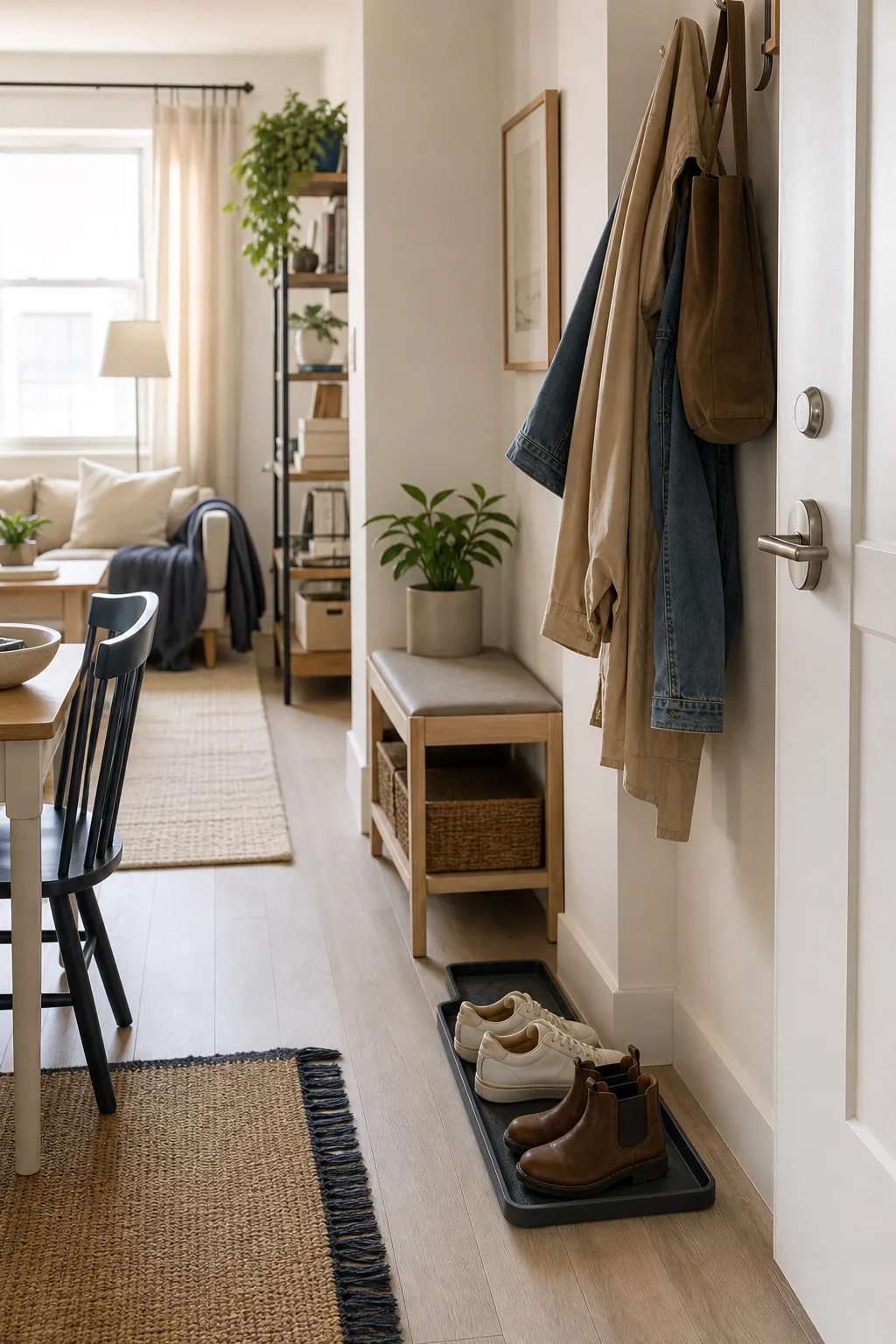
A low boot tray or a simple rubber mat near the door keeps shoes corralled in one spot and protects your floor from wet soles. The key is limiting how many pairs live at the entry: I allow myself two pairs maximum on the tray, and everything else goes in the closet. This boundary is actually more effective than any elaborate shoe rack because it forces you to rotate rather than accumulate. For small space organization, a tray also signals visually where the entryway ends, which makes the area feel tidier than it technically is. Choose a tray in a dark or pebbled finish so dirt and water marks are not as visible.
Tip: Slide a dryer sheet under the tray to keep the entry smelling fresh, especially in damp seasons.
5. Bring In a Slim Stackable Shoe Rack for Larger Collections

If you have more than a few pairs of shoes living at your entry, a slim stackable shoe rack keeps them off the floor and vertically organized. Choose one that is no wider than 20 inches and stacks at least three tiers high to maximize the vertical space you have. Many of these racks are modular, so you can expand or shrink the configuration based on the season. This kind of freestanding storage is a classic renter-friendly storage move because it comes with you when you move. Place it just inside the closet if the hallway is too narrow, and it still counts as a dedicated shoe zone.
Tip: Angle the shoe rack slightly toward the wall so the entry feels open from the front door perspective.
Wall and Door Storage Without Drilling
6. Mount a Key and Mail Station With a Command Hook Strip

Losing keys is a small-apartment tax that you do not have to keep paying. A Command strip hook rail near the door, with one hook per key set, solves it in about five minutes. Add a small adhesive pocket or a slim magnetic tray for mail, coupons, and other flat items that land at the entry. I have mine at eye level, right beside the light switch, so using it is automatic. This is one of the most practical home organization tips for apartment renters because it protects your walls and genuinely changes how your mornings feel.
Tip: Label each hook with a small tag so everyone in the household returns keys to the same spot consistently.
7. Use Tension Rods Inside a Closet to Create a Mini Mudroom

If you have a coat closet near your front door, a tension rod mounted low can hold bags, scarves, and belts on S-hooks without touching the walls. A second rod at standard height holds coats and jackets. This two-rod system inside a single closet basically builds a mudroom small apartment version inside a space you already have. Add a small bin on the closet floor for shoes and you have a fully contained drop zone that disappears when the door closes. No drilling, no permanent changes, and completely reversible when you move.
Tip: Use uniform S-hooks in the same finish so the inside of the closet looks intentional even when it is packed.
8. Hang a Pegboard Panel With Adhesive-Backed Hardware
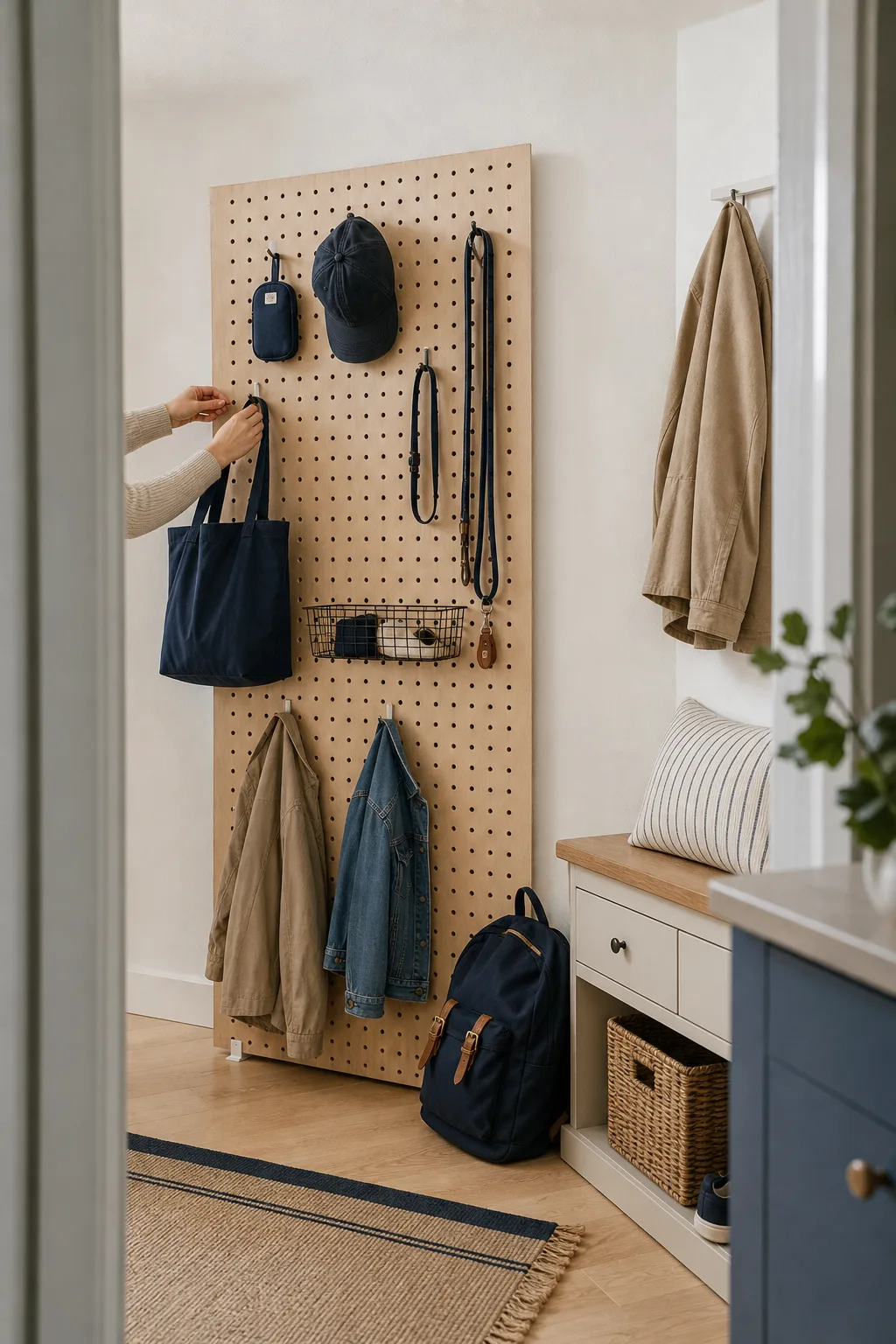
A pegboard does not have to mean drilling into drywall. Lightweight pegboard panels can be mounted with strong adhesive picture strips rated for heavier loads, or simply leaned against the wall and stabilized with small furniture feet. Use pegboard hooks to hang bags, hats, dog leashes, and even a small basket for sunglasses. This is a popular apartment organization idea because the layout is completely flexible: you rearrange hooks as your needs change without leaving new holes. Keep the pegboard to one wall section, roughly 24 by 24 inches, so it feels curated rather than overwhelming.
Tip: Paint the pegboard a color that matches your wall to make the whole setup feel like a planned design element.
Smart Storage for Shared Spaces
9. Create a Basket System for Shared Household Items

If you share your apartment, a labeled basket system near the entry keeps everyone's things from mixing into one pile. One basket per person, stored on a low shelf or inside the entryway closet, holds whatever each person drops at the door: gym gear, work bags, chargers. This is a simple but effective home organization tip that works in studios and one-bedrooms alike because it creates personal accountability without requiring a lot of space. Wicker, wire, or fabric bins all work, as long as the sizing is consistent. Uniform baskets are what make a row of them look organized rather than chaotic.
Tip: Put a small hook above each basket so bags hang above and shoes or items go inside, keeping everything stacked vertically.
10. Add a Slim Console Table for Surface and Shelf Space

A console table that is 10 to 14 inches deep fits in almost any entryway and gives you both a surface and an under-shelf for storage. Use the top for a tray to corral small items and a lamp or plant to signal that this is a real, designed space. The lower shelf holds a basket for shoes, a bag, or cleaning supplies like a small umbrella stand. This approach is central to mudroom small apartment apartment organization ideas because it treats the entry like a room rather than a leftover gap. Choose a table with open legs to keep the visual weight low in a small hallway.
Tip: Keep the console tabletop edited to three or fewer items so it reads as an organized surface, not overflow storage.
Studio Apartment Entryway Hacks
11. Build a Cleaning Closet Corner Into Your Entry Zone
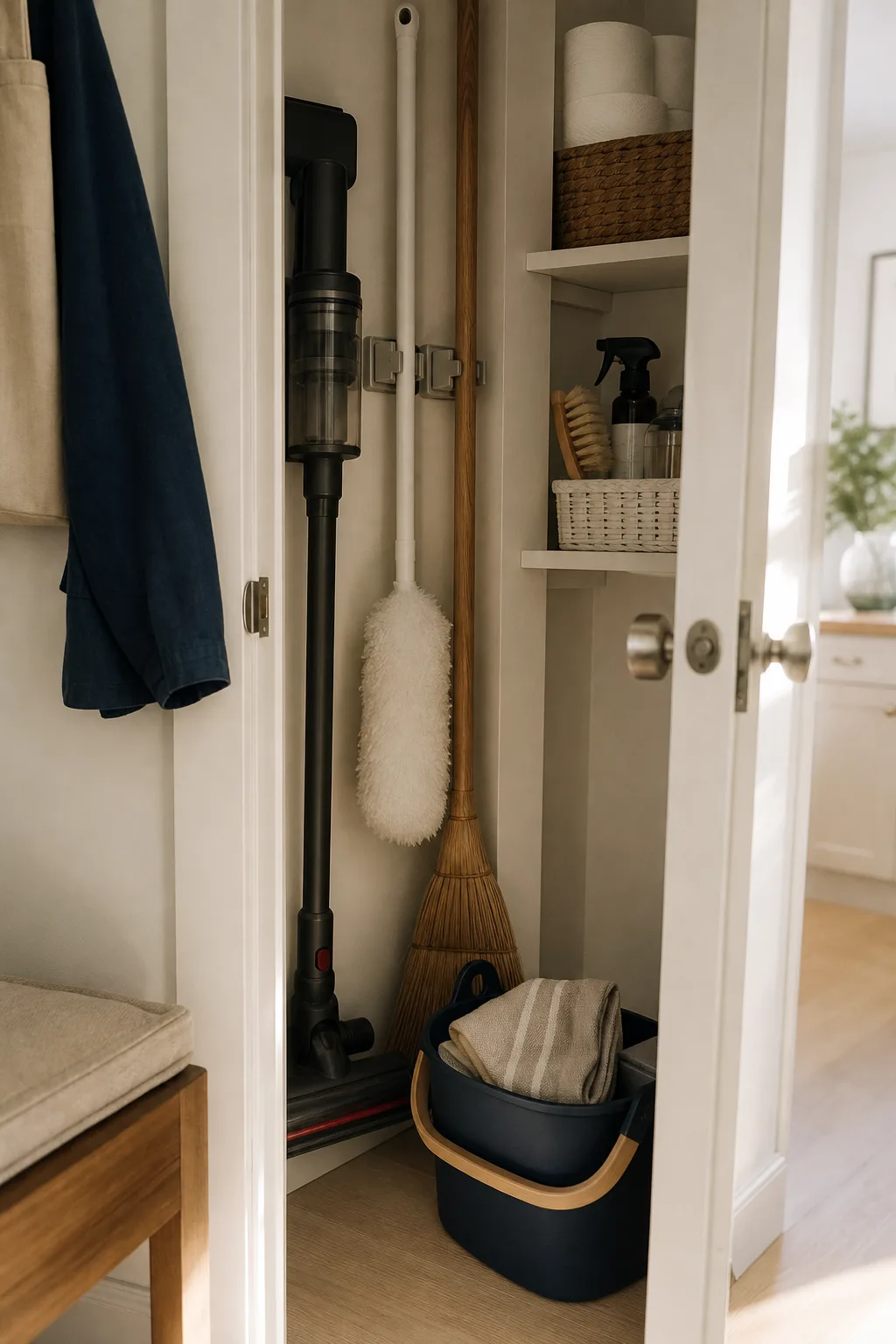
If your broom, mop, or vacuum currently leans against a wall somewhere random, relocating them to the entry closet solves two problems at once. It frees up space elsewhere and gives your cleaning tools a logical home near the door where you grab them before sweeping or heading to laundry rooms. Use an over-door hook or a tension-rod broom holder inside the closet to get tools vertical and off the floor. This is one of those apartment organization ideas that feels small but changes how functional your whole layout feels. It is especially useful in studio apartments where there is no utility closet to hide gear.
Tip: Keep a small caddy of cleaning supplies on the closet floor beside the tools so everything for a quick clean is in one grab.
12. Define the Entry Zone With a Rug to Signal the Space

In a studio apartment or open floor plan, there is often no architectural boundary between the front door and the living area. A distinct rug placed just inside the entry creates a visual zone that tells your brain this is where shoes come off and bags get dropped. Choose a rug with a low pile and a pattern or color that is different enough from your main area rug to read as a separate layer. This small space organization trick is one of the most underused because it costs little and requires no installation. It also protects your floors near the door, which landlords appreciate.
Tip: Size the entry rug to fit under the bench or rack legs if possible so the whole zone feels anchored rather than floating.
FAQ
How do I create a mudroom in a small apartment with no entryway?
Start by identifying the zone just inside your front door, even if it is only a few feet wide. Add a freestanding hook rack or over-door organizer for bags and coats, a boot tray or slim shoe rack for footwear, and a small tray or Command hook for keys. That three-layer system, vertical hooks, mid-level storage, and a floor anchor, is what makes a drop zone function like a mudroom without needing a dedicated room.
What are the best renter-friendly mudroom storage ideas?
The best renter-friendly storage options require no drilling and leave no permanent marks. Over-door organizers, Command strip hooks, freestanding coat racks, tension rods inside closets, and leaning pegboards are all solid choices. They come with you when you move and do not risk your security deposit.
Can I build a mudroom zone in a studio apartment?
Yes. In a studio, the key is using a rug to define the entry zone visually, then adding just one or two storage pieces that do not crowd the main living area. A slim console table or a compact bench with a freestanding hook rack above it is usually enough to create a functional drop zone that does not spill into the rest of the room.
How many shoes should I keep at my apartment entryway?
A good rule for small space organization is to keep no more than two pairs per person at the entry at one time. Everything else should rotate in and out from a closet or under-bed storage. A boot tray or defined shoe rack spot makes this limit easier to maintain because the boundary is physical, not just mental.
What is the most important home organization tip for a small entryway?
Give every item that lands at the door a specific home. Keys go on the hook, bags go on the rack, shoes go on the tray. When things have assigned spots, the area stays tidy almost automatically, even on busy mornings. The habit is more powerful than any storage product.
If even one of these ideas made your entry feel more possible, save this guide somewhere you can find it again. Setting up an entryway zone is one of those projects that takes an afternoon and pays off every single day. For more small apartment organization ideas sent straight to your inbox, the Nest and Narrow newsletter is a good place to start.