

My nightstand is roughly the size of a large hardcover book stacked on a small stool. That is not an exaggeration. When I moved into my current apartment, I had exactly one drawer, one shelf, and a surface the width of a cereal box to work with. What ended up on that surface told the full story of my bedtime chaos: a water bottle, two library books, a phone charger that slid off nightly, lip balm, and a candle I never lit.
Nightstand organization in a small bedroom is not about buying a bigger nightstand. It is about being deliberate with the vertical space, the surface, and the zones around your bed. Whether you are working with a true nightstand, a floating shelf, or a stacked crate you found at a thrift store, these apartment organization ideas will help you pare down and set up a bedside that actually supports rest.
Key takeaways
- Treat your nightstand like a one-task station: sleep prep only, nothing else earns a spot there.
- Vertical and wall-adjacent space counts even in a rental, with no-drill options like adhesive hooks and tension rods.
- Editing what lives on your nightstand is the single fastest small space organization win in a bedroom.
Why I Finally Dealt with My Nightstand
I spent two years knocking my water glass over in the dark because a tangle of cables and a stack of books had eaten my entire nightstand surface. It took one tray, two adhesive cable clips, and about fifteen minutes to fix it. I genuinely could not believe I had waited that long.
Step-by-step
Start with the Edit
1. Audit Everything Currently on Your Nightstand

Pull every single item off your nightstand surface and drawer before you organize anything. Sort into three piles: sleep-related, belongs elsewhere, and trash or donate. This one step reveals how much nightstand clutter is actually misplaced items from other rooms. In a small bedroom, your nightstand cannot afford to be a catch-all landing zone. Keeping only sleep-related items is the foundation of every other step here.
Tip: Org tip: Set a five-item limit for your nightstand surface. If a sixth item wants to live there, something else has to leave.
2. Define Your Nightstand Zones Before You Add Any Products
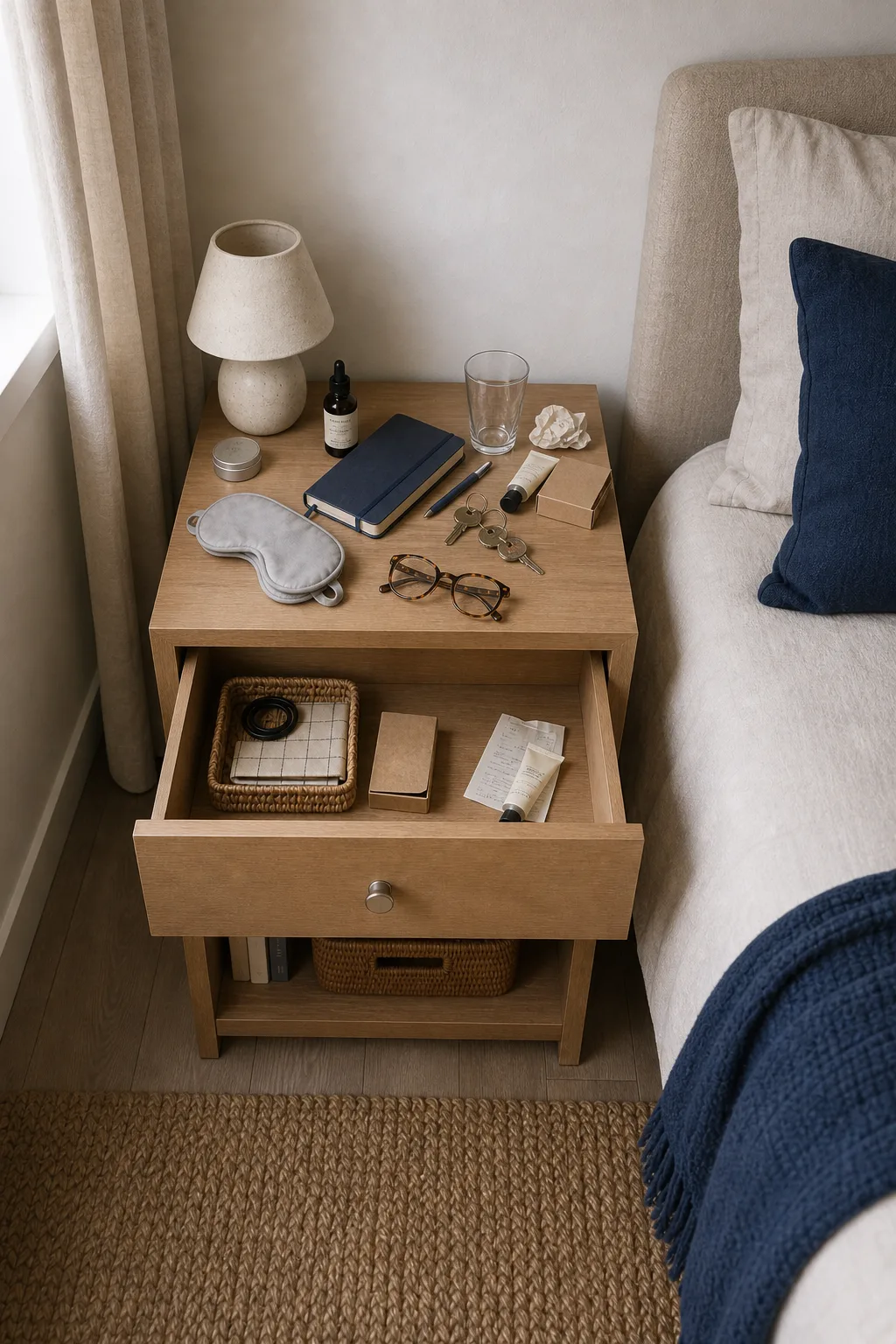
Think of your nightstand in three layers: the surface, the inside or shelf, and the vertical space beside or above it. Assign each zone one job. Surface holds what you reach for in the dark. The drawer or shelf holds items you use during a wind-down routine. The vertical zone handles charging or overflow. Zoning before buying prevents the common mistake of filling new organizers with the same old clutter. This is the core principle behind most home organization tips that actually stick.
Tip: Org tip: Sketch your three zones on a sticky note before purchasing any organizer. It makes shopping much faster.
Surface Control
3. Use a Small Tray to Contain Your Surface Items

A tray is one of the simplest nightstand organization small bedroom solutions because it creates a visual boundary on the surface. Everything inside the tray belongs there; anything that does not fit does not get a spot. A four-inch by eight-inch tray is enough for a phone, lip balm, and a small glass of water. When you make the bed in the morning, you move one tray instead of twelve loose items. Look for cork, ceramic, or woven trays at thrift stores to keep the cost low.
Tip: Org tip: Choose a tray with low sides so you can grab items in the dark without knocking anything over.
4. Corral Cords with a Clip or Adhesive Cable Holder
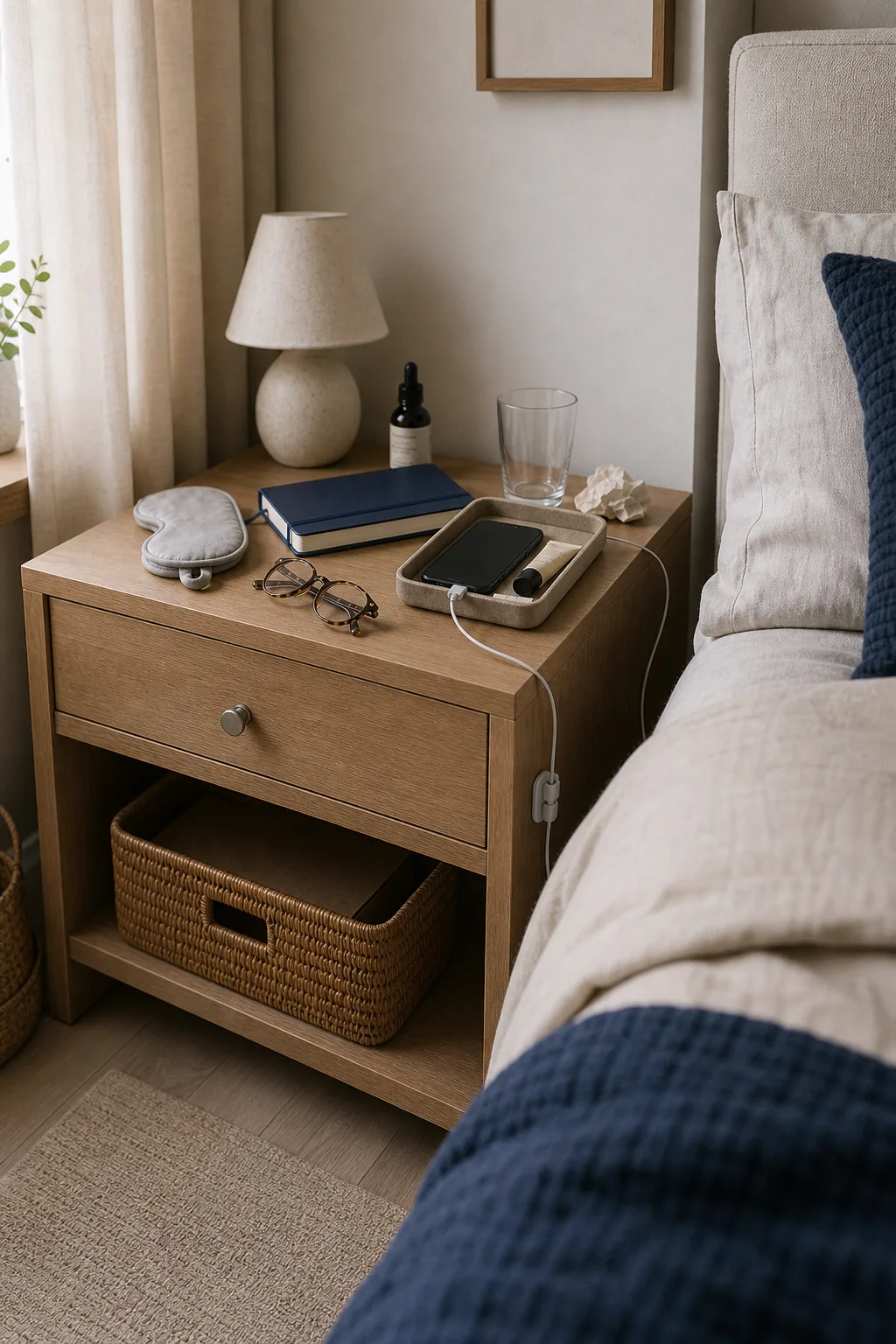
A charging cable that slides off the nightstand every night is one of the smallest but most consistent frustrations in a small bedroom. Adhesive cable clips attach to the side of your nightstand and hold the cord in place when your phone is not plugged in. These are renter friendly storage solutions because they remove without damage and cost under five dollars for a pack. Run the cord under the tray or along the edge of the surface to keep things looking tidy. This is a small detail that makes the whole setup feel intentional.
Tip: Org tip: Thread the cable through the clip before you need it at night so it is always within reach in the dark.
Inside the Drawer or Shelf
5. Add a Small Drawer Organizer to Separate Sleep Essentials
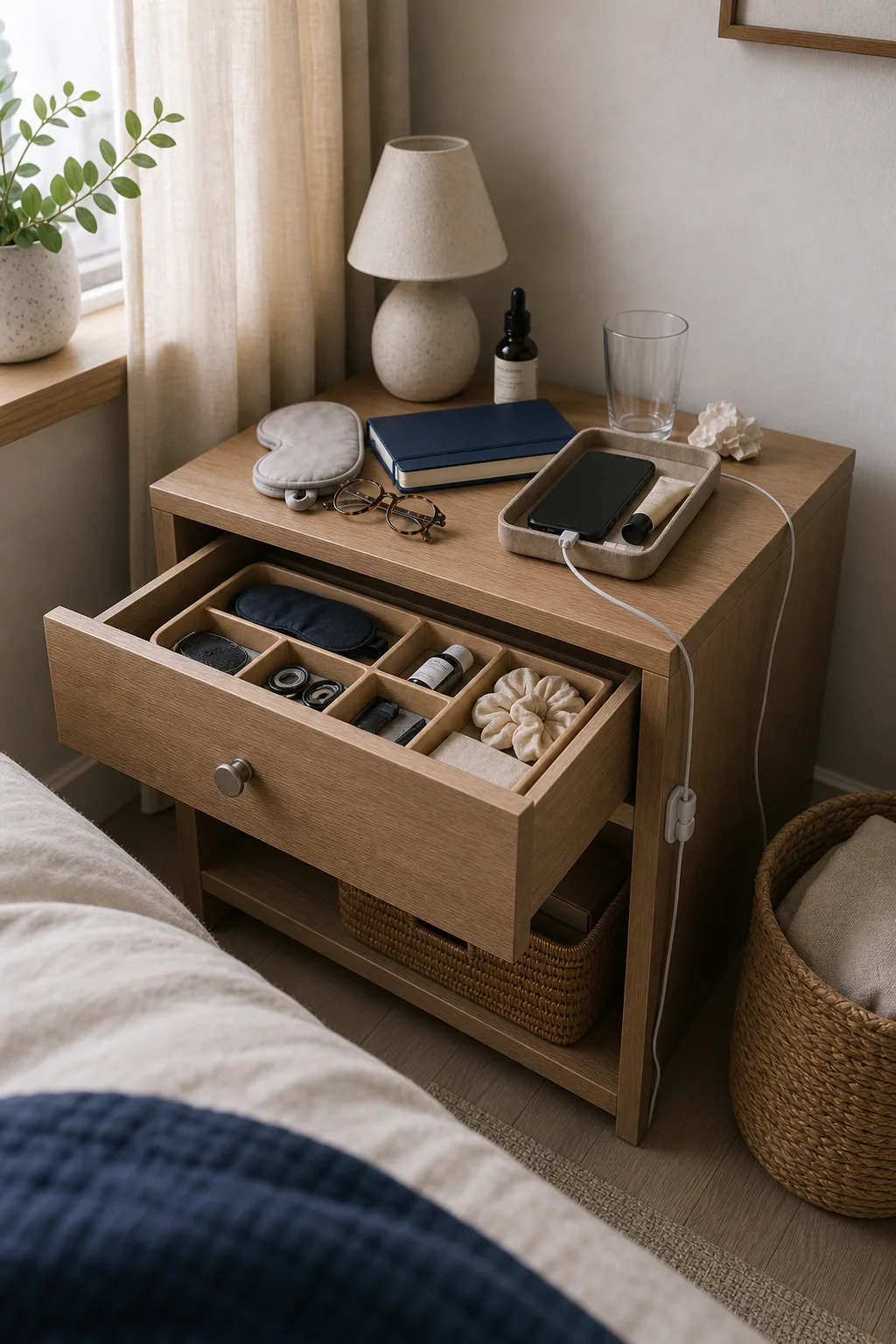
If your nightstand has a drawer, it is probably a loose jumble of items that never get used because nothing is findable. A simple set of small bins or a divided bamboo tray inside the drawer changes that immediately. Assign one section to sleep aids like earplugs or a sleep mask, one to medications or lip balm, and one to whatever you actually read or use before bed. Organization small bedroom spaces depends heavily on contained zones rather than open storage. Even a repurposed cutlery tray works perfectly here.
Tip: Org tip: Measure your drawer depth before buying an organizer. Many standard bamboo trays are too tall for shallow nightstand drawers.
6. Store Your Current Read Vertically in a Small Bookend or Caddy
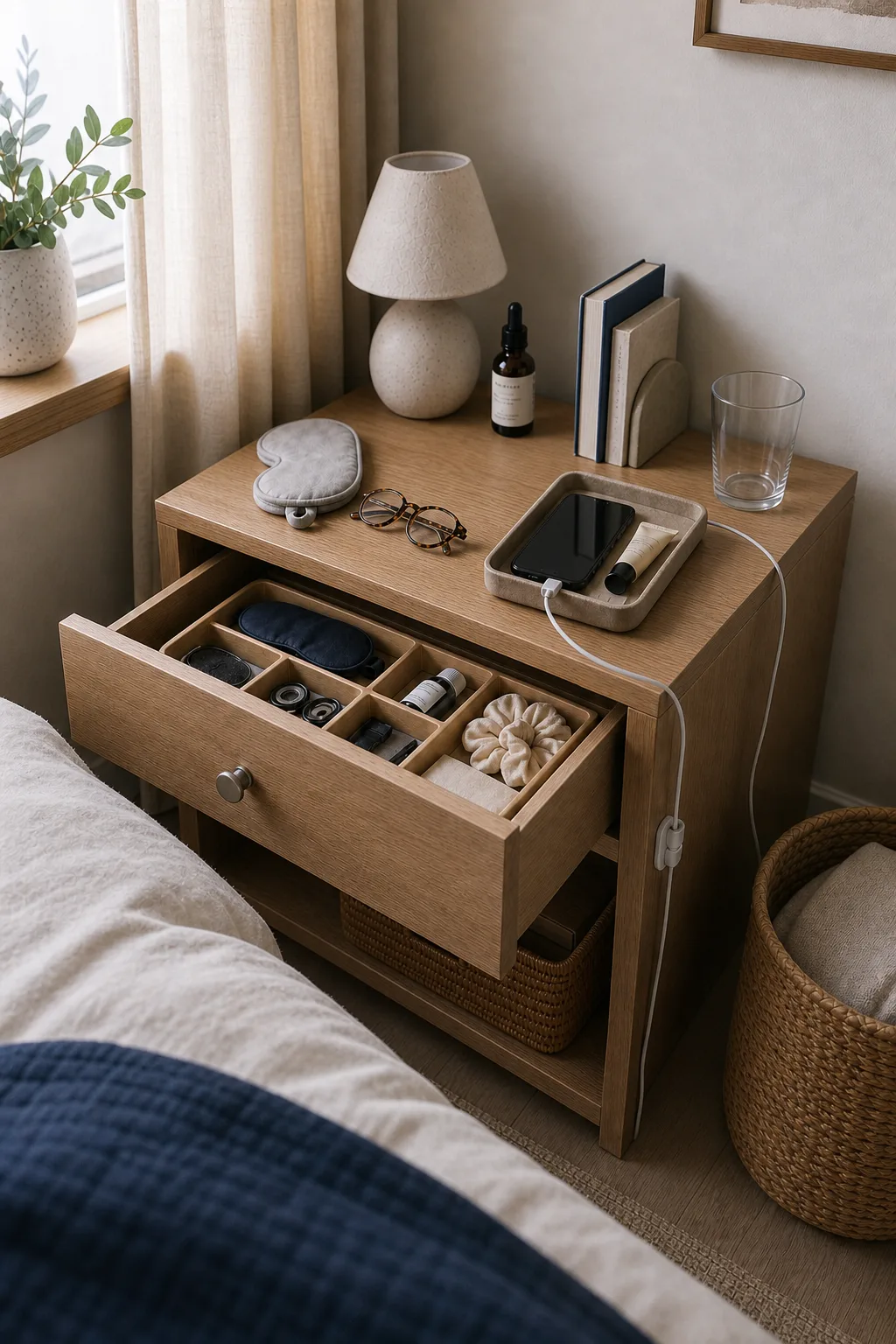
Books stacked flat take up significant surface space and make reaching for your water glass a nightly obstacle course. A small bookend at the back corner of your nightstand or a slim bedside caddy that hangs over the mattress keeps one or two books upright and off the main surface. Caddy-style organizers are especially useful in apartment organization because they add storage without touching walls or floors. Limit yourself to two books maximum so the caddy does not become a second shelf of clutter.
Tip: Org tip: Return finished books to your shelf or a bag for donation the same day you finish them so they never pile up.
Vertical and Wall Space
7. Mount a No-Drill Adhesive Shelf Above Your Nightstand
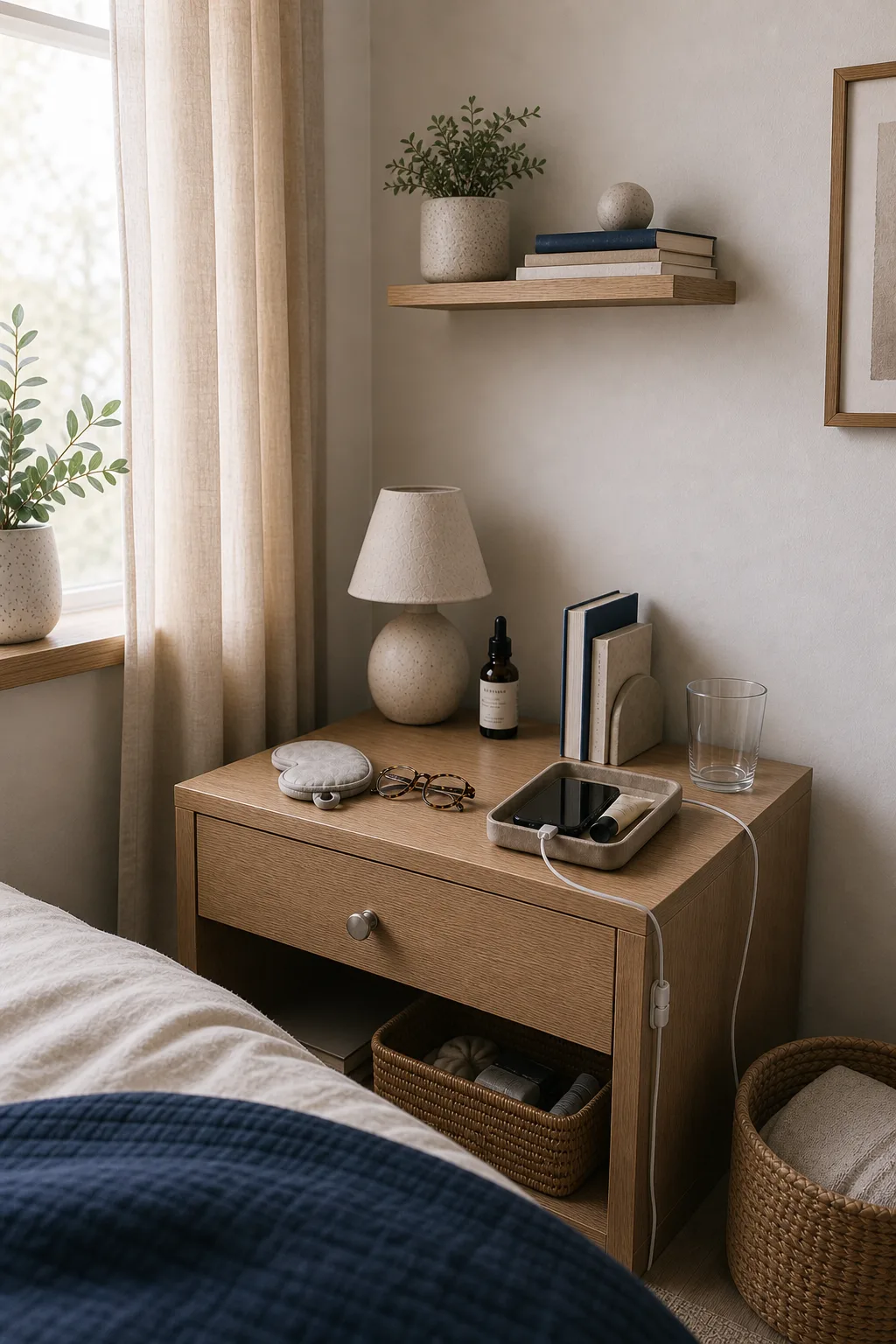
If your nightstand surface is tiny or nonexistent, a small adhesive floating shelf mounted above it at arm's reach gives you a second tier of storage without calling the landlord. Most adhesive shelves rated for five to ten pounds hold a lamp, a small plant, or a stack of books with no problem. This is one of the more impactful no-drill apartment organization ideas because it reclaims vertical wall space that would otherwise go unused. Measure the width of your nightstand first so the shelf does not extend awkwardly past the furniture below.
Tip: Org tip: Position the shelf at seated arm height so you can reach it comfortably without sitting up fully in bed.
8. Hang an Adhesive Hook for Headphones or a Sleep Mask
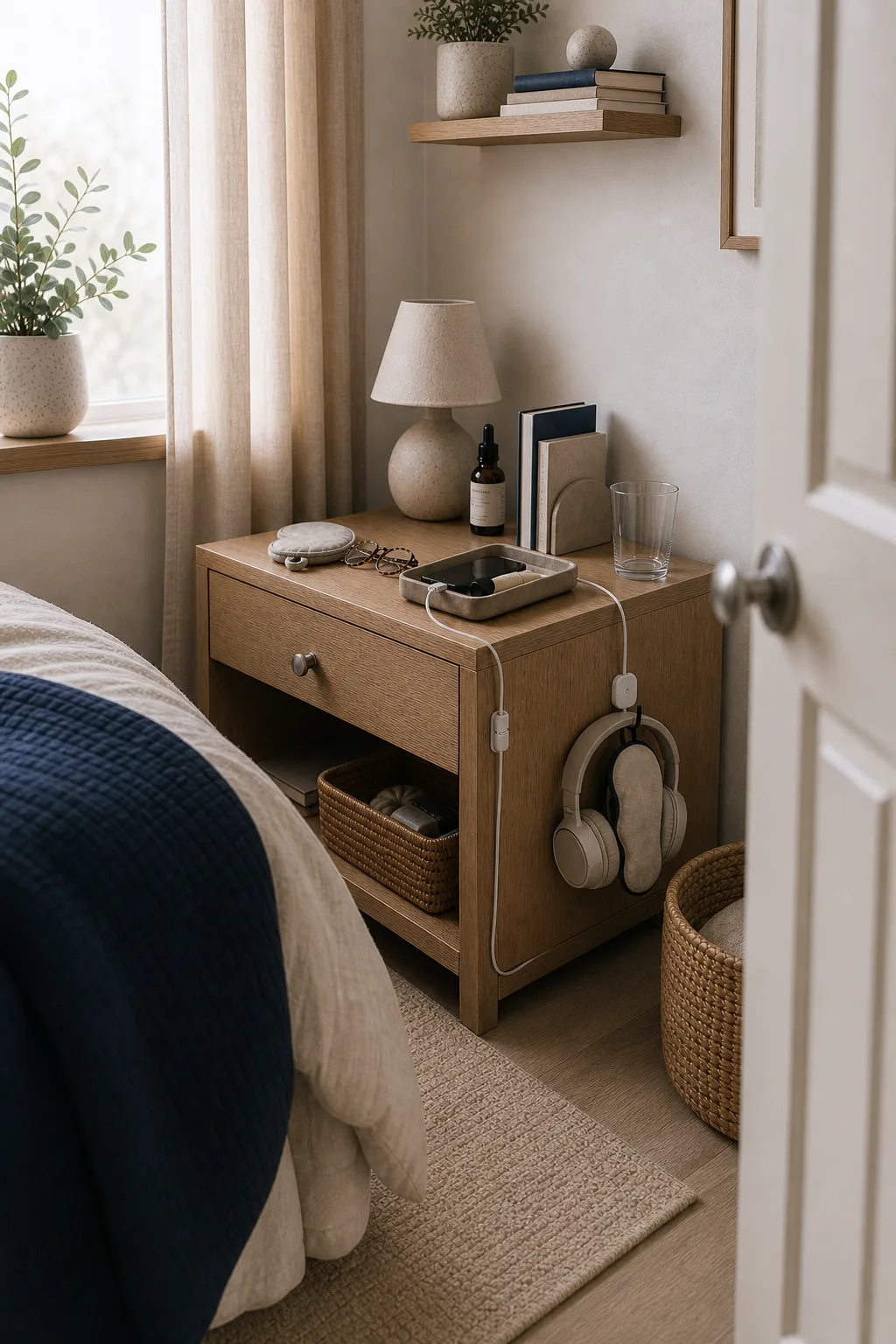
Headphones and sleep masks are classic nightstand clutter because they have no natural place to land. A single adhesive hook on the side panel of your nightstand or on the wall just beside it gives these items a permanent home. This keeps them off the surface and out of the drawer while remaining easy to grab. Adhesive hooks are one of the most versatile renter friendly storage tools you can own and cost almost nothing. Remove them cleanly with dental floss and a bit of warm air from a hairdryer when you move.
Tip: Org tip: Use a double-sided hook so you can hang headphones on one side and a sleep mask on the other.
Furniture Swaps and Renter-Friendly Upgrades
9. Swap a Lamp for a Clip-On or Wall-Mounted Reading Light

A table lamp eats a significant portion of nightstand real estate. Swapping it for a clip-on reading light that attaches to your headboard or a small adhesive-backed wall sconce frees up the entire back third of your surface. Many clip lights are USB-rechargeable so there is no extra cord to manage. This is a straightforward home organization tip that also improves function because a clip light directs light exactly where you need it without illuminating the whole room. It is especially useful in a studio apartment where your sleeping space doubles as your living space.
Tip: Org tip: Choose a light with a warm color temperature setting so it does not disrupt your sleep the way bright white light can.
10. Consider a Bedside Caddy If You Have No Nightstand at All

Many small bedrooms and studio apartments have beds pushed against walls or furniture arrangements that leave no room for a traditional nightstand. A fabric bedside caddy that slides between the mattress and box spring gives you pockets for a phone, remote, book, and glasses without occupying any floor space. This is one of the most practical small space organization solutions for renters because it costs under twenty dollars and moves with you. Look for caddies with a sturdy spine so the pockets stay upright and accessible.
Tip: Org tip: Limit yourself to filling three of the pockets or the caddy becomes just as cluttered as a surface.
Maintenance and Long-Term Habits
11. Relocate Items That Are Not Actually Part of a Sleep Routine

Notebooks, work documents, skincare with five steps, snacks, and charging cables for devices you do not use at night have no business on a nightstand in a small bedroom. Identify what truly happens in your wind-down routine versus what has just accumulated there. Skincare belongs in the bathroom, work items belong at your desk, and snack wrappers belong in the trash. Nightstand organization small becomes sustainable only when the nightstand holds a focused set of items rather than a rotating collection of whatever you carried in that day.
Tip: Org tip: Do a ten-second nightstand sweep every morning when you make the bed to prevent slow accumulation.
12. Do a Monthly Reset to Keep the System Working

Even a well-organized nightstand drifts over time. A monthly five-minute reset where you empty the tray, wipe the surface, check the drawer, and remove anything that has migrated in keeps the system working without a full reorganization. This habit is especially important in a small bedroom where clutter compounds quickly because there is no extra surface to absorb the overflow. Set a recurring reminder on your phone for the first Sunday of each month. Consistent small resets are what separate apartment organization ideas that last from ones that fall apart after two weeks.
Tip: Org tip: Pair the monthly reset with another existing habit like changing your pillowcase so it becomes automatic.
FAQ
What should actually go on a nightstand in a small bedroom?
Stick to items that are part of your actual sleep routine: a glass of water, your phone or alarm, a book you are currently reading, and one or two small personal items like lip balm or glasses. If an item is not used between getting into bed and waking up, it probably belongs somewhere else.
What if I do not have a nightstand at all?
A bedside caddy that slides under the mattress, a floating adhesive shelf on the wall beside your bed, or even a sturdy crate turned on its side all work as nightstand alternatives in a small or studio apartment. The key is picking one solution and committing to its limited storage capacity rather than layering multiple options.
How do I organize a nightstand without drilling into walls?
Adhesive hooks, adhesive cable clips, adhesive floating shelves, and over-mattress bedside caddies are all completely no-drill options. Most adhesive products rated for the weight you need remove cleanly from painted walls, making them ideal renter friendly storage tools.
How do I keep my nightstand from getting cluttered again?
A ten-second surface sweep every morning and a five-minute drawer reset once a month prevents most drift. The bigger habit is resisting the urge to set random items on the nightstand as you move through your bedroom. If something does not belong in a sleep zone, make yourself walk it to its actual home right away.
Save this guide so it is easy to reference when you are ready to tackle your bedside setup. And if you want more practical small space organization ideas sent straight to your inbox, the Nest and Narrow newsletter covers exactly that, one calm, useful tip at a time.