

When I adopted my cat, I did not fully account for how much gear one small animal would require. Bags of food, treat pouches, a litter box, toys, a carrier, grooming tools, and backup supplies somehow multiplied across every surface in my studio. It did not take long before I had to get serious about pet organization in my small apartment because the clutter was making the whole place feel chaotic.
The good news is that small space organization for pet supplies works with the same principles as organizing anything else in an apartment: assign every item a home, use vertical space, and choose containers that do double duty. These 12 apartment organization ideas are renter-friendly, low-drama, and built for real apartments where you share the square footage with a furry roommate.
Key takeaways
- Assign every pet supply a dedicated zone so items stop drifting across your apartment and landing on whatever surface is closest.
- Vertical storage, cabinet doors, and under-furniture clearance are the most underused spots in a small apartment for pet organization.
- Renter-friendly storage options like tension rods, over-door organizers, and freestanding units let you organize without drilling a single hole.
How I Finally Got My Cat's Stuff Under Control
For the first year of having my cat, her supplies were in four different rooms and I still could not find the nail clippers when I needed them. I finally committed to one closet bin for all the random stuff and a low basket for toys, and that two-step system changed how the whole apartment felt. It is not perfect but everything has a place, and that is enough.
Ideas that work in small spaces
Kitchen: Food and Feeding Supplies
1. Decant Pet Food into an Airtight Canister
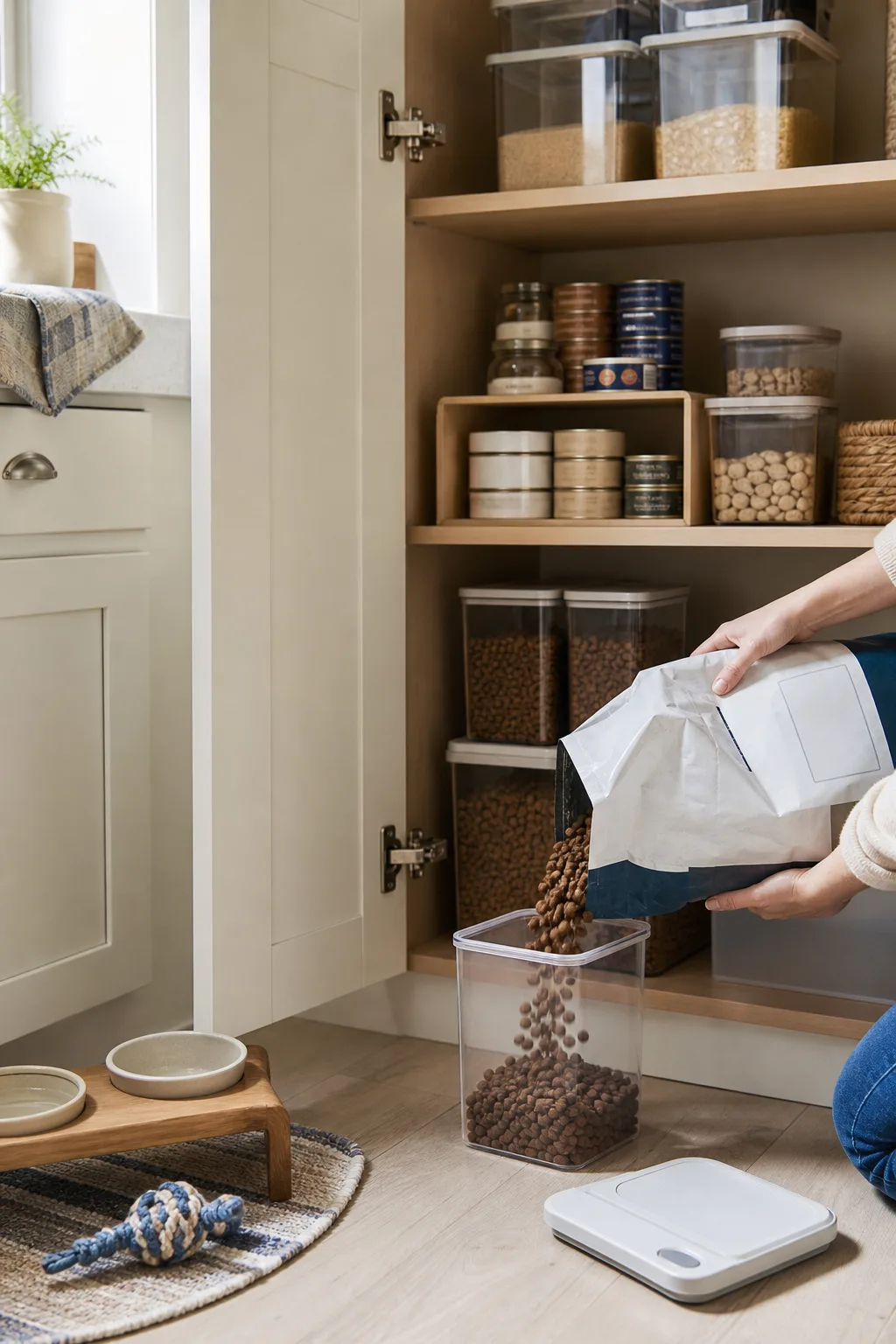
A large bag of pet food sitting open on the kitchen floor is both a space problem and a pest risk. Transfer dry food into a stackable airtight canister and store it in a low cabinet or pantry corner. Canisters with a straight rectangular shape stack better than round ones and waste less shelf space. Label the canister with the brand and feeding instructions so you are not digging through the trash to check the bag. This one swap makes kitchen organization feel noticeably cleaner.
Tip: Look for canisters with a locking lid and a small scoop that stores inside the lid so you are not hunting for it at every mealtime.
2. Create a Dedicated Feeding Station with a Tray
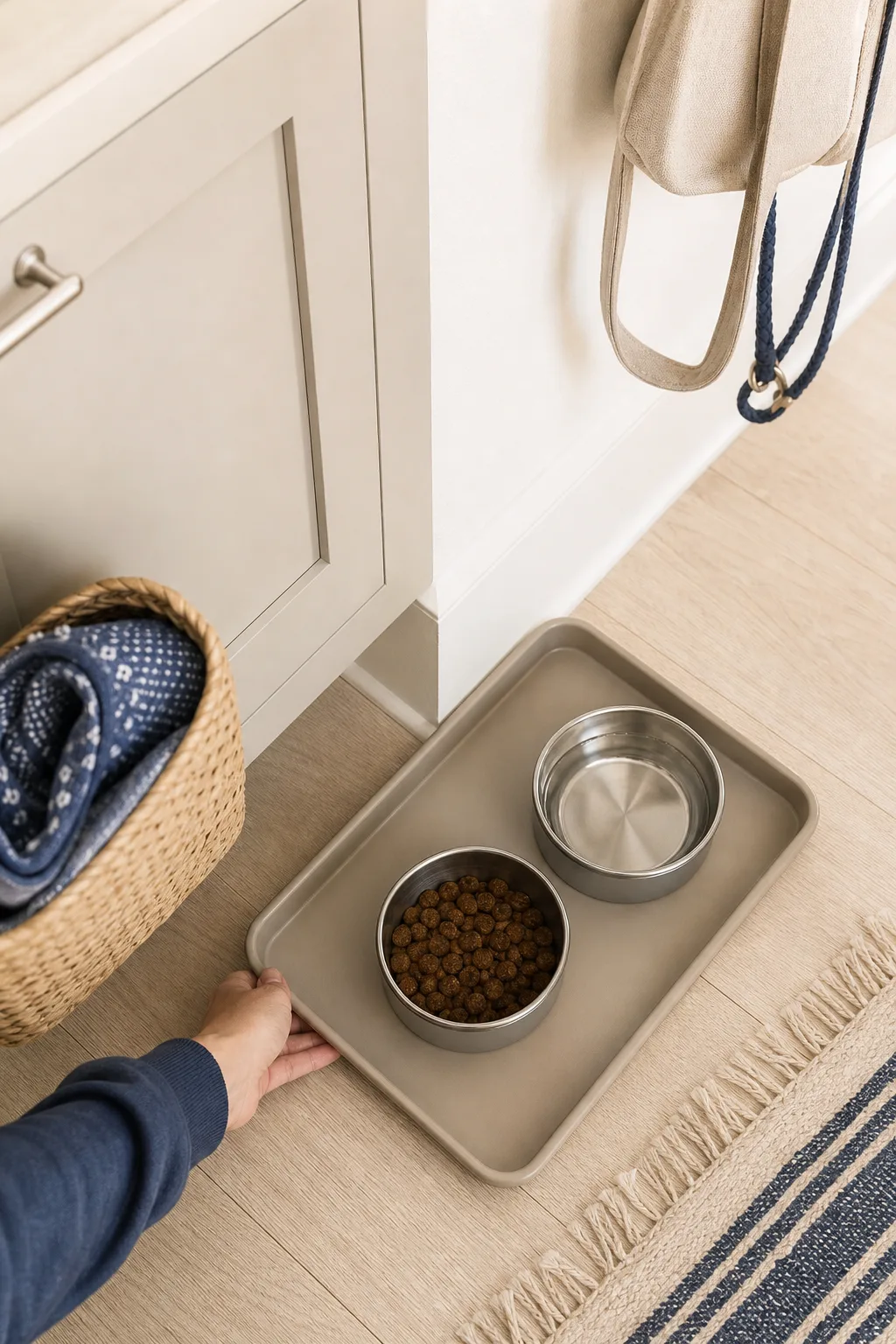
A defined feeding station keeps food and water bowls from wandering and protects your floor from spills and splashes. A low-sided tray, a silicone mat, or even a small baking sheet corrals the bowls and gives that corner a finished look. Tuck the tray along a wall or under a small floating shelf to use vertical space above it for treats or backup bowls. This approach works well in studio apartments where the kitchen and living area share one open room.
Tip: A silicone mat with a lip is easier to clean than a fabric one and handles water bowl overflow without soaking through to the floor.
3. Use a Cabinet Door Organizer for Treats and Small Supplies

The inside of a kitchen cabinet door is one of the most overlooked storage spots in any apartment. An over-door organizer or a set of adhesive hooks with small baskets holds treat pouches, pill pockets, measuring scoops, and backup can openers without taking up shelf space. This is a renter-friendly storage move because most over-door organizers require no drilling at all. Keep the cabinet closest to your feeding station for the most convenient access.
Tip: Clear pouches or small bins on the door let you see what you have at a glance so you are not accidentally buying duplicates at the pet store.
Entryway: Walk Gear and Go Bags
4. Wrangle Leashes and Collars at the Entryway
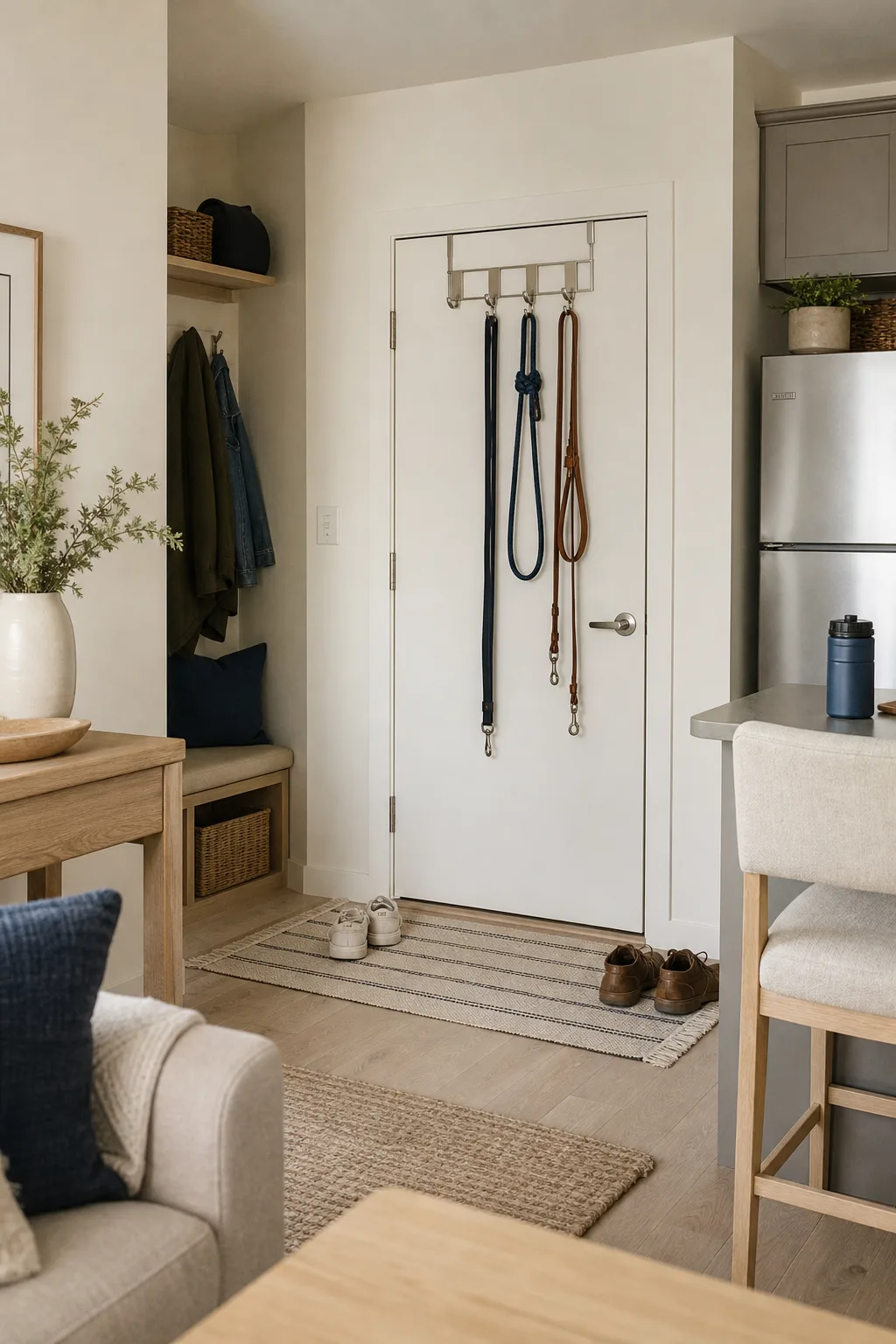
Leashes left on the floor near the front door become a tripping hazard and add to that just-walked-in chaos. A set of adhesive hooks or a small over-door hook rack on the inside of the front door gives every leash and collar a consistent home. If your building allows it, a narrow mounted hook strip near the door works even better. This is one of the most practical home organization tips for dog owners in small apartments because it also speeds up the walk routine.
Tip: Hang a small bag or pouch on one of the hooks to hold poop bags, hand sanitizer, and your dog's ID tag backup so the whole walk kit is in one spot.
5. Pack a Pet Go Bag on a Single Hook
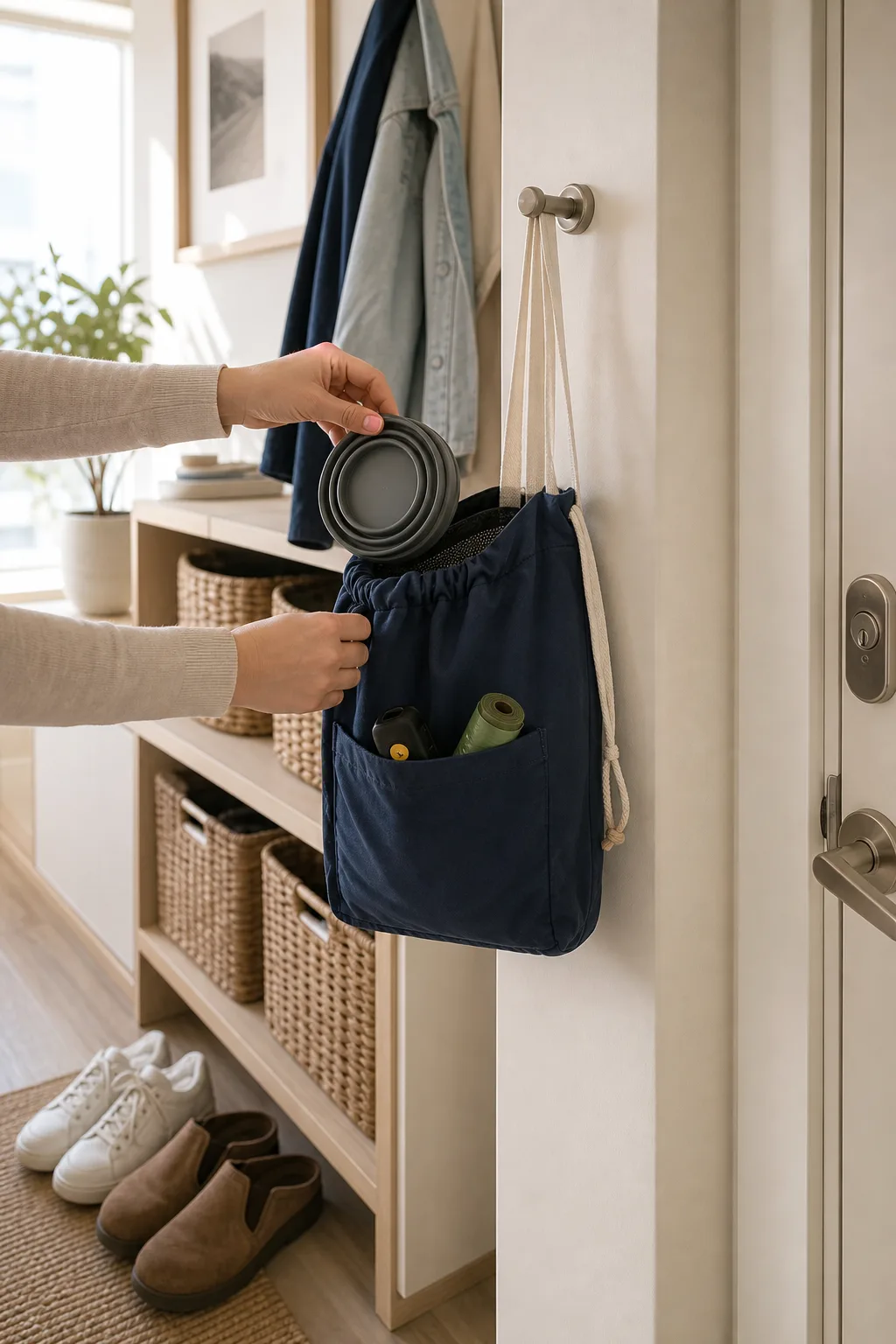
A small tote or drawstring bag hung at the entryway can hold everything you grab on the way out: treat pouch, clicker, waste bags, and a collapsible water bowl. When it all lives in one bag on one hook, you stop rummaging through the junk drawer before every walk. This is a simple pet organization small space strategy that also works for pet emergencies when you need to grab supplies fast. Replenish the bag during your weekly reset so it is always ready.
Tip: A lightweight mesh bag works better than a heavy canvas tote because you can see the contents without digging and it weighs almost nothing added to the leash.
Closet and Hidden Storage
6. Store the Pet Carrier Under the Bed or Sofa
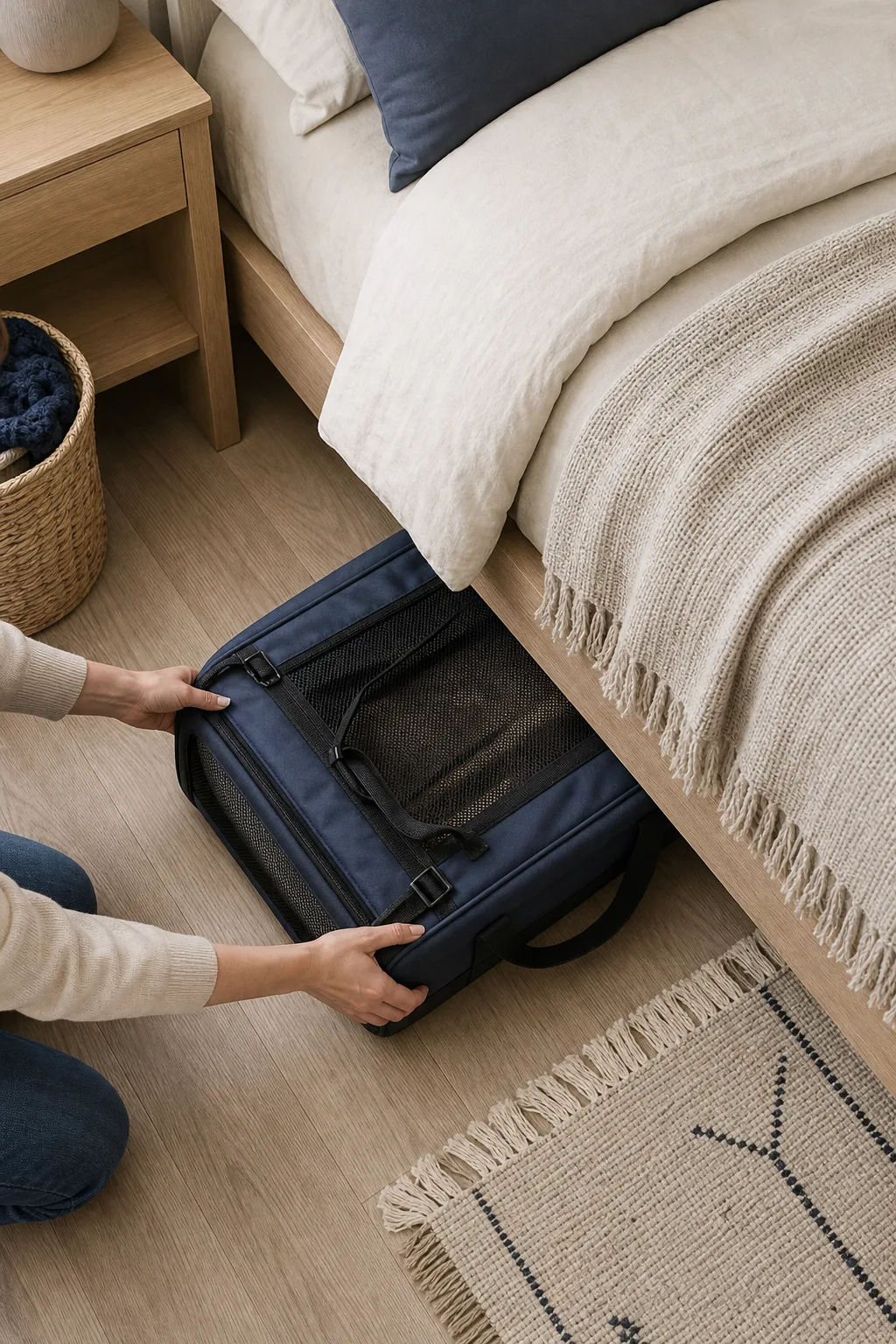
A pet carrier is one of the bulkiest items a small apartment pet owner deals with and it only gets used a few times a year. Slide a soft-sided carrier flat under your bed or sofa using the clearance you already have. If you use a hard carrier, measure the clearance first and consider whether it stores better vertically in a closet corner. Some pet owners leave the carrier out with a soft blanket inside as a hideaway, which eliminates the storage problem entirely.
Tip: Attach a luggage tag to the carrier handle with your pet's name and your contact info so it doubles as a piece of emergency identification.
7. Dedicate One Closet Bin to All Pet Supplies
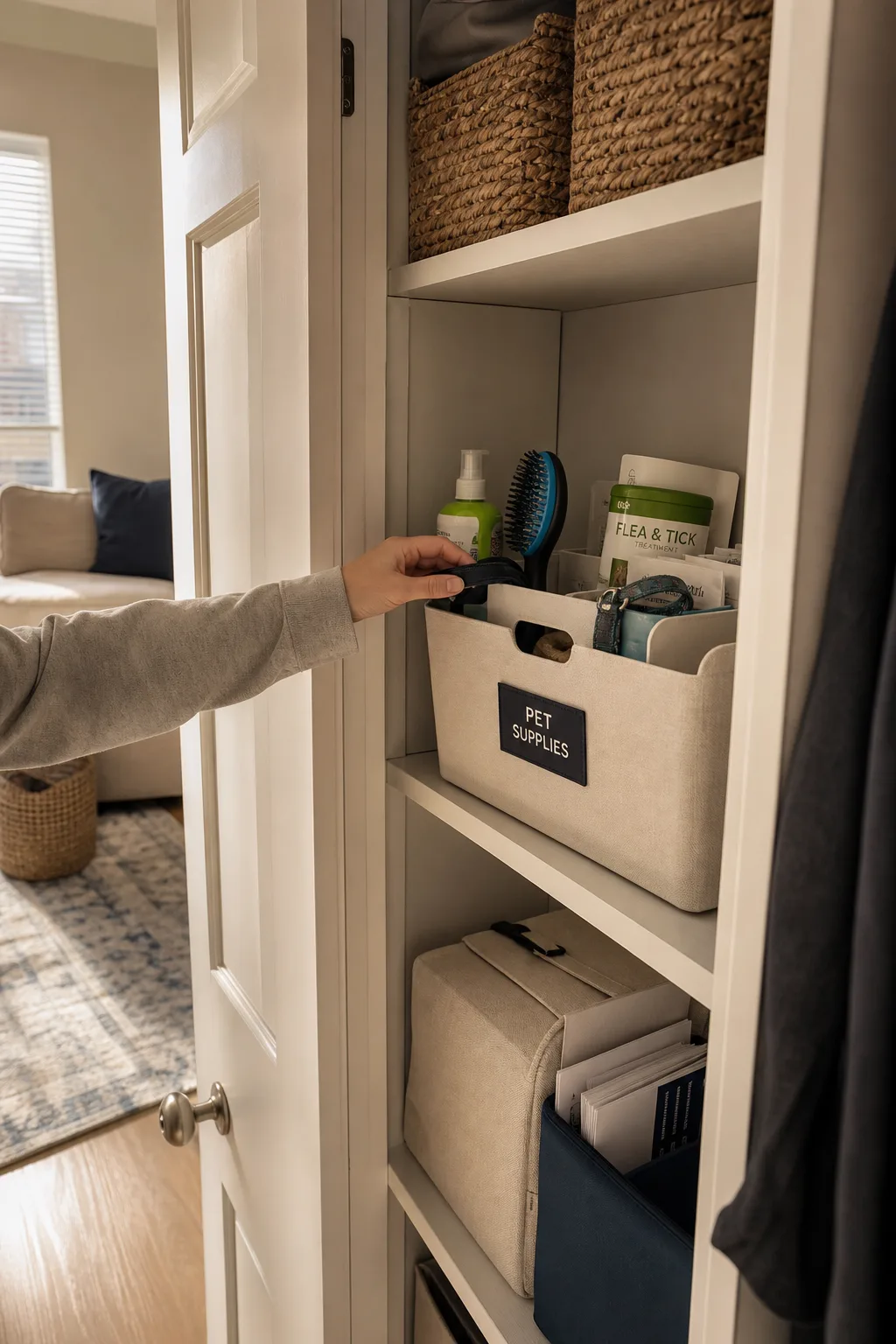
A single labeled bin on a closet shelf corrals grooming tools, backup flea treatments, spare collars, and vet paperwork so none of that stuff migrates to your nightstand or kitchen counter. Use a bin with an open top or a lid with cutouts so it is easy to drop things in without fussing. This kind of apartment organization idea works because it creates one fixed address for everything miscellaneous. When the bin gets full, that is your signal to edit, not to expand to a second bin.
Tip: Keep a small folder or zip pouch inside the bin for vet records, vaccination papers, and your pet's microchip number so you always know where to find them.
Living Area: Toys and Comfort Items
8. Contain Toys in a Low Basket with One Rule
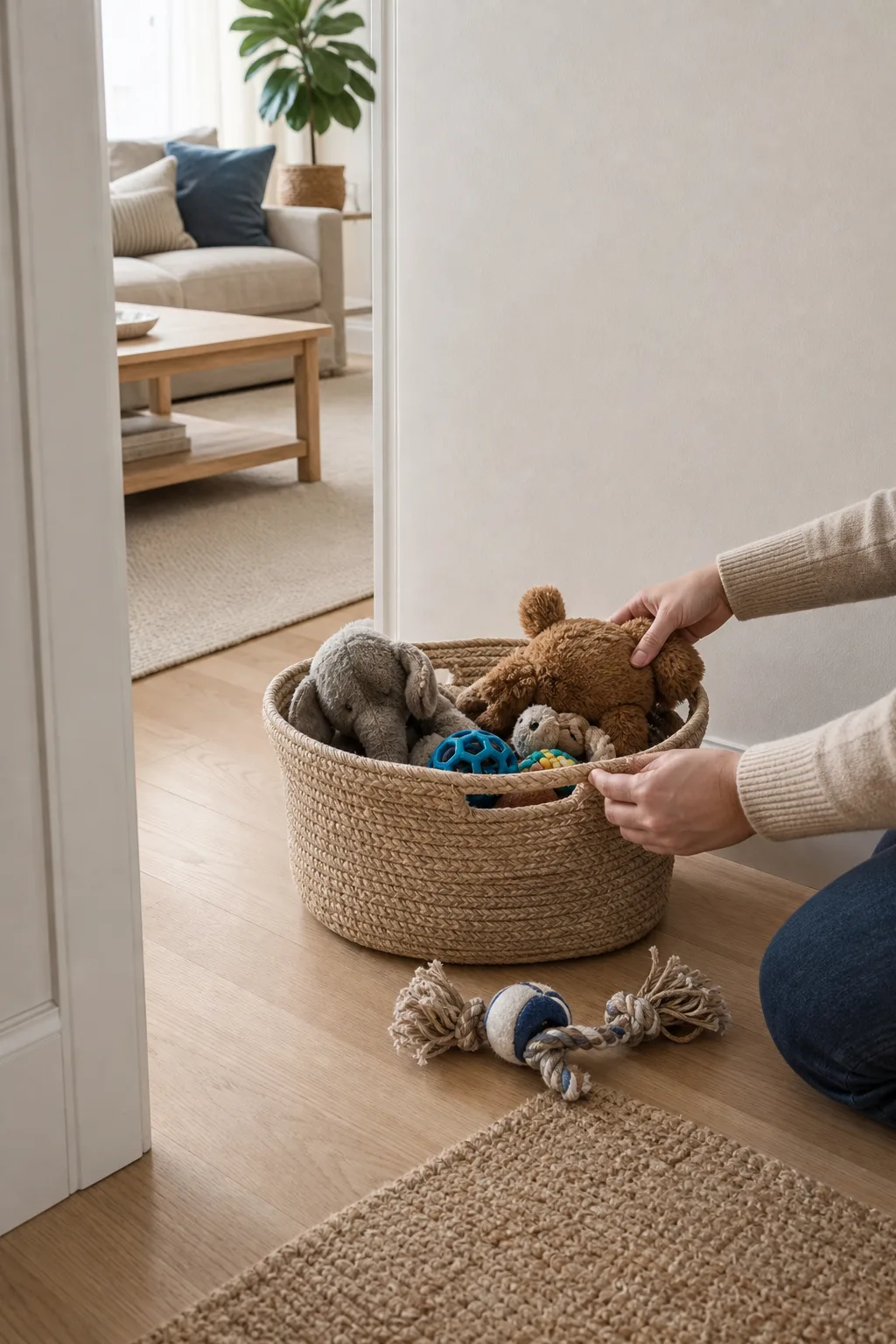
Pet toys multiply fast and they end up everywhere unless you give them a boundary. A low, open basket on the floor in the living area lets your pet dig through it and also makes it easy to toss toys back in after a play session. The rule: if it does not fit in the basket, something leaves the basket. This kind of small space organization works because it sets a physical limit that you do not have to think about. A woven seagrass basket or a simple fabric cube bin both look intentional rather than like overflow.
Tip: Rotate toys by moving half the basket to a closet bin and swapping them out monthly. Your pet will engage with familiar toys like they are new again.
9. Choose Pet Furniture That Doubles as Storage

An ottoman with a lift-off lid stores blankets, spare toys, or grooming supplies while also serving as a seat or coffee table. A cat tree with a base that includes a small shelf or hammock reduces the number of separate cat items you need on the floor. In a studio apartment, every furniture piece should justify its footprint by doing more than one job. Pet organization in a small apartment home gets much easier when the storage is built into the furniture you already need.
Tip: Measure your space before buying any pet furniture and prioritize vertical height over floor footprint so the room still feels open.
Bathroom: Litter and Grooming
10. Build a Litter Box Nook Without Renovating
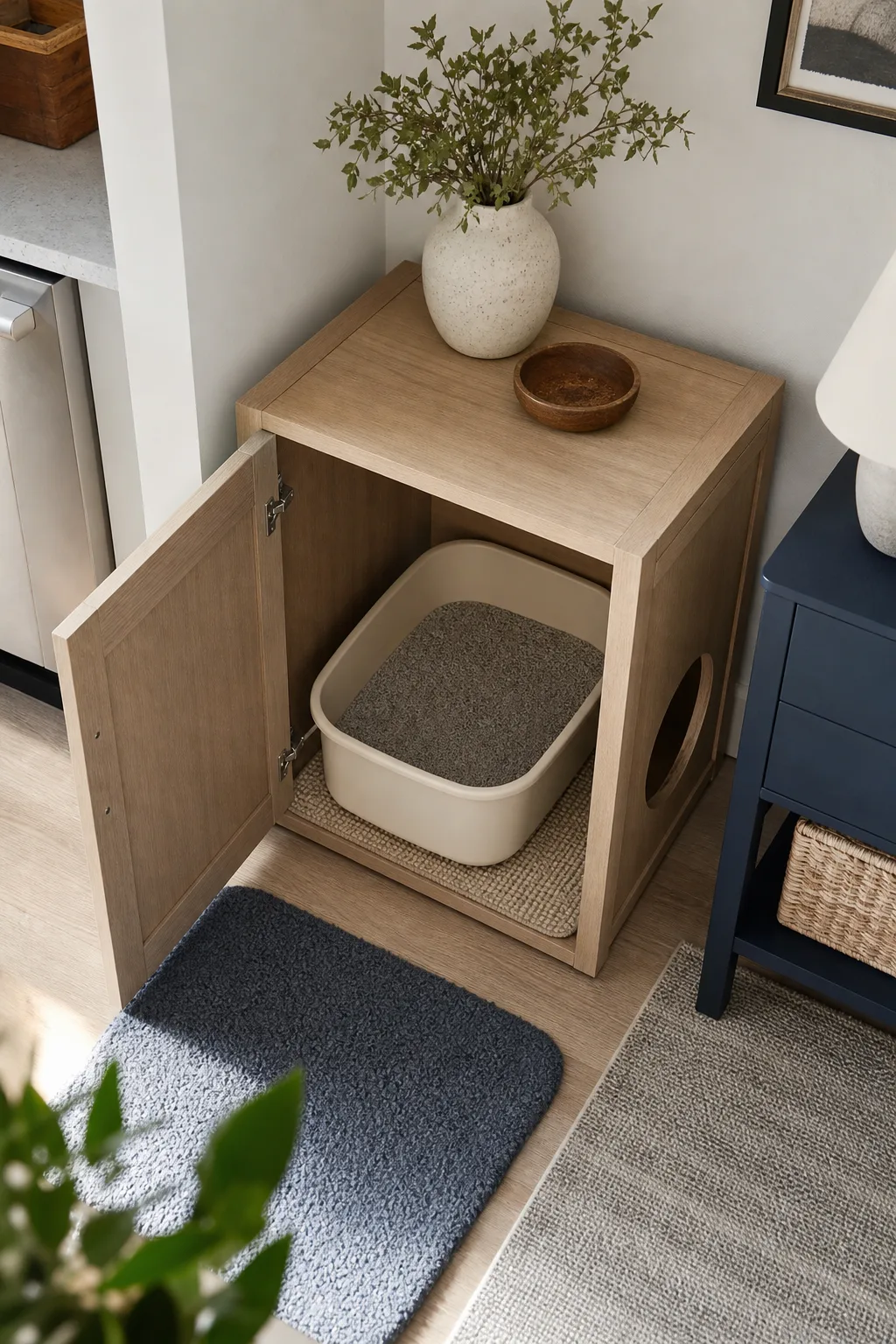
The litter box is the hardest pet supply to hide and the one that matters most for the smell and feel of a small apartment. A freestanding cabinet with a hole cut in the side creates a concealed litter station without any permanent changes, which makes it a solid renter-friendly storage solution. If that feels like too much, an end table with open sides positioned in a bathroom corner gives the box a home and reduces scatter on the surrounding floor. Add a small mat just outside the opening to catch litter tracked out.
Tip: Place a wall-mounted air freshener or a small jar of baking soda on the shelf above the cabinet to handle odor at the source rather than masking it across the room.
11. Keep Grooming Tools in a Bathroom Drawer Organizer
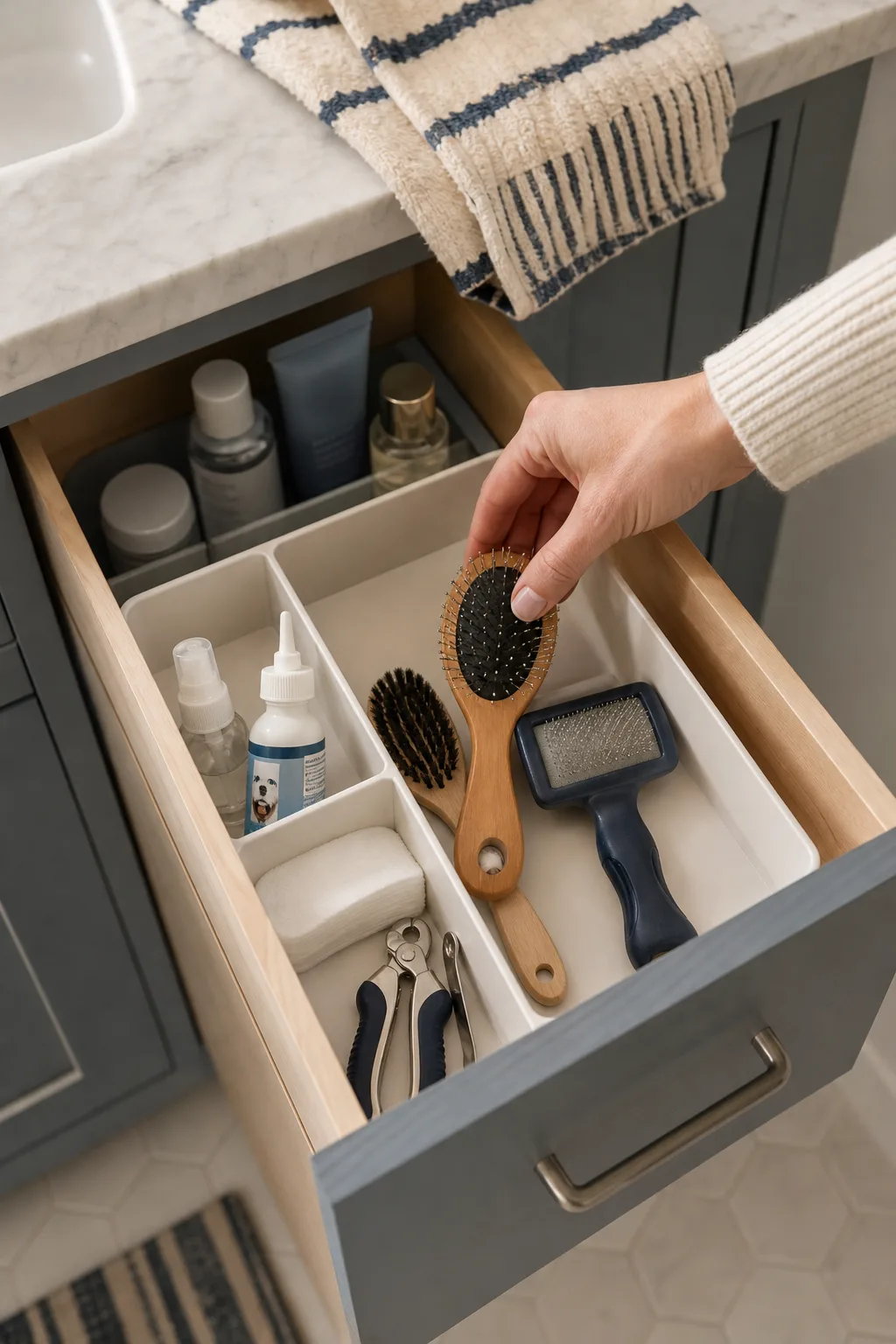
Pet brushes, nail clippers, ear cleaner, and dental wipes can share bathroom drawer space with a simple divider insert. A single divided organizer keeps pet grooming tools separate from your own toiletries without needing a whole extra drawer. If your bathroom has no drawer space, a small labeled pouch stored under the sink works just as well. Keeping grooming tools in the bathroom makes the most logical sense because cleanup is already built into that room.
Tip: Do a quick inventory of pet grooming products every couple of months and toss anything expired or unused so the drawer does not silently fill up.
Cleaning Storage: Pet Mess Essentials
12. Store Pet Cleaning Supplies with Your Regular Cleaning Kit
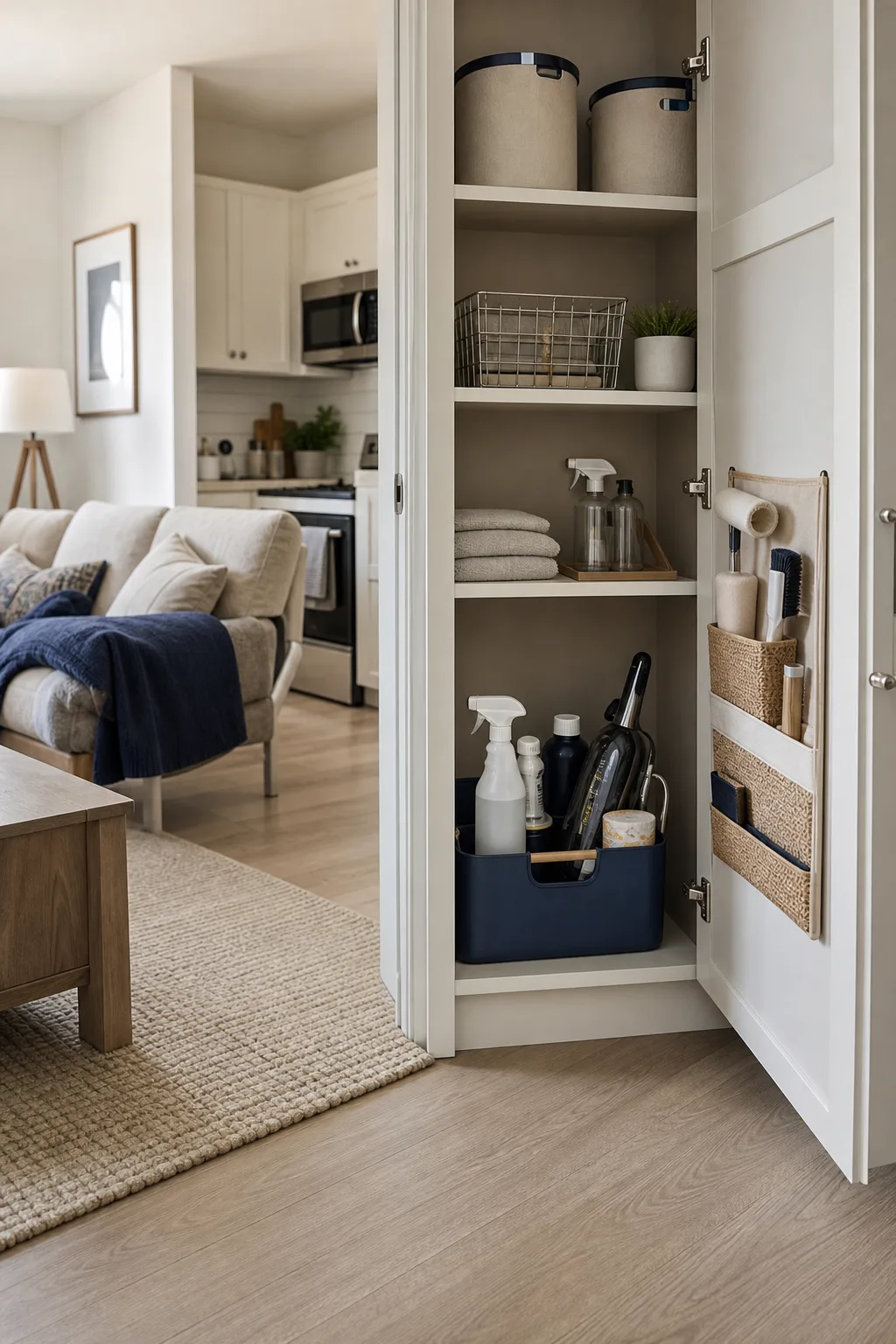
Enzyme cleaner for accidents, lint rollers, and a handheld vacuum for pet hair belong in your cleaning storage area rather than scattered across different rooms. Keeping them together means you can grab what you need fast when an accident happens instead of hunting through the apartment. A small caddy or bin on the cleaning shelf specifically for pet messes makes the whole system more intuitive. This is one of those home organization tips that feels minor but reduces a lot of daily friction for pet owners in small apartments.
Tip: Keep a mini lint roller on your entryway hook or in your bag as well so you can do a quick pass before leaving the apartment without going back to the cleaning closet.
FAQ
How do I organize pet supplies in a studio apartment with no extra storage space?
Focus on multitasking furniture first: an ottoman with interior storage, a cat tree with built-in shelves, or a bench with a lift lid near the door. Then use vertical real estate by adding an over-door organizer in the kitchen for treats and small supplies. The goal is to assign every item a fixed home, even if that home is a labeled pouch inside a larger bin, so nothing lives on a surface by default.
What are the best renter-friendly storage solutions for pet supplies?
Over-door organizers, adhesive hooks rated for the weight you need, freestanding shelving, and open baskets are all renter-friendly options that leave no damage when you move out. Avoid permanent drilling for pet-specific fixtures and instead look for systems that work with your existing doors, closets, and furniture clearance.
How do I keep a small apartment from smelling like a pet?
Smell control in a small apartment comes down to consistent cleaning and strategic placement. Scoop the litter box daily, wash pet bedding weekly, and store enzyme cleaner within easy reach so you can treat accidents immediately. A covered litter cabinet with a small air freshener nearby handles the biggest odor source, and running an air purifier with a HEPA filter helps with airborne pet dander and odor.
Where should I store a large bag of pet food in a small apartment?
Transfer the food into a labeled airtight canister and store it in a lower kitchen cabinet, pantry corner, or even inside a bench with storage near your feeding area. Keeping the original bag for feeding instructions works well until the canister is empty. The canister format is more compact, pest-resistant, and far easier to integrate into small space organization than a bulky bag leaning against the wall.
Save this guide so you have it handy the next time you are reconfiguring your space around your pet. If you want more apartment organization ideas delivered straight to your inbox, joining the Nest and Narrow newsletter is the easiest way to stay on top of small space tips as they come out at nestandnarrow.com.