

When I moved into a one-bedroom with a roommate a few years ago, our biggest problem was not personality clashes. It was stuff. Two people, one narrow kitchen, one tiny bathroom, and zero plan for who owned which shelf. Within a week, the counter looked like a yard sale and neither of us could find anything. That is when I realized roommate organization in a small apartment is its own skill set, separate from just tidying up.
The good news is that small space organization between roommates does not require matching bins or a color-coded chore chart. It requires honest conversations, clear zones, and a few renter-friendly storage solutions that work without a landlord's permission. Whether you are moving in together for the first time or trying to reset a system that stopped working, these 12 steps will give you a solid place to start.
Key takeaways
- Assign dedicated zones to each roommate in every shared area, especially the kitchen and bathroom, so there is never a question about who owns which shelf or drawer.
- Renter-friendly storage tools like tension rods, over-door organizers, and removable hooks let you double your usable space without touching the walls.
- A short household agreement about cleaning rotation and shared supplies prevents the small frustrations that build into big ones in a compact living space.
Why I Finally Had the Zones Talk
My roommate and I went three months without ever agreeing on who owned which kitchen shelf, and every time I could not find my olive oil I got quietly annoyed at a situation I had never actually addressed. The day we spent twenty minutes naming zones was the day the apartment started feeling like a home instead of a shared storage unit. I wish we had done it on move-in day.
Step-by-step
Lay the Groundwork
1. Walk every room together before you unpack anything
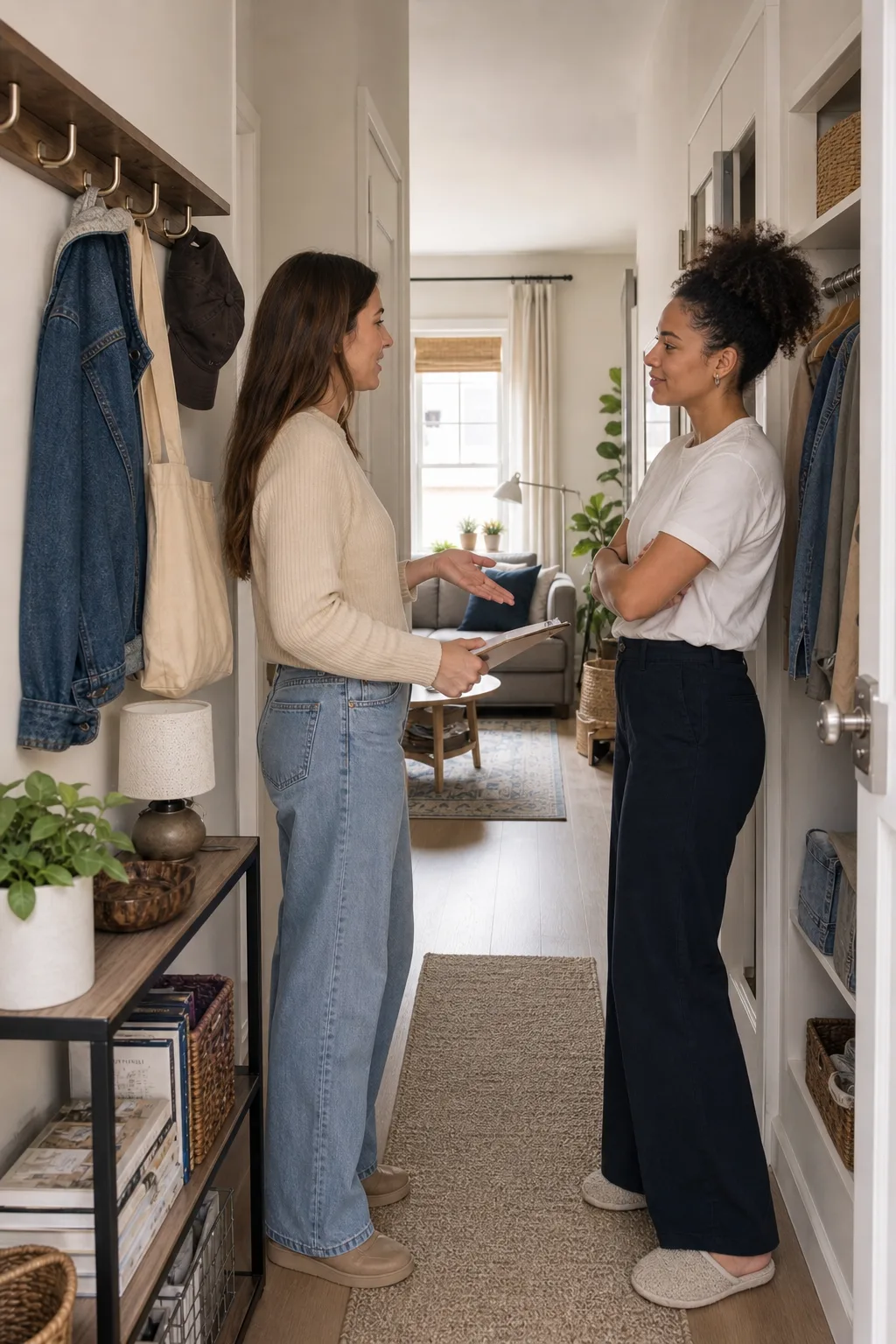
Before a single box is emptied, do a full walk-through of the apartment together and talk about what each space needs to hold. Note every cabinet, closet rod, shelf, and drawer out loud. This first conversation is the foundation of your whole system because it forces both of you to see the space as a shared resource, not a first-come-first-served situation. Skipping this step is how one person ends up with three kitchen shelves and the other has half a drawer. It takes twenty minutes and prevents months of low-grade frustration.
Tip: Take phone photos of each storage area during the walk-through so you both have a visual reference when you start dividing zones.
2. Split every shared area into named zones

Once you have done the walk-through, divide each shared space into clear named zones and assign ownership. In the kitchen, that might mean Roommate A owns the top two shelves and the left cabinet, while Roommate B owns the lower shelf and the right cabinet. In the bathroom, one person gets the top two rows of the medicine cabinet and one gets the bottom two. Naming zones removes the daily mental negotiation of figuring out whose stuff is whose. This is one of the most effective apartment organization ideas for people sharing tight quarters, and it works even in a studio apartment where the lines between spaces blur.
Tip: Use a small piece of painter's tape temporarily labeled with initials inside each cabinet or shelf while you are both still adjusting to the system.
Kitchen
3. Add a tension rod under the kitchen sink to double your cleaning storage
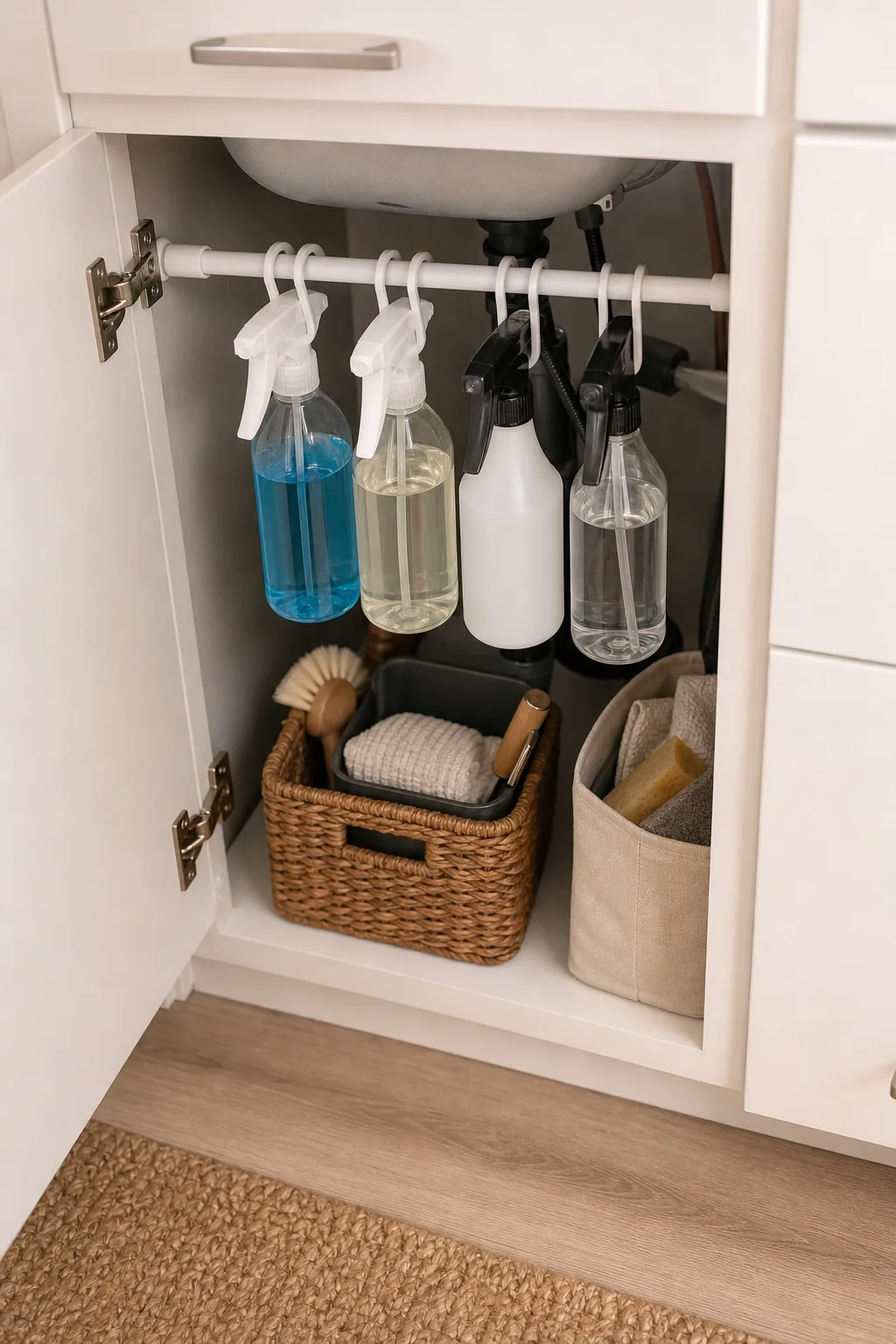
The cabinet under the kitchen sink is usually a chaotic pile of bottles and sponges that belongs to everyone and no one. A simple tension rod installed horizontally across the inside of the cabinet lets you hang spray bottles by their triggers, freeing up the entire floor of the cabinet for bulkier items like a bucket or paper towels. This costs under five dollars and requires zero drilling, which makes it a perfect renter-friendly storage fix. Each roommate can claim one side of the rod for their own cleaning supplies so the zone rule carries into this small space too.
Tip: Clip a small label to each spray bottle handle with a piece of tape so you both know at a glance which products belong to whom.
4. Use a shelf riser inside kitchen cabinets to create two usable levels

Most kitchen cabinets have one fixed shelf with a gap above it that is too short for tall items and too tall to stack efficiently. A simple wire or bamboo shelf riser sits inside the cabinet and creates a second usable level, effectively doubling the storage without any installation. When you are sharing an apartment, this is a low-cost way to carve out a dedicated layer for each person inside a single cabinet. Each roommate gets one level, nothing gets stacked on top of someone else's things, and the cabinet stays organized without a complicated system.
Tip: Measure the inside of your cabinet before buying a riser because widths vary quite a bit between apartments.
Bathroom
5. Give each roommate their own labeled bin in the bathroom cabinet
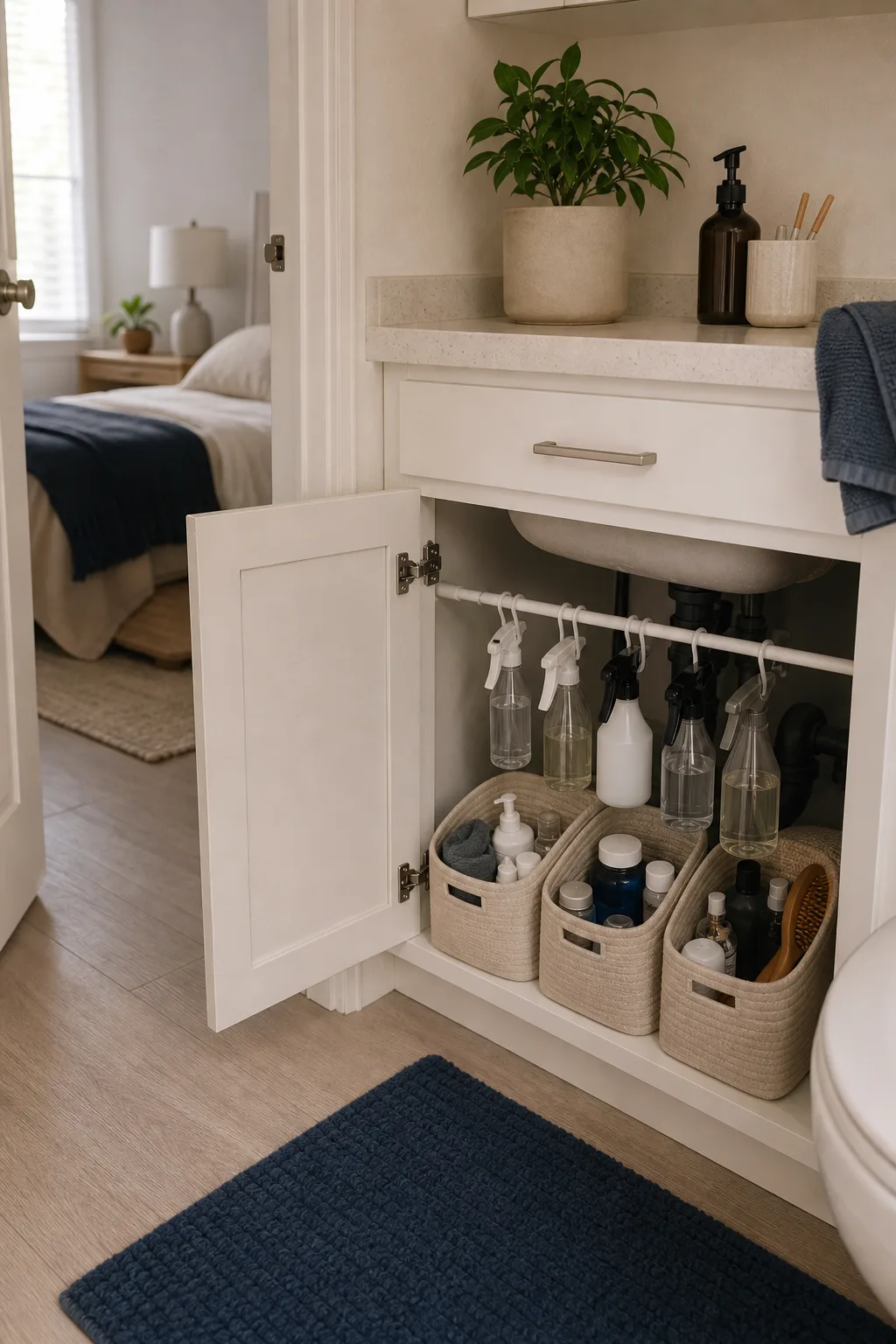
Under-sink bathroom storage is one of the most common friction points in a shared apartment because products multiply fast and the space is small. The easiest fix is to give each person their own bin or basket that slides in and out easily. One bin per person means you grab your bin, find what you need, slide it back. No sorting through someone else's hair products or trying to remember which face wash is yours. This is one of the simplest home organization tips for shared bathrooms, and it works whether the cabinet is a wide double-door style or a narrow single-shelf opening.
Tip: Choose bins with an open front or low sides so you can see what is inside without pulling the whole thing out.
6. Mount an over-door organizer on the bathroom door for personal item overflow
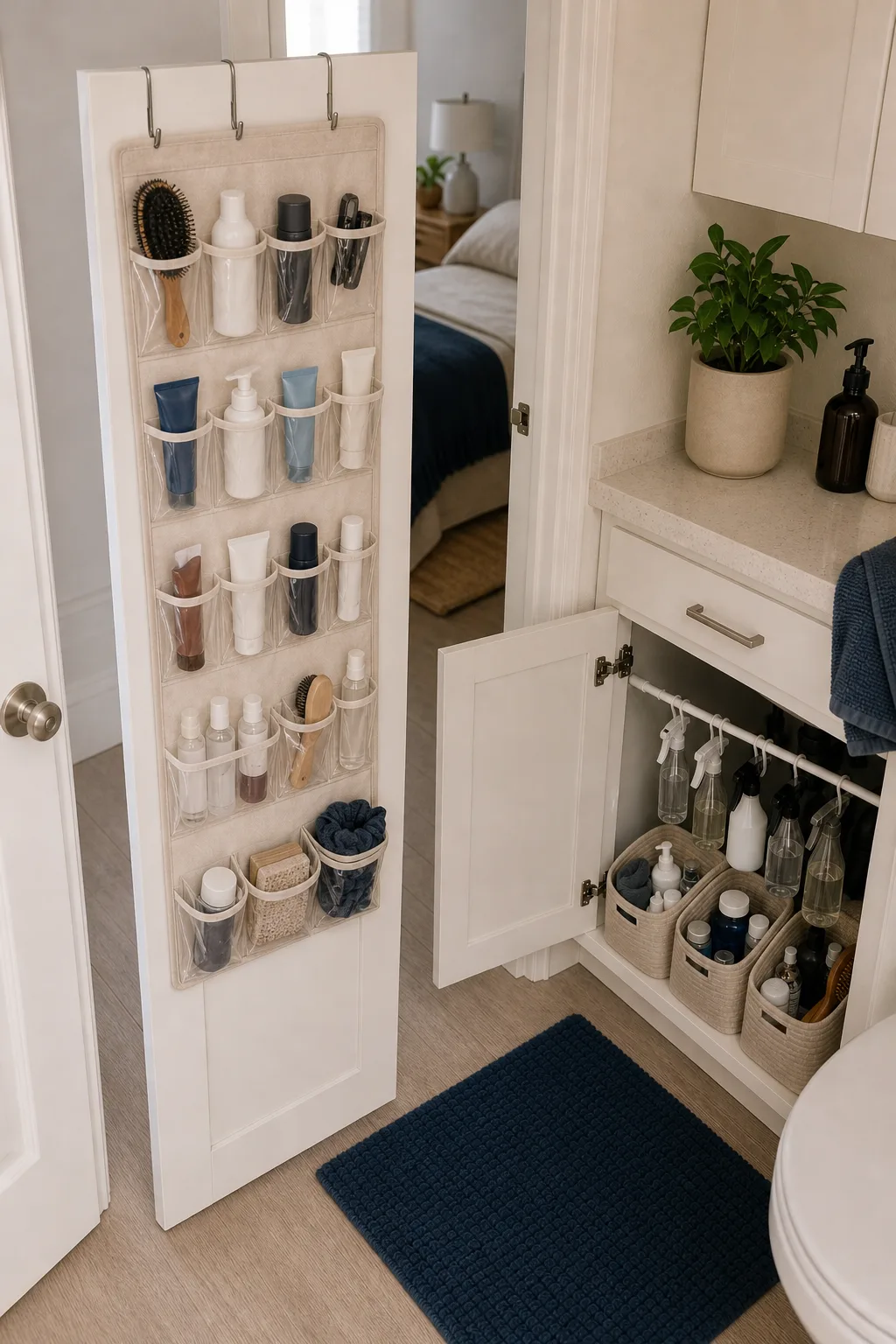
When two people share one bathroom, counter space disappears fast. An over-door organizer with clear pockets hangs on the back of the bathroom door without any drilling and gives each person a few extra pockets for daily-use items like a hair brush, lotion, or face wash. Split the pockets evenly between roommates so it functions as a vertical extension of your labeled-bin system. This kind of no-drill solution is especially valuable in rental bathrooms where you cannot add shelving to the walls. Hang it on the inside of the door and it stays completely out of sight when the door is open.
Tip: Avoid overfilling the pockets because a heavy over-door organizer can stress the door hinge over time in an older apartment.
Entryway
7. Divide the entryway into one hook zone per person

Most small apartments have no mudroom, which means the entryway is a strip of floor near the front door that collects both roommates' shoes, bags, and coats simultaneously. A simple command hook strip or an over-door hook rack gives each person their own designated hang spot. Assign the left hooks to one roommate and the right hooks to the other, or use two separate small strips if the wall space allows. When everyone has a specific spot, bags and coats stop migrating onto chairs or the couch because there is an actual home for them. This is a low-effort renter-friendly storage solution that makes the entry feel intentional rather than chaotic.
Tip: Limit each person to two or three hooks so the entryway does not become a landing zone for every item that comes through the door.
8. Use a shoe tray and a two-slot limit to manage entryway floor clutter

Shoes are the fastest way to make a small apartment entryway feel cramped and cluttered. A low-profile boot tray gives both roommates a defined landing spot and keeps dirt contained to one area. Set a house rule together: two pairs of shoes per person maximum in the entryway at any given time, with the rest stored in bedroom closets. This kind of household agreement sounds small but it makes a real difference in organization for a small apartment because the entry is usually the first and last space you see every day. When it feels manageable, the whole apartment feels more under control.
Tip: Look for a boot tray with a slight lip around the edge to catch water and mud during rainy seasons so your floors stay clean.
Closet
9. Split the closet rod into two halves with a center divider clip

If you are sharing a bedroom closet, the most practical step is to establish a clear center point on the rod and treat each side as a separate closet. A simple clip-on closet divider marks the boundary so neither person's clothes creep into the other half over time. If you each have your own bedroom closet, the same thinking applies to any shared coat closet or hall storage area. Closet organization is one of the areas where small space organization really pays off because a closet that two people use without a system degrades quickly. A center boundary keeps things fair and prevents the slow takeover that happens when one person has more stuff.
Tip: If one roommate has significantly more hanging clothes, consider splitting the rod 60/40 rather than 50/50 and compensating with extra shelf space on the other side.
Cleaning Storage
10. Create a shared cleaning supply station with a rotating responsibility list
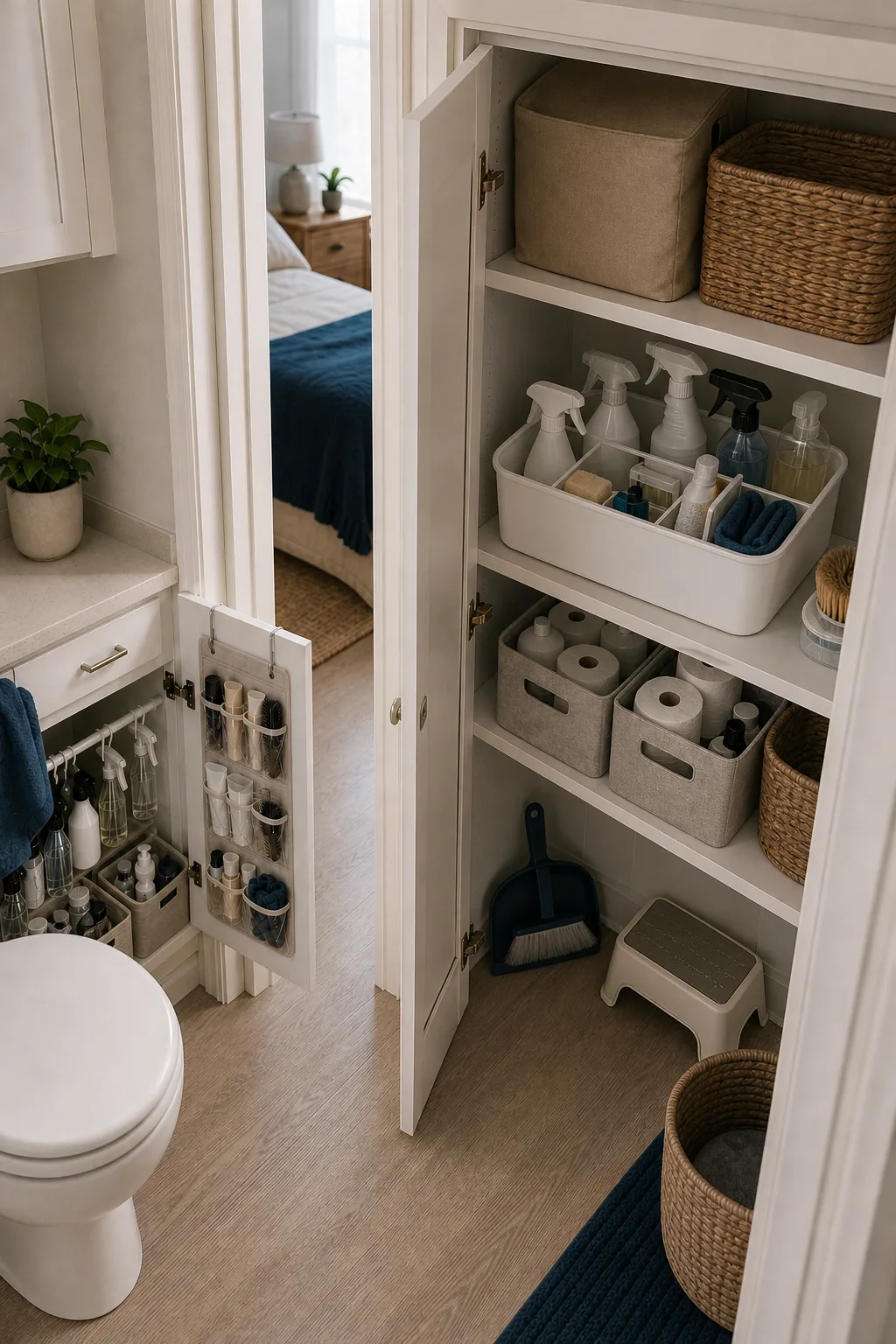
Shared cleaning supplies are a classic source of quiet resentment because one person ends up buying everything while the other assumes it will just appear. Designate one specific spot for shared supplies, whether that is a small caddy under the sink, a basket on a laundry shelf, or a corner of a broom closet. Then agree on a simple rotating list of who buys what and when. This does not need to be elaborate. A note on the fridge or a shared phone note works fine. Treating cleaning storage as a shared system rather than one person's responsibility is one of the most underrated home organization tips for roommates.
Tip: Keep a small sticky note inside the cleaning caddy listing the supplies you have agreed to split so there is no guesswork when something runs out.
Desk & WFH
11. Set up a mini desk zone for each person even in a studio apartment
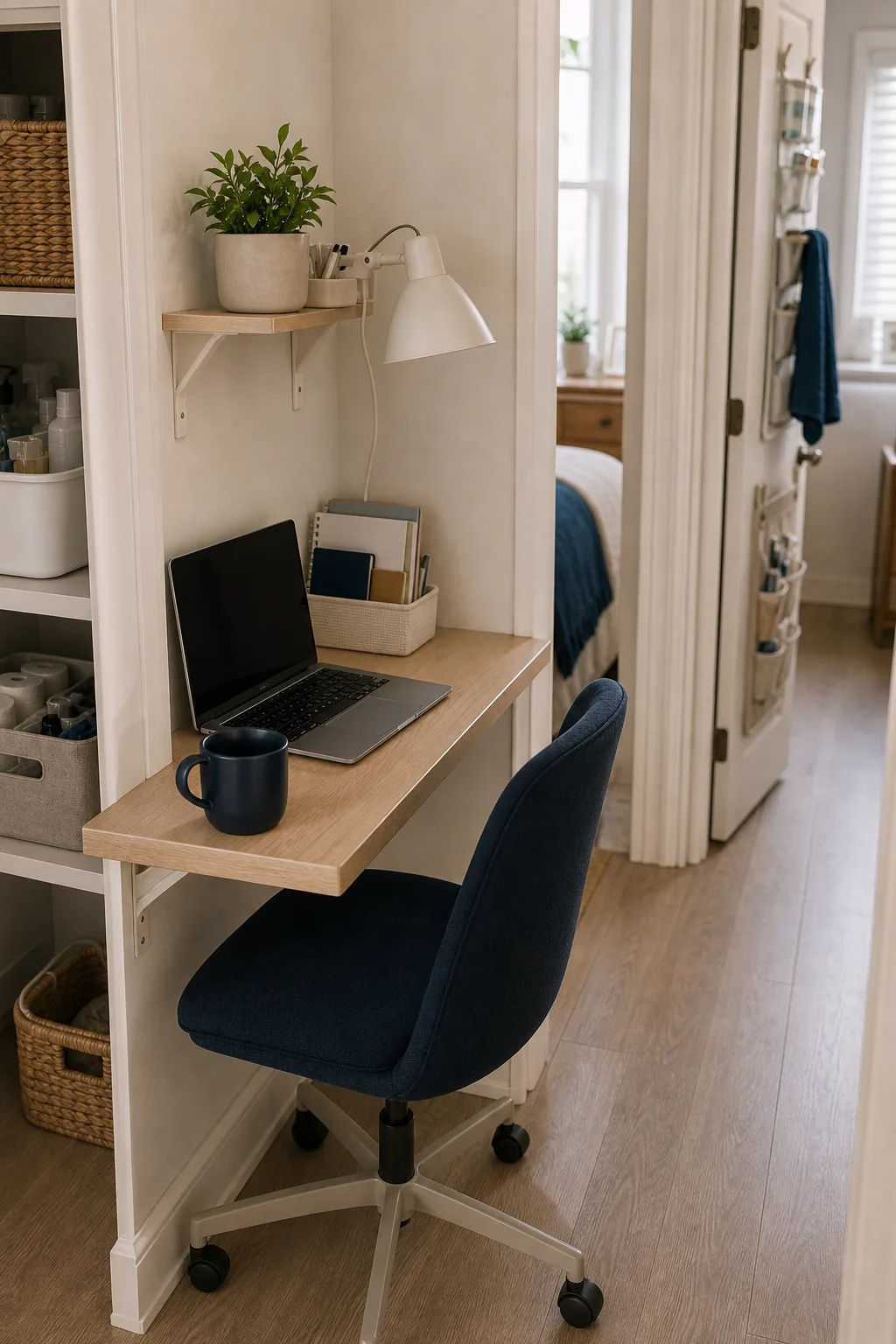
If both roommates work from home, even part-time, sharing a studio apartment without defined work zones creates real cognitive clutter. Each person should have a dedicated spot, even if it is just a small wall-mounted shelf with a laptop, a drawer organizer, and one clip-on lamp. The goal is not a full office setup but a signal to your brain that this corner is for focused work and that corner is not yours. In a studio apartment, visual boundaries matter more than square footage because the space is doing multiple jobs at once. If you cannot physically separate the desks, staggered schedules and a no-interruption signal like headphones can substitute as an invisible boundary.
Tip: A small desktop organizer with dedicated trays for each roommate keeps shared desk surfaces from becoming a dumping ground for both people's papers and chargers.
Lay the Groundwork
12. Schedule a 15-minute monthly reset to revisit what is and is not working
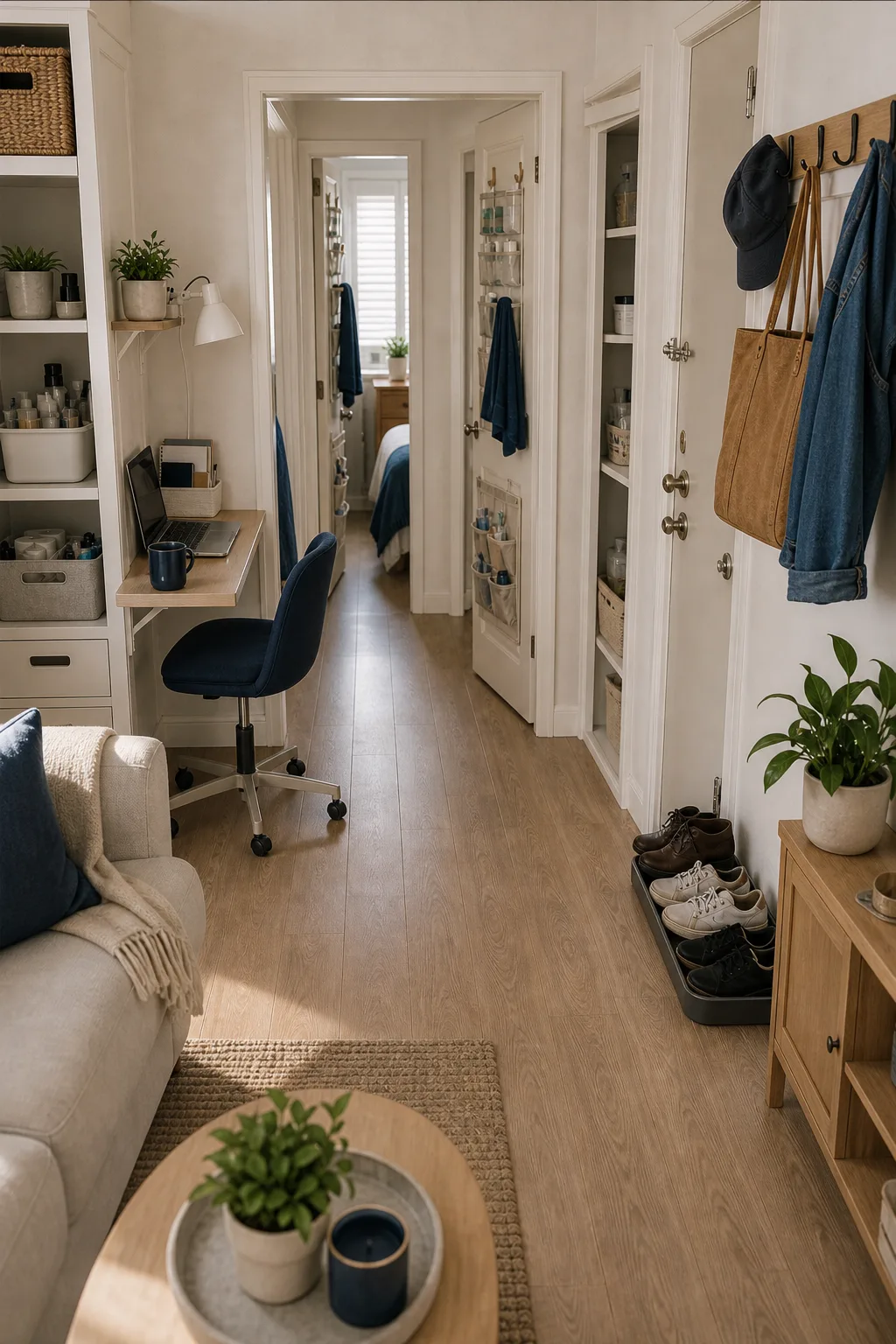
Even the best roommate organization system needs occasional adjustment because life changes, stuff accumulates, and what worked in month one may not work in month six. A short monthly reset conversation, fifteen minutes tops, lets both roommates flag what is bothering them before it becomes a real issue. Walk through the shared spaces together, check that zones are still holding, and swap anything that has stopped making sense. This habit is what separates apartment organization ideas that work long-term from systems that fall apart after a few weeks. Think of it less as a formal meeting and more as a quick check-in that keeps the whole apartment feeling like a shared effort rather than one person's project.
Tip: Pick a consistent day for the reset, like the first Sunday of each month, so it becomes a habit neither person has to remind the other about.
FAQ
How do you organize a small apartment with a roommate when you have very different tidiness standards?
Start by focusing on shared spaces only, not each other's personal areas. Agree on a minimum standard for the kitchen, bathroom, and entryway, things like dishes done within 24 hours or surfaces cleared by evening. Keep the rules simple and specific rather than general. When expectations are written down or at least said out loud, they are much easier to follow than unspoken assumptions.
What is the best renter-friendly storage solution for a shared bathroom with no extra shelving?
An over-door organizer on the back of the bathroom door is the easiest no-drill option. Pair it with one labeled bin per person under the sink and you have covered most of the daily-use storage needs without touching a single wall. Both solutions are fully removable when you move out.
How do you fairly divide kitchen cabinet space between two roommates?
Measure or count the total usable shelves and divide them as evenly as possible based on how much each person actually cooks and stores. If one person owns a lot of kitchen equipment, they can take slightly more cabinet space in exchange for less counter space. The key is to make the split explicit and agreed upon, not assumed.
Can roommate organization tips work in a studio apartment where there is almost no separation?
Yes, but the approach shifts from physical division to visual and behavioral cues. Each person gets a defined zone within shared furniture, like specific shelves, a dedicated desk corner, and an assigned hook. Agreeing on shared surface rules, such as keeping the kitchen counter clear after 9pm, helps the space feel less like it belongs to one person and more like a shared home.
Save this guide somewhere you can both find it, sending it to your roommate is a low-pressure way to start the conversation. If you want more small-space organization ideas sent straight to your inbox, the Nest and Narrow newsletter goes out regularly with practical tips made for real apartments. You can sign up at nestandnarrow.com.