

My apartment entry is roughly the size of a bath mat. There is no mudroom, no built-in cubbies, and no closet within reach of the front door. Just a small stretch of floor where shoes immediately multiply the second I stop paying attention. If that sounds familiar, you are not alone. Shoe storage in a small entry is one of the most searched apartment organization ideas for a reason: it is a problem almost every renter faces.
The good news is that small space organization near the front door does not require a renovation or a landlord's permission. It mostly requires thinking vertically, choosing the right footprint for your furniture, and being selective about how many pairs actually live at the door versus in the closet. I have tested a lot of these setups in my own apartment, and the 12 ideas below are the ones that genuinely hold up over time.
Key takeaways
- Vertical storage like over-door organizers and tall shoe towers use wall height instead of floor space, which is critical in a narrow entry.
- Renter-friendly storage solutions such as freestanding benches, tension-rod racks, and peel-safe hooks require zero drilling and leave no damage behind.
- Limiting the entry to 2 to 4 pairs per person and rotating seasonally is the single most effective home organization tip for keeping a small entry from feeling chaotic.
My Entry Is Smaller Than Your Welcome Mat
My front door opens into a space that is genuinely about four feet wide before it hits the kitchen wall. For two years I just piled shoes on the floor and told myself it was fine. It was not fine. A slim shoe tower and a strict four-pair rule at the door changed the entire feel of my apartment from the moment I walked in, and it cost less than a dinner out.
Ideas that work in small spaces
Furniture That Earns Its Floor Space
1. A Slim Shoe Bench with Hidden Storage
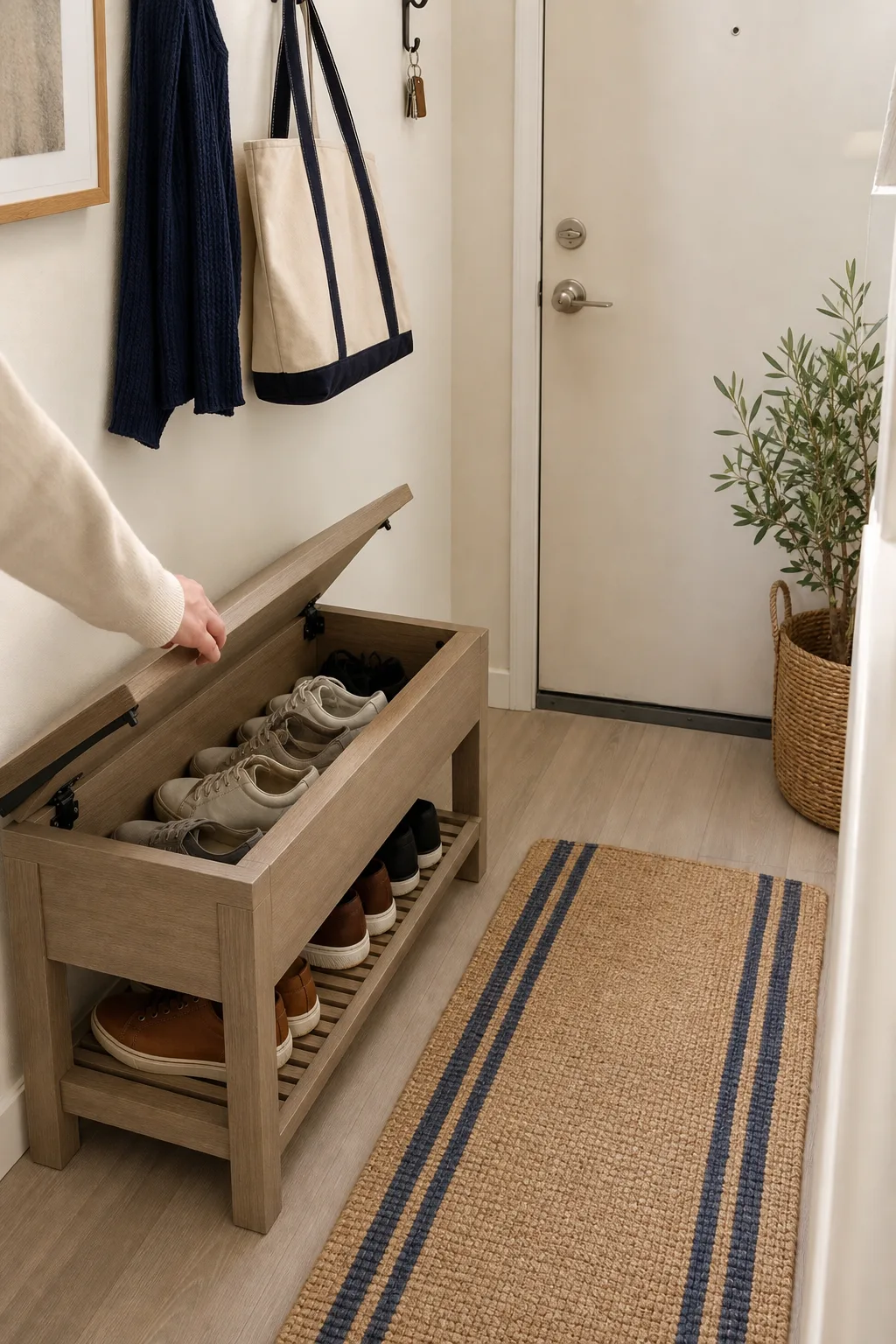
A bench with a lift-top compartment or slatted shelf underneath pulls double duty: it gives you a place to sit while putting on shoes and tucks away 4 to 6 pairs underneath. Look for benches that are 14 inches deep or less so they do not block a narrow hallway. Upholstered tops keep the entry looking intentional rather than utilitarian. This is one of the most practical apartment organization ideas for anyone who has a small but defined entryway zone.
Tip: Limit the under-bench storage to current-season shoes only. Rotate off-season pairs to your bedroom closet to keep the compartment from overflowing.
2. A Narrow Shoe Tower or Tall Cabinet
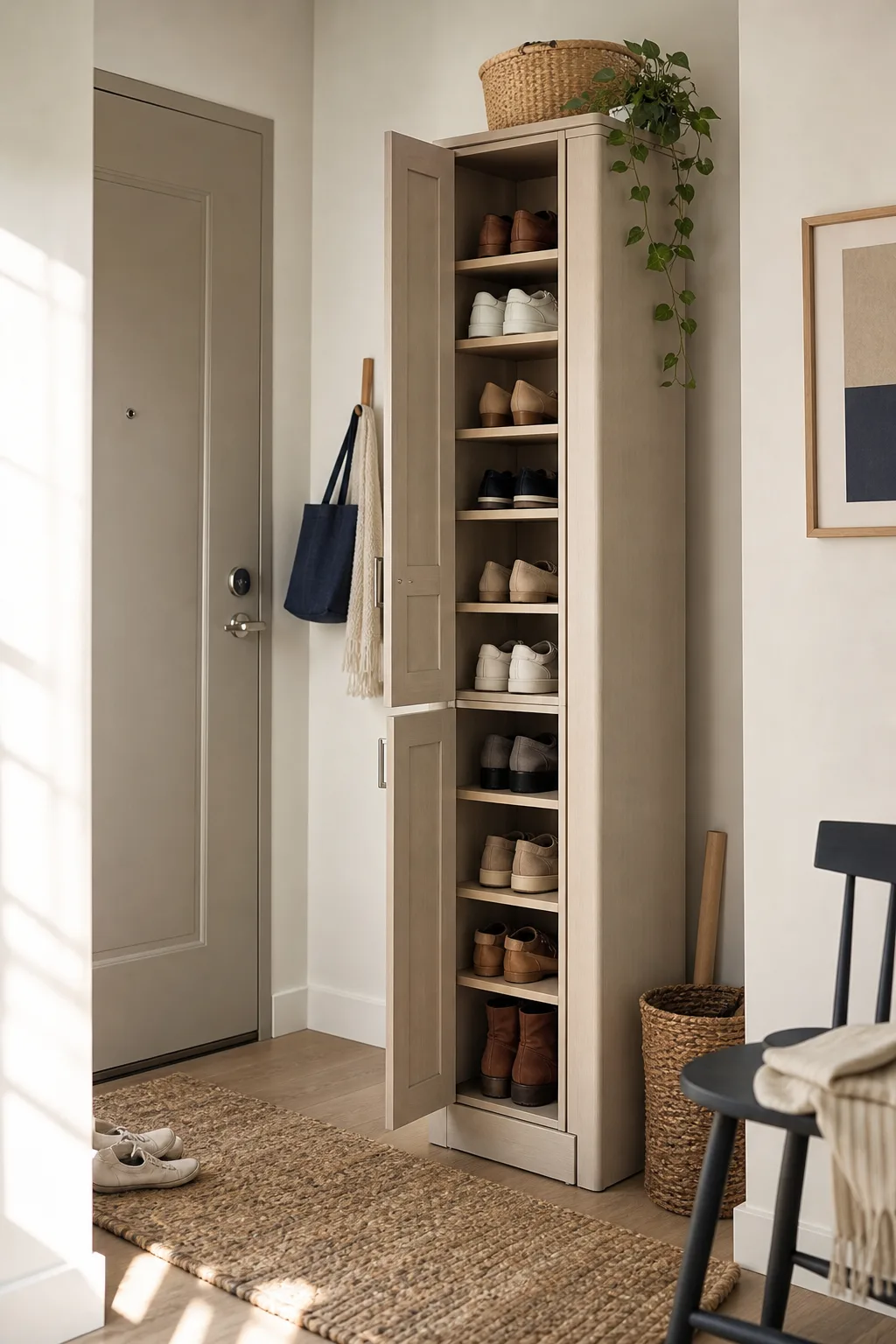
A vertical shoe tower with doors is one of the most efficient uses of floor space in a small entry because it goes up instead of out. Many styles fit 12 to 24 pairs in a footprint as narrow as 12 inches wide. Closed doors hide any visual clutter, which makes the entry feel calmer the moment you walk in. This works especially well in studio apartments where the entry, living room, and kitchen are often one continuous space.
Tip: Place the tower flush against the wall nearest the door hinge so it does not interrupt the swing path of the door.
3. A Tiered Shoe Rack with a Small Footprint

A two or three-tier open shoe rack is the most affordable entry point for shoe storage small entry setups. The best ones angle the shelves so shoes stack heel-to-toe, fitting more pairs per level. Look for racks under 20 inches wide if your entry is truly narrow. Open racks are not the most polished look, but a small basket placed on the top shelf for keys or masks keeps the overall display feeling organized rather than messy.
Tip: Dedicate one tier per household member so pairs do not get mixed together and the rack stays sorted without effort.
No-Drill and Renter-Friendly Picks
4. Over-the-Door Shoe Organizer for the Front Door

If your front door opens into a closet or has a solid back panel, an over-the-door organizer adds storage without touching a single wall. Clear pockets let you see exactly what is inside, and most styles hold 12 to 24 pairs depending on shoe size. This is a genuinely renter-friendly storage option because it requires no hardware and leaves zero damage. In apartments where the entry doubles as a hallway, this trick frees up all floor space completely.
Tip: Use the lower pockets for shoes and the upper pockets for flat items like slippers, dog leashes, or a small umbrella.
5. Command Hook Rail for Flip-Flops and Sandals

A row of removable adhesive hooks mounted at ankle height on a side wall creates a dedicated spot for sandals, flip-flops, and flats that hang neatly by their straps. This is a true no-drill solution that works on painted drywall as long as you follow the weight limits and let the adhesive cure for 24 hours before loading. Three to four hooks take up almost no visual space and keep warm-weather shoes off the floor entirely. This is one of those small space organization moves that looks intentional once it is in place.
Tip: Group hooks by size so the smallest sandals hang together and the row looks tidy at a glance.
6. A Floating Shoe Shelf with Damage-Free Mounting Strips

Picture ledges and floating shelves mounted with heavy-duty adhesive strips can hold lightweight shoes like sneakers and flats when sized correctly. A single 24-inch ledge at ankle height becomes a dedicated display shelf for your most-used pairs. Keep it to two or three pairs maximum so the weight stays within the strip rating. This renter-friendly storage approach adds architectural interest to a blank entry wall without a single nail hole.
Tip: Choose a shelf in a finish that matches your baseboard trim so it looks built-in rather than added on.
7. A Storage Ottoman That Does Double Duty

A small cube ottoman near the door works as a seat, a shoe storage bin, and an extra surface all at once. Styles with removable lids let you toss shoes inside quickly when guests arrive, which is one of those home organization tips that makes real life easier rather than just Instagram-worthy. Choose a neutral color or texture that reads as furniture rather than storage so the entry feels like a designed space. In a studio apartment, this piece can also pull duty as extra seating when needed.
Tip: Line the inside of the ottoman with a fabric bin or small basket so shoes stay sorted and the interior does not get scuffed.
Closet Overflow Solutions
8. Shoe Boxes with Label Slots for Closet Overflow

When your entry cannot physically hold more than a few pairs, the rest need a real system in the bedroom closet. Clear stackable shoe boxes with label slots let you see exactly what is inside without unstacking the whole column. This approach is a core part of small space organization: accepting that not every shoe can live at the door and building a secondary system that makes retrieval easy. Drop-front boxes work especially well for stacking because you can access the bottom boxes without disturbing the ones on top.
Tip: Store the boxes you reach for most at eye level and seasonal or occasion shoes toward the top or floor.
9. An Under-Bed Shoe Organizer for Seasonal Pairs

Flat under-bed bags or rolling trays are the most underused square footage in any apartment. A breathable fabric under-bed organizer with individual pockets holds 8 to 12 pairs of off-season shoes without taking up any closet real estate. This is the kind of apartment organization idea that sounds obvious but makes a measurable difference: when seasonal boots or heels are stored under the bed in summer, the entry and closet both breathe easier. Look for styles with a zip top to keep dust out.
Tip: Do a seasonal swap twice a year: spring and fall. Take 20 minutes to rotate what is under the bed with what is in the entry.
Studio-Friendly Setups
10. A Pegboard Panel for the Entry Wall
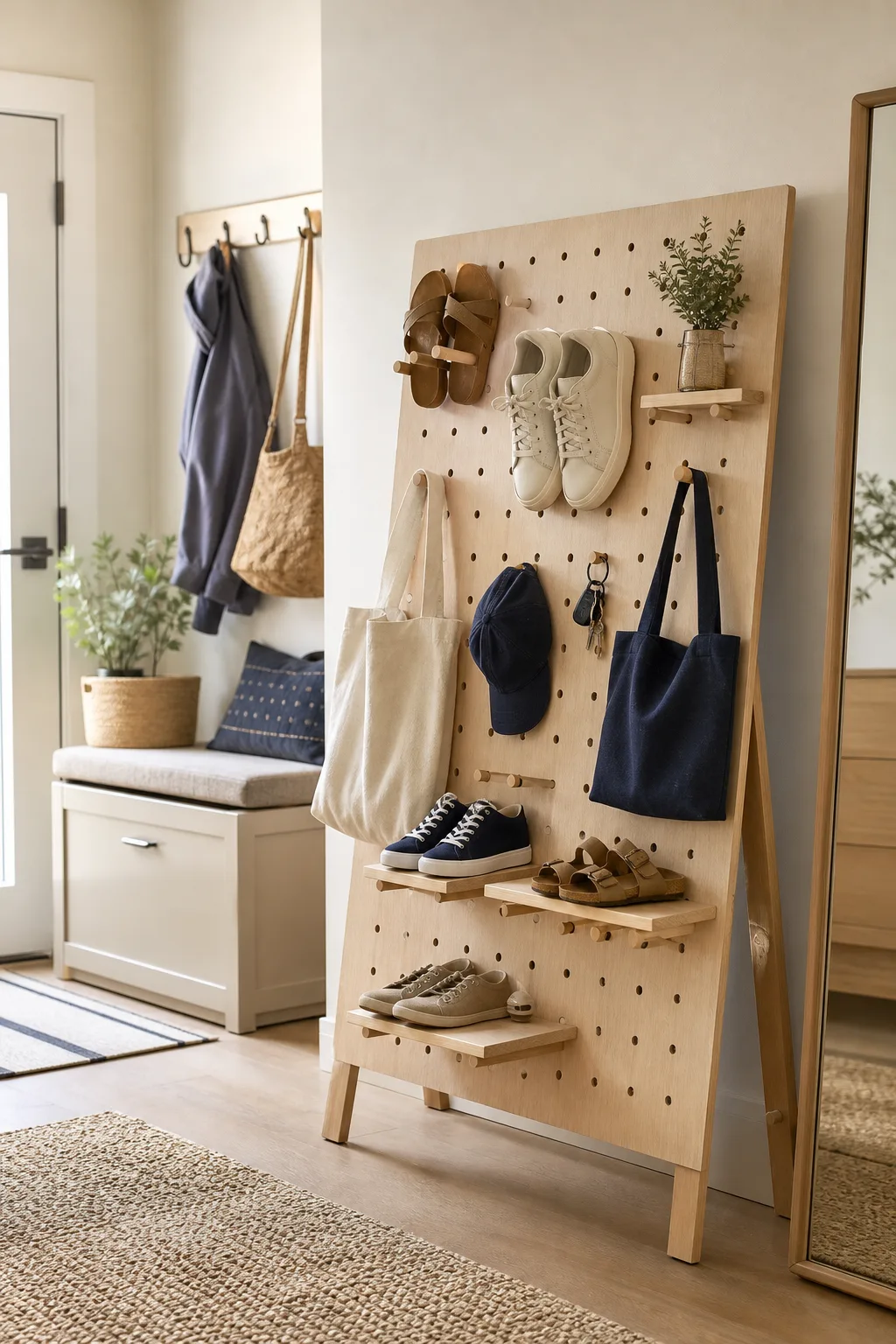
A freestanding pegboard panel on a small easel or leaned against the wall requires no wall attachment and creates a modular storage wall for shoes, bags, and accessories. Add small hooks or ledge pegs to hold sandals, sneakers, and tote bags in one compact footprint. This is a popular apartment organization idea in studios where the entry, living, and dining areas share one open room because the pegboard can act as a subtle visual divider. Painting it to match the wall keeps it from feeling like shop storage.
Tip: Limit the pegboard to the current season's everyday pairs so it stays functional rather than becoming a dumping surface.
11. A Tension Rod Shoe Rack Inside a Closet

If you have even a small closet near your entry, two horizontal tension rods installed at different heights turn the floor into a hanging shoe rack: heels hook over the lower rod and the toe rests on the upper one. This no-drill solution costs almost nothing and adds a full extra row of shoe storage without adding any furniture to the floor. Shoe storage small entry apartment renters often overlook what is already inside the closet door. This trick effectively doubles the closet's shoe capacity in about 10 minutes.
Tip: Use one tension rod setup for heels and boots and keep a small basket on the closet floor for flat shoes that will not balance on the rods.
12. A One-In-One-Out Shoe Rule for the Entry Zone
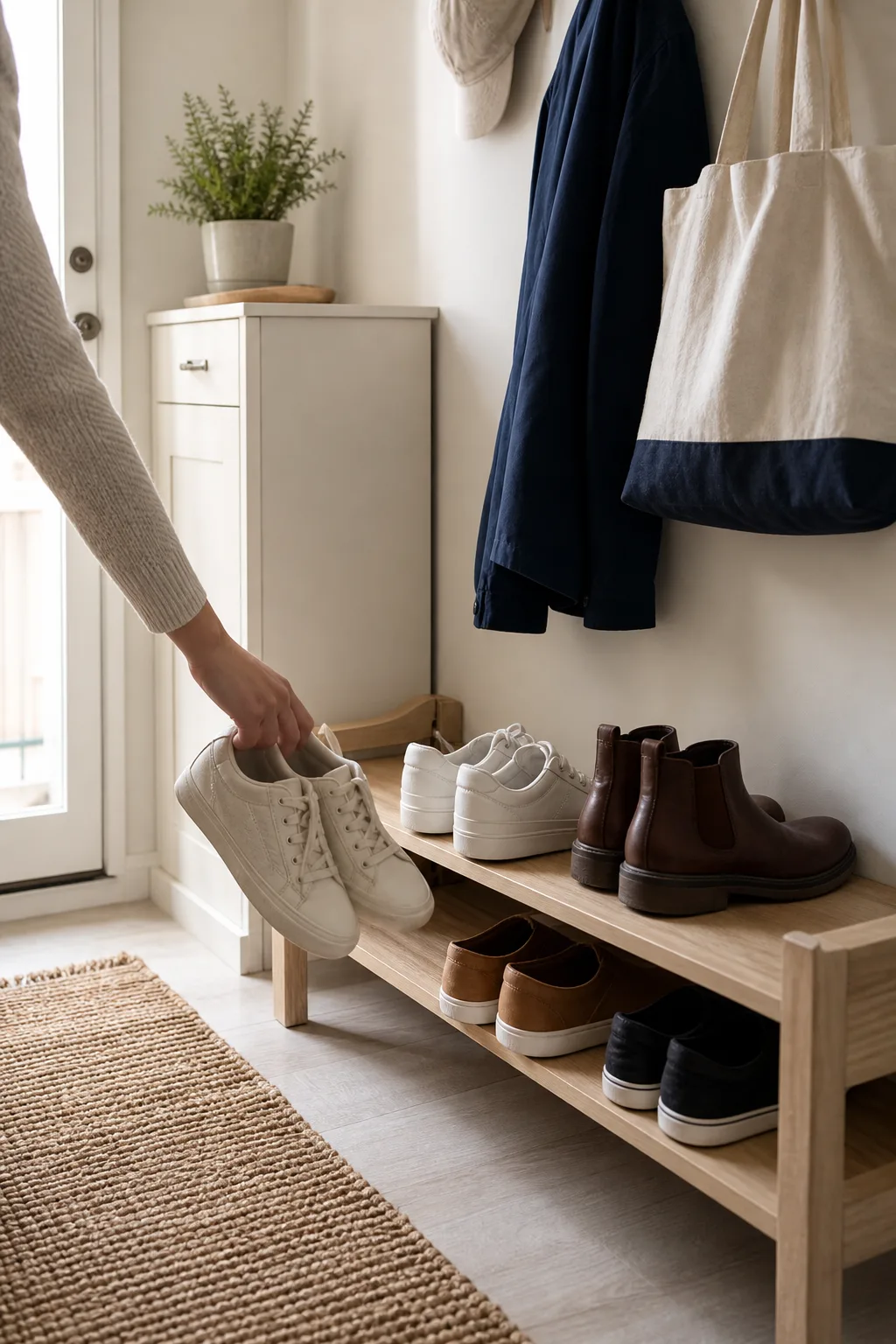
The most effective home organization tip for a small entry is not a product: it is a rule. Decide how many pairs live at the door, whether that is 2, 4, or 6 depending on your household size, and commit to that number. When a new pair comes in, an old pair goes back to the closet or leaves the apartment entirely. This keeps any shoe storage solution from being overwhelmed within a week of setting it up. Small space organization only holds long-term when the volume of stuff matches the capacity of the storage.
Tip: Put a small basket or tray at your entry specifically to catch shoes that need to go back to the closet. Deal with the basket once a week so it never piles up.
FAQ
What is the best shoe storage for a very small apartment entry?
For the smallest entries, a slim vertical shoe tower or an over-the-door organizer gives you the most storage per square foot. Both options keep floor space clear, which makes the entry feel larger. Pair either one with a one-in-one-out rule and you have a system that stays manageable even in a tiny space.
How do I store shoes at the door without drilling holes?
Over-the-door organizers, freestanding shoe racks, storage ottomans, adhesive command hooks, and tension rods inside a closet are all renter-friendly storage options that require zero drilling. Adhesive floating shelves can also work for lightweight shoes as long as you follow the weight limits and use strips rated for the surface type.
How many shoes should I keep in my entryway?
A good general rule is 2 pairs per person for the entry zone, covering your most-used everyday shoes. Everything else should live in the bedroom closet or under the bed in organized storage. Keeping the entry number low is the single most important home organization tip for preventing shoe pile-up near the door.
Can I use a shoe storage bench in a narrow hallway?
Yes, as long as you choose a bench that is 14 inches deep or less. Most hallways need at least 36 inches of walking clearance, so measure your hallway width before buying and make sure the bench does not narrow that passage below a comfortable walking width.
What is a good shoe storage idea for a studio apartment with no entry?
In a studio where the front door opens directly into the living area, a pegboard panel leaned against the wall or a slim shoe cabinet with closed doors works best because both contain the visual clutter. A storage ottoman near the door also blends into the living space naturally while hiding shoes inside.
Save this guide somewhere you can find it when your entry starts to creep back into chaos, because it will, and that is completely normal. Small space organization is an ongoing process, not a one-time project. If you want more renter-friendly storage ideas and apartment organization tips delivered straight to you, the Nest & Narrow newsletter is a good place to start.