

I have lived in apartments where the closet was the size of a phone booth and the kitchen had exactly one drawer. What I learned pretty quickly is that the goal is not to find more storage. It is to use the storage you have in a way that keeps things accessible without making every surface feel chaotic. Small space storage without clutter is less about buying more bins and more about making deliberate choices about what gets a home and where.
These 12 steps cover the rooms that cause the most stress in a small apartment: kitchen cabinets that swallow everything, bathroom shelves that tip over, entryways that collect every random object that walks through the door. If you have been searching for apartment organization ideas that actually fit a renter's reality, no built-ins, no mudroom, no landlord permission to drill, this guide is for you.
Key takeaways
- Clutter in small spaces usually comes from storage that is too deep or too tall, not from owning too much. Dividers and risers fix this faster than buying new furniture.
- Renter-friendly storage options like tension rods, over-door organizers, and removable adhesive hooks can transform a space without leaving a mark.
- Assigning a specific home to every category of item, even down to 'charging cables go here,' is what separates organized small spaces from ones that feel perpetually messy.
Why I started thinking about storage differently
When I moved into my current apartment, I bought a full set of matching bins before I even unpacked, and most of them ended up holding the wrong things in the wrong rooms. What actually worked was taking a weekend to figure out what I touched daily versus what I was keeping out of guilt, and then finding a home for each category. That shift, from buying solutions to building a system, is what finally made my small space feel manageable.
Step-by-step
Before You Organize Anything
1. Audit every cabinet before you add a single bin
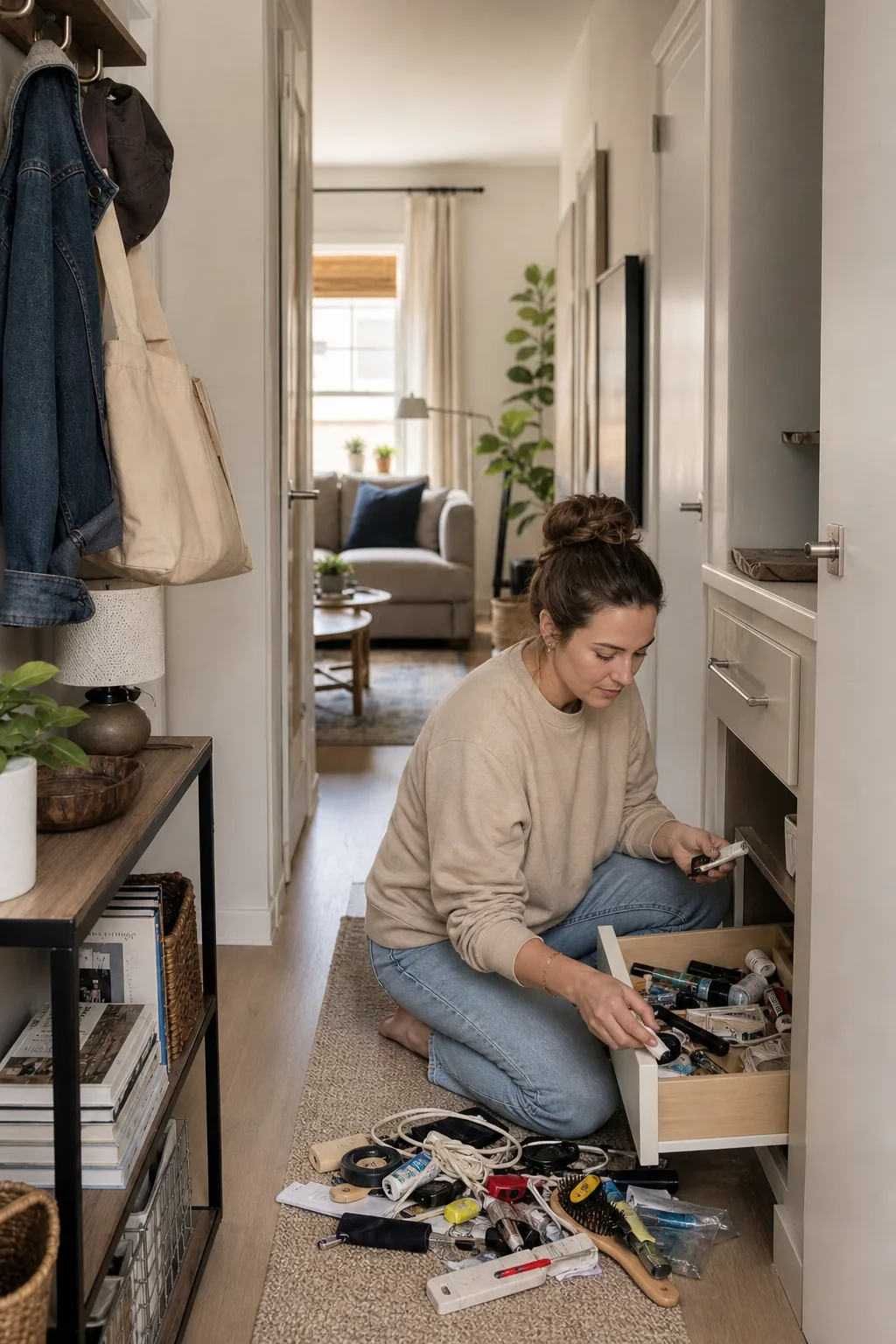
Before spending money on organizers, pull everything out of one cabinet or drawer at a time and lay it on the counter. You will almost always find duplicates, expired items, or things that belong in a different room entirely. In my apartment, the kitchen junk drawer had three pairs of scissors and zero pens. Clearing that out is free, and it creates breathing room that no bin can manufacture. Small space organization starts with less, not more.
Tip: Do one cabinet per day so it does not feel overwhelming. A single focused session beats a whole-apartment purge that never gets finished.
2. Zone your under-sink shelf by task

Under the bathroom or kitchen sink is one of the most disorganized spots in any apartment because nothing has a category. Split the space into task zones: cleaning supplies on one side, extra toiletries or dish soap refills on the other. Use a small tension rod across the front of the cabinet to hang spray bottles, which frees up the floor of the cabinet for bins. This is one of the simplest home organization tips that immediately makes the space feel intentional rather than chaotic.
Tip: A slim caddy or two-tier shelf riser works well under most apartment sinks and costs under fifteen dollars.
Kitchen
3. Use a tension rod to create vertical cabinet layers in the kitchen
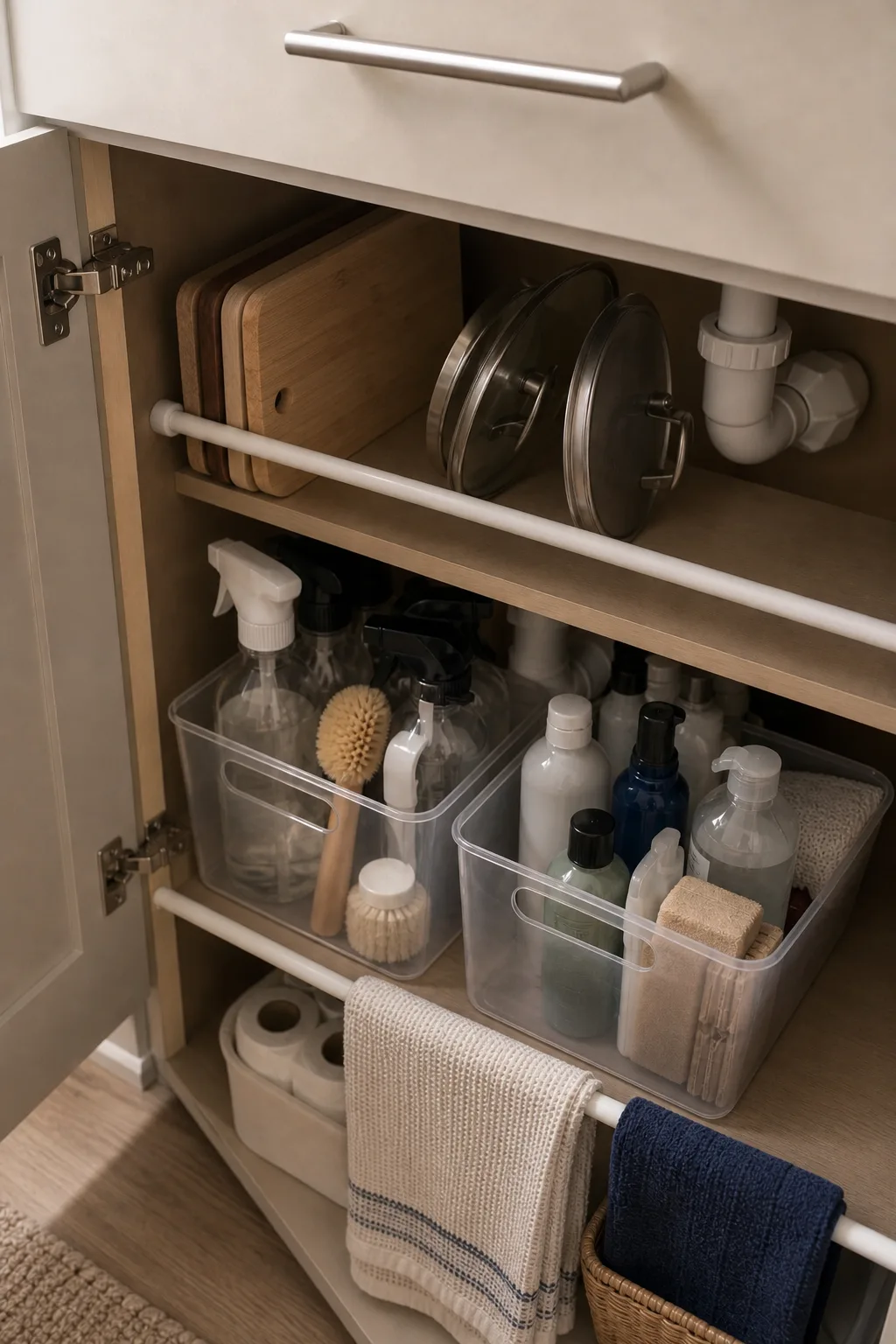
Most kitchen cabinet shelves have too much vertical clearance for the items stored on them, so half the space goes to air. Install a tension rod horizontally across a cabinet to create a second layer for lids, cutting boards, or baking sheets. No drilling required, and you can remove it when you move out without leaving a mark. This kind of renter-friendly storage doubles usable space without touching the walls.
Tip: Tension rods also work inside cabinet doors to hold foil and wrap boxes vertically, keeping them from falling over.
4. Corral countertop items into one tray to define the boundary

Countertop clutter in a small kitchen spreads because there is no visual boundary telling it where to stop. Place a small tray or cutting board on your counter and commit to keeping only the things that belong there: coffee maker, dish soap, a small plant, whatever your daily essentials are. Anything outside the tray gets put away. This one habit does more for small space storage than any organizer you can buy because it creates a rule the counter has to follow.
Tip: A wooden tray or small baking sheet works just as well as a decorative one and costs almost nothing.
Closet
5. Stack folded clothes vertically in closet drawers or bins
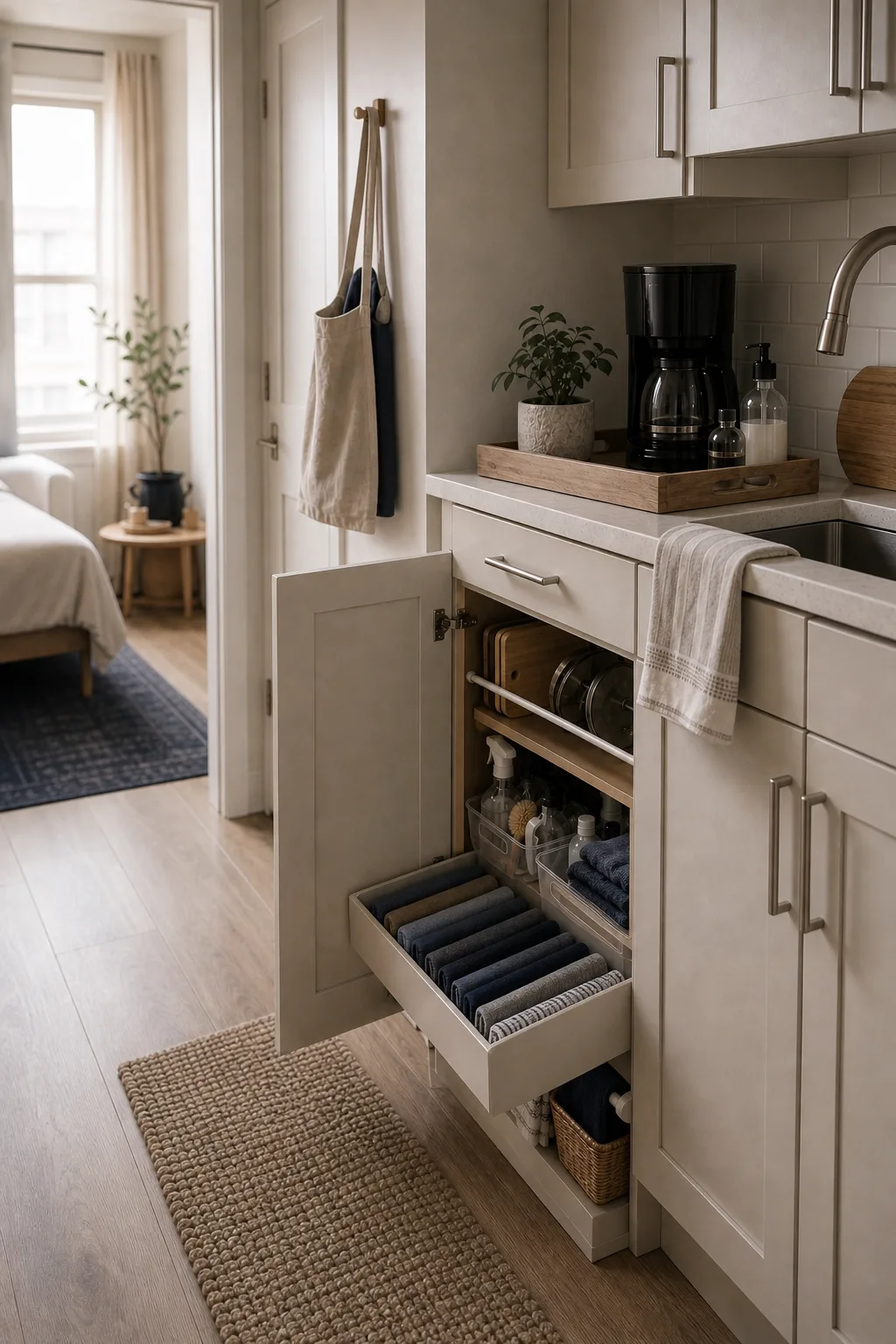
Folding clothes flat and stacking them on top of each other means you can only see the top item. Folding them into small rectangles and storing them upright, like files in a drawer, lets you see every item at once and pull one out without disturbing the rest. This works in dresser drawers, closet bins, and even in fabric baskets on a shelf. It is one of those small space storage techniques that sounds fussy until you try it and realize you have twice the capacity you thought you did.
Tip: Start with one drawer, usually T-shirts or socks, and get used to the method before converting your whole closet.
6. Add a second hanging rod to double your closet capacity
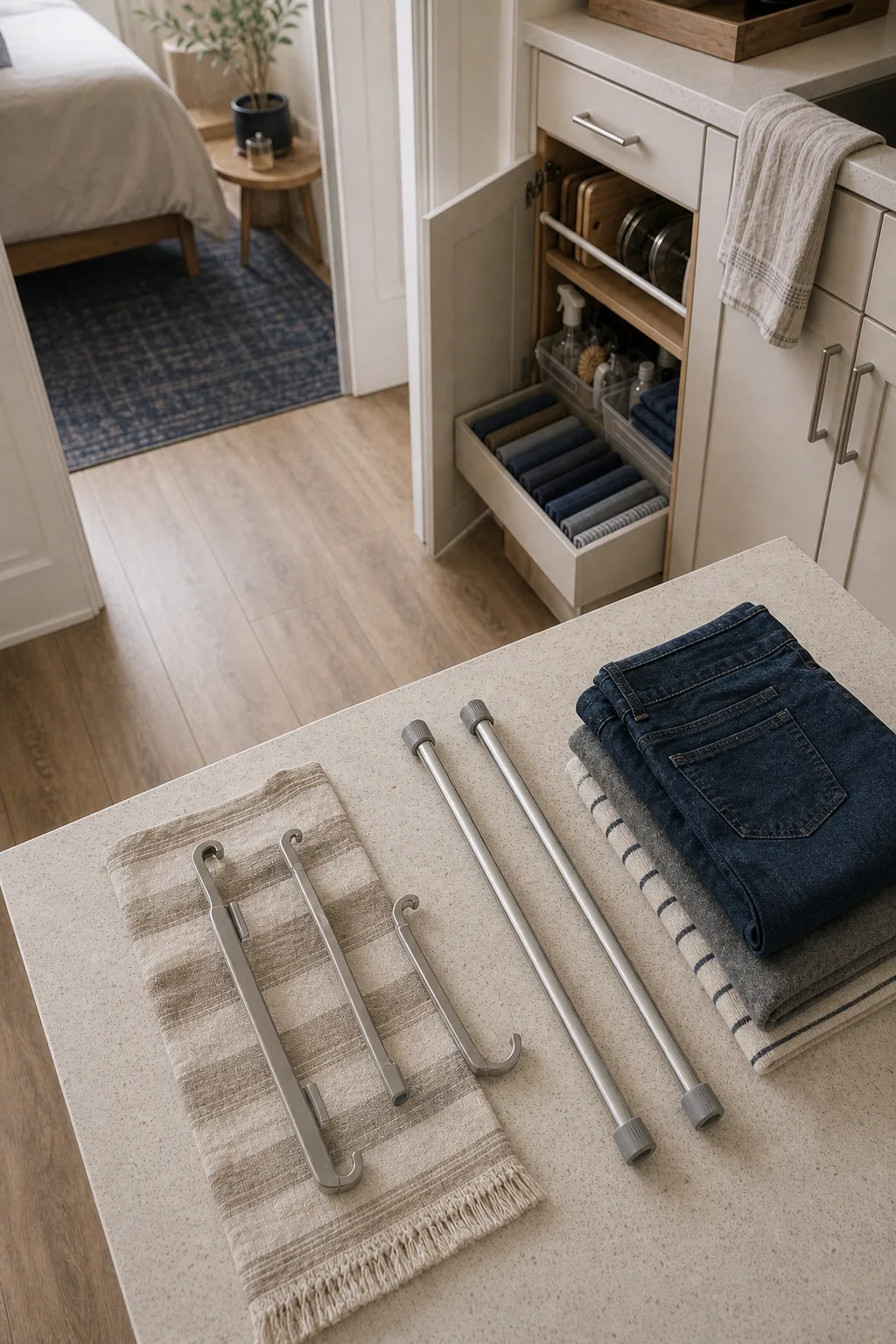
Most apartment closets have one rod hung at the top, which leaves a huge empty zone below your shorter hanging items. A portable hanging rod that clips onto the existing one drops down to create a second tier for folded pants, jackets, or shorter tops. No tools, no drilling, and it comes down in minutes when you move. This is one of the most effective apartment organization ideas for renters with a standard closet bar and limited floor space.
Tip: Use the floor space below the double rod for a small shoe rack or a single storage bin, since that area tends to get wasted.
Bathroom
7. Mount an over-door organizer on the bathroom door
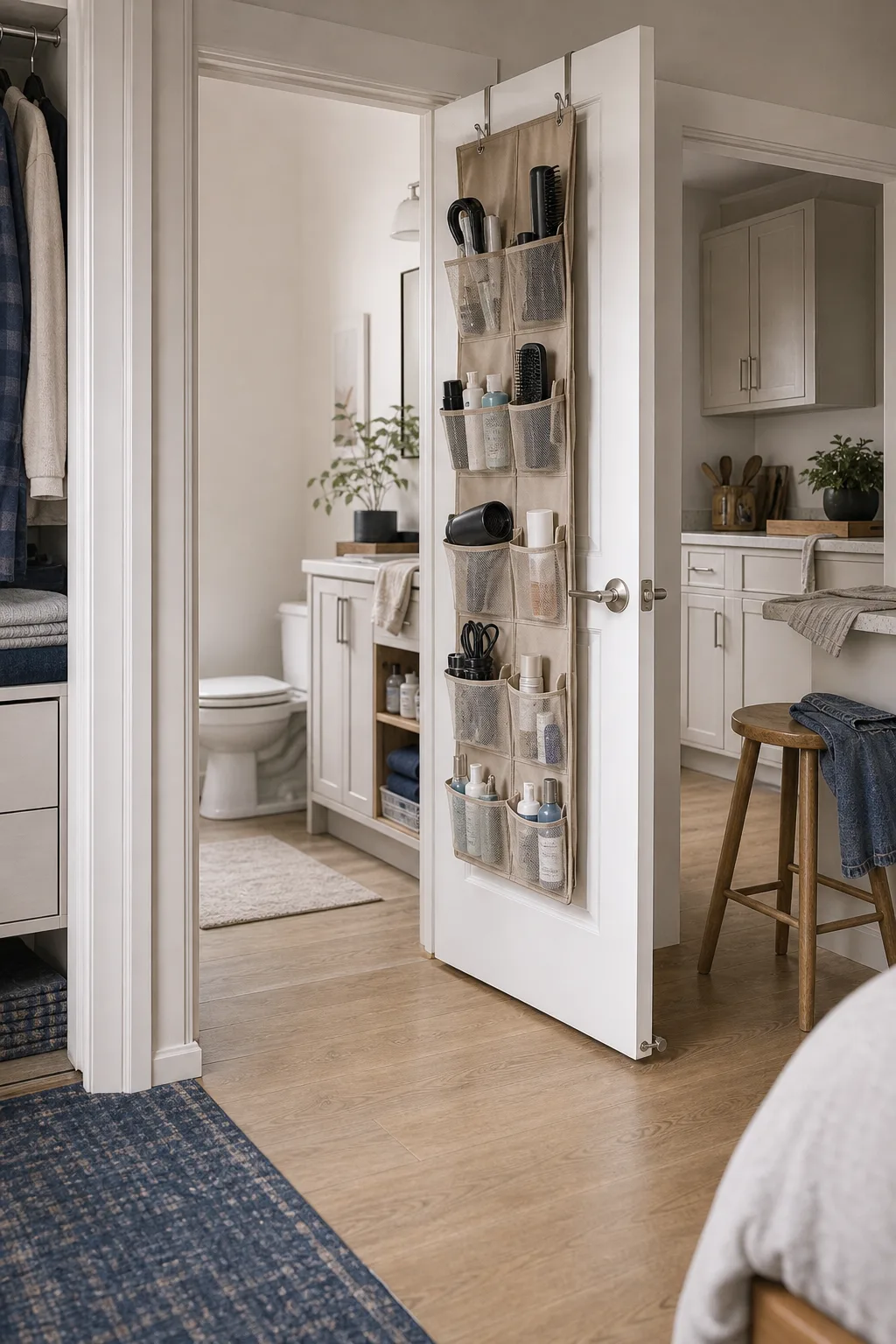
Bathroom storage in a rental is almost always limited to one narrow cabinet and maybe a shelf above the toilet. An over-door organizer with pockets or small bins adds immediate vertical storage without touching the wall. Use it for hair tools, travel-size products, medicine, or anything else that currently lives in a pile on the sink. This is a no-drill solution that works on nearly every standard interior door and comes down in seconds.
Tip: Look for over-door organizers with adjustable hooks so they fit doors with or without a lip at the top.
8. Group bathroom products into labeled categories on open shelves
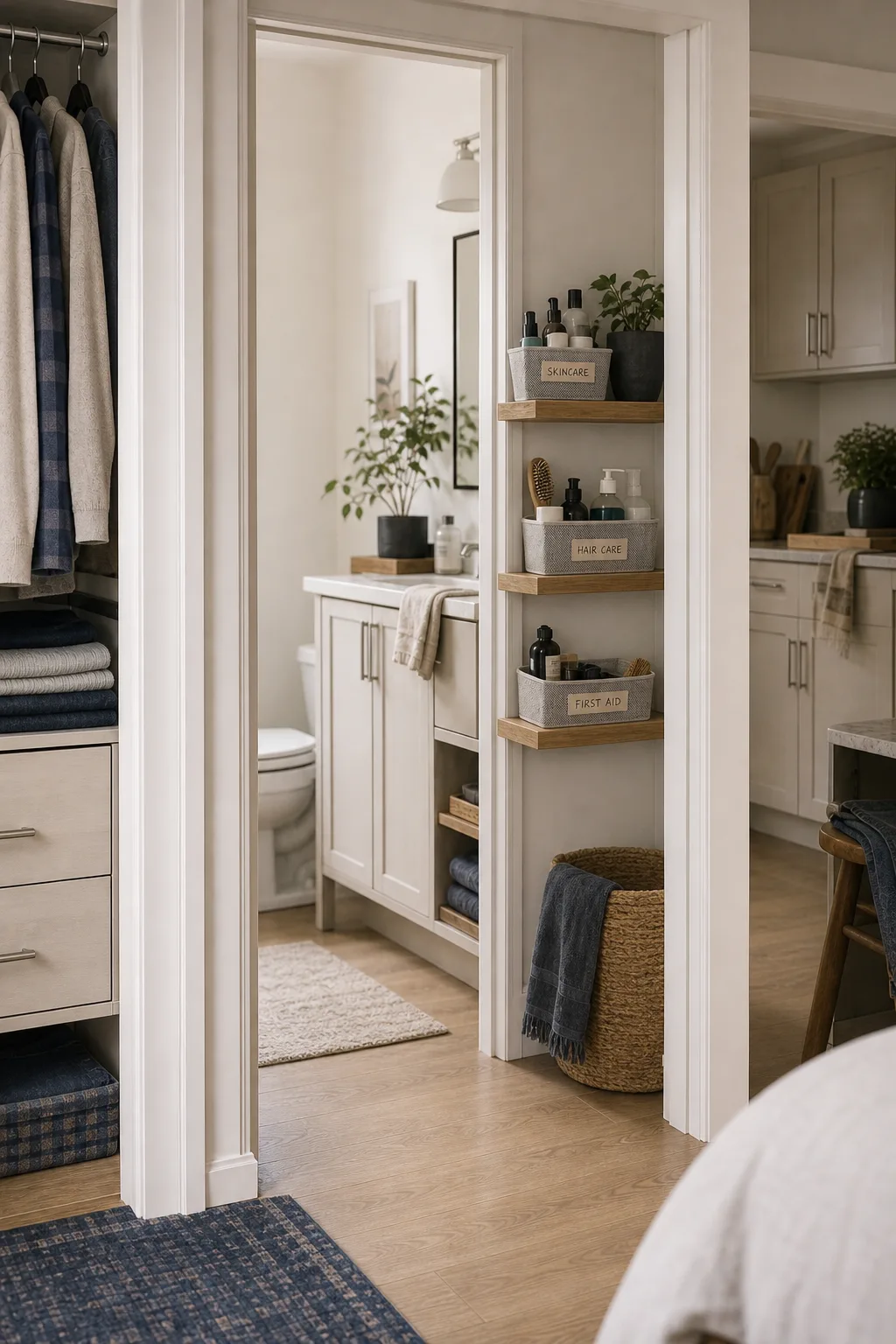
If your bathroom has an open shelf or floating ledge, resist the urge to line products up randomly. Group them by category into small bins or baskets: skincare in one, hair products in another, first aid in a third. Label the front of each bin, even with masking tape and a marker, so the category is immediately clear. Labeled categories are what keep open shelving from becoming a cluttered visual mess, and they make it faster to find things when you are running late.
Tip: Clear bins let you see when you are running low on something without having to dig. Opaque bins look tidier but require more effort to maintain.
Entryway
9. Create a drop zone at the front door using a wall-mounted hook strip
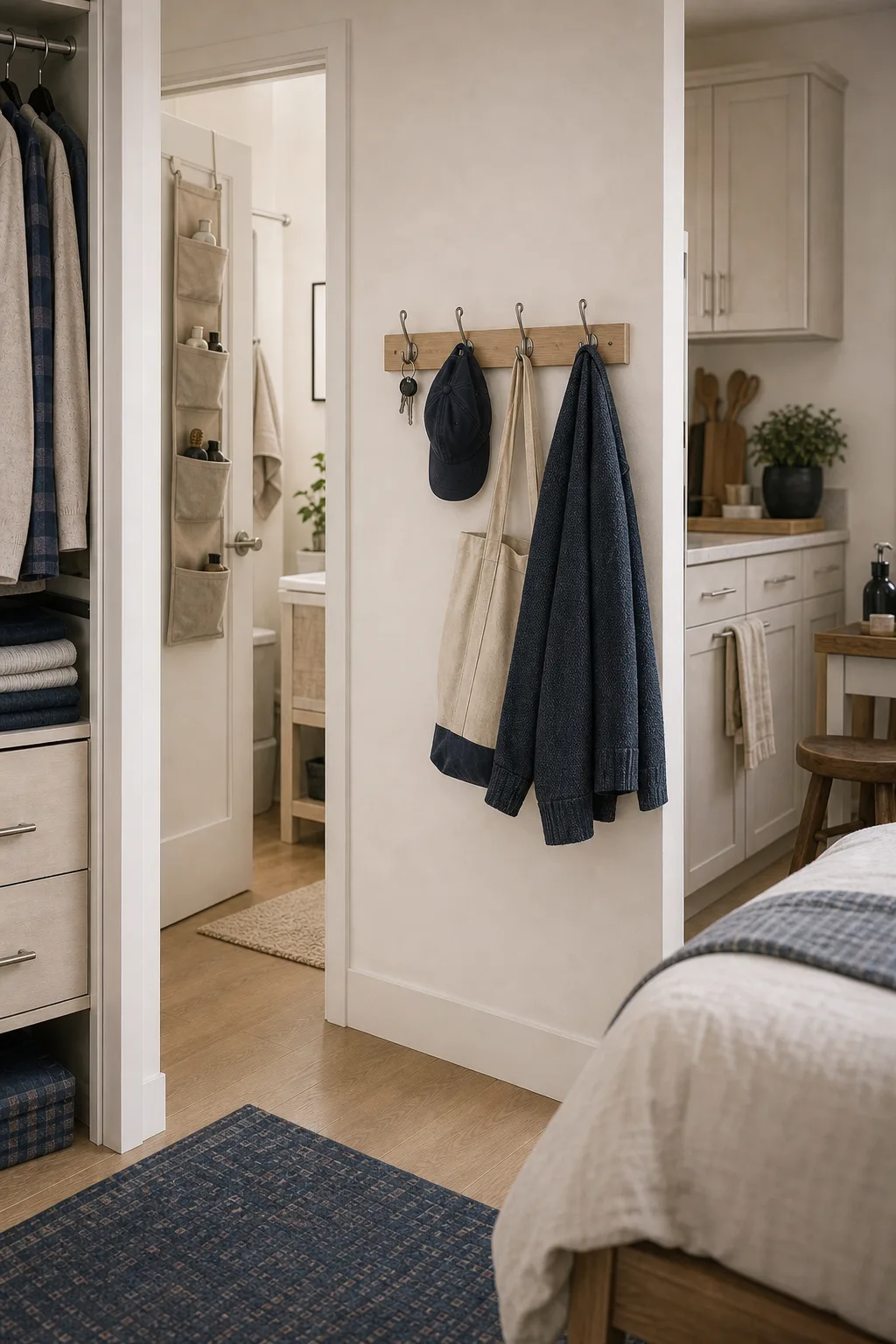
Without a mudroom or entryway closet, keys, bags, and coats tend to land wherever they fall. A removable adhesive hook strip mounted near the front door gives each item a designated hook and stops the pile-up before it starts. I keep four hooks near my door: one for my keys, one for my bag, one for a reusable tote, and one for whatever jacket I am rotating. Having a home for each thing is the core of storage without clutter, and it costs about ten dollars to set up.
Tip: Command strips have a weight rating on the packaging. Check the weight of whatever you are hanging before you commit to a size.
10. Tuck shoes into a slim over-door rack or a low-profile bench with storage

Shoes are one of the fastest ways a small entryway becomes a tripping hazard. An over-door shoe organizer uses vertical space on the back of a coat closet or even the front door itself. If you prefer a floor solution, a bench with a hollow interior or a bottom shelf keeps shoes contained and gives you a seat to put them on. Either option keeps the floor clear, which makes even a narrow hallway feel larger and less chaotic.
Tip: Limit the entryway to the shoes you actually wear in the current season. Off-season pairs go in a bin under the bed or on a high closet shelf.
Desk & WFH
11. Keep desk surfaces clear by giving every cable and supply a drawer assignment
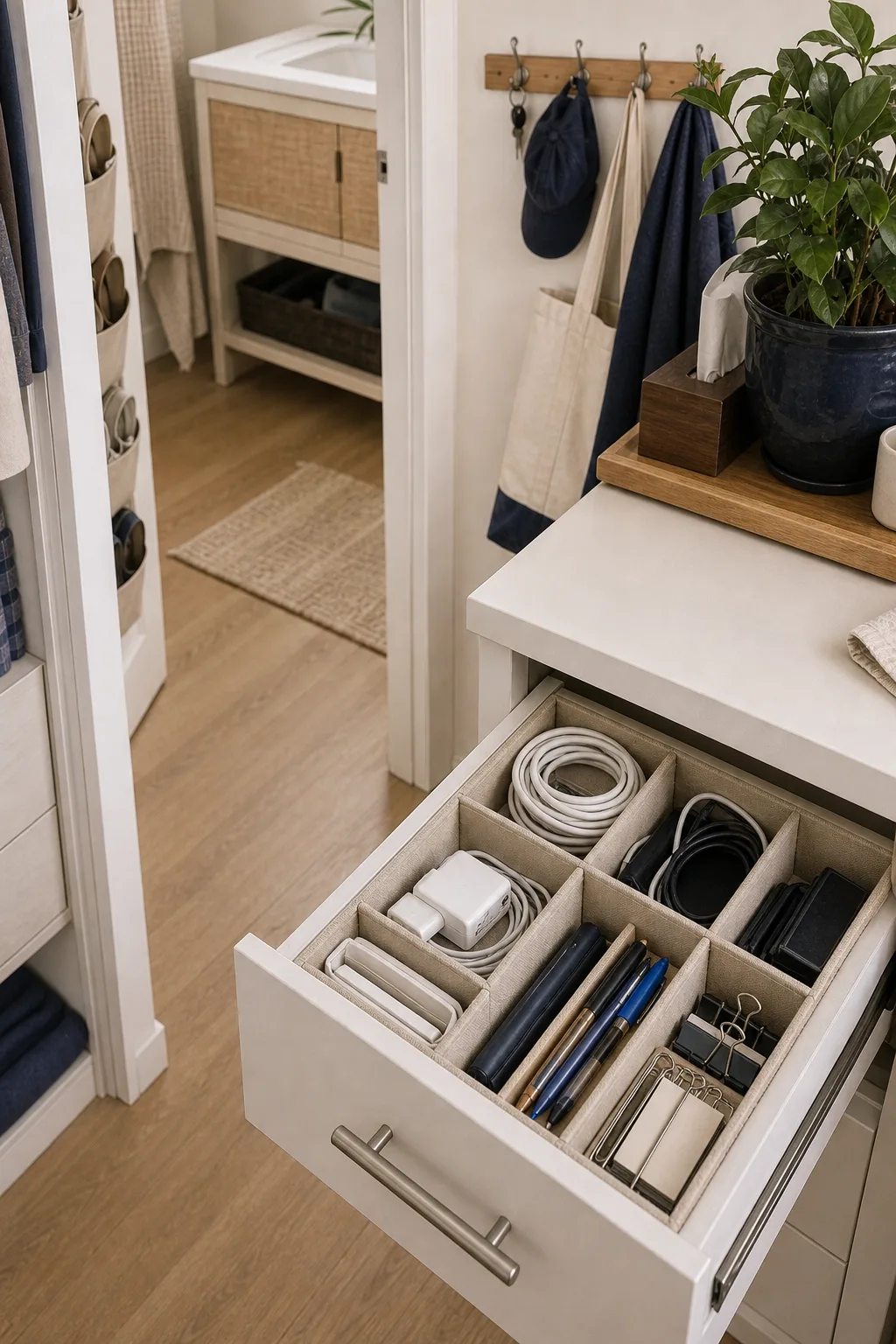
A desk in a small apartment or studio often does double duty as a dining table, craft space, or landing zone. The fastest way to maintain small space organization on a desk is to assign every category of supply to a specific drawer, bin, or pouch and return things there at the end of every work session. Cables and chargers in one spot, pens and markers in another, paperwork in a folder. When everything has a category, tidying takes two minutes instead of twenty.
Tip: A small desktop organizer with two or three compartments is usually enough for a minimal work-from-home setup. You likely do not need the large tower version.
Cleaning Storage
12. Store cleaning supplies in a portable caddy so they move with you

Cleaning storage in a small apartment is tricky because you often have one under-sink cabinet to work with and no utility closet. A portable cleaning caddy keeps all your supplies in one spot and means you carry everything with you from room to room instead of making multiple trips. Keep the caddy under the sink or in a low cabinet and limit what goes in it to what you actually use regularly. Spare supplies and refills go in a separate bin so the daily caddy stays light and easy to grab.
Tip: Decanting refill products into smaller bottles means your everyday caddy stays compact and does not get weighed down by bulk sizes.
FAQ
How do I create small space storage without clutter when I have almost no built-in storage?
Focus on vertical space first. Over-door organizers, tension rods inside cabinets, and wall-mounted adhesive hooks add storage without requiring built-ins or drilling. The key is assigning every category of item a specific home, even if that home is a labeled bin on a shelf, so things do not accumulate on surfaces.
What are the best renter-friendly storage solutions that do not damage walls?
Adhesive hooks rated for the weight you need, tension rods, over-door organizers, freestanding shelving units, and furniture with built-in storage like ottomans or bed frames with drawers are all renter-friendly options. Command brand adhesive products are specifically designed to come off without damaging most painted walls, though it is worth testing in a low-visibility spot first.
How do I keep a studio apartment organized when everything is in one room?
Define zones visually even without walls. A small rug anchors a living area, a desk lamp signals a work zone, and a curtain or bookshelf can divide a sleep space from the rest of the room. Within each zone, use the same labeled-category system you would use in a multi-room apartment. The goal is for each area to have a clear purpose so items from one zone do not drift into another.
Is it better to use open shelving or closed storage in a small apartment?
Both work, but they require different habits. Open shelving looks tidy only when categories are clearly grouped and surfaces are edited down to what you actually use or want to see. Closed storage like cabinets and bins hides clutter more easily but can become disorganized quickly if you do not maintain a system inside. Most small apartments benefit from a mix: closed storage for daily-use items and open shelving for a few intentional display pieces.
Save this guide somewhere you will find it again, your camera roll, a bookmark folder, or a Pinterest board works great. If you want more practical apartment organization ideas sent straight to your inbox, the Nest and Narrow newsletter covers exactly this kind of room-by-room, renter-friendly thinking. You can sign up at nestandnarrow.com.