

When I moved into my first studio apartment, I stood in the middle of the room and genuinely could not figure out where anything was supposed to go. The kitchen bled into the living area, my closet was barely a suggestion, and the bathroom had one narrow shelf above the toilet. There was no mudroom, no pantry, no dedicated office corner. Just one open room and a lot of stuff.
What helped me most was treating the studio like a real home with actual zones, even if those zones were separated by a rug instead of a wall. This guide walks through studio apartment organization room by room, covering everything from your kitchen cabinet corners to the patch of wall beside your front door. Every step here is renter-friendly, most require zero drilling, and all of them come from living this layout myself.
Key takeaways
- Treat each area of your studio as its own zone and set it up with only the items that belong to that function.
- Vertical space is your biggest untapped storage asset in a small apartment, especially in the kitchen, bathroom, and closet.
- Renter-friendly storage tools like tension rods, over-door organizers, and freestanding shelves let you stay organized without touching a single wall.
Why I Started Organizing by Zone
I used to reorganize my studio by just moving piles from one surface to another and calling it done. It was not until I stopped and actually named each zone that things started staying in place. Giving my desk corner a real identity, separate from my lounge area three feet away, changed how I used the whole apartment.
Step-by-step
Start Here: The Studio Foundation
1. Map your studio into named zones before you move anything

Before buying a single bin or shelf, walk your studio and assign a name to each area: kitchen, sleep, work, lounge, entry. Even if your desk chair is three feet from your bed, giving it a label helps you make intentional decisions about what lives where. Sketch a rough floor plan on paper and note which zones share walls or floor space. This is the foundation of real studio apartment organization. Once you have zones, you stop cramming things wherever they fit and start placing them where they belong.
Tip: Use painter's tape on the floor to mark zone boundaries while you experiment with layout before committing.
Kitchen
2. Use a tension rod to double your under-sink kitchen storage
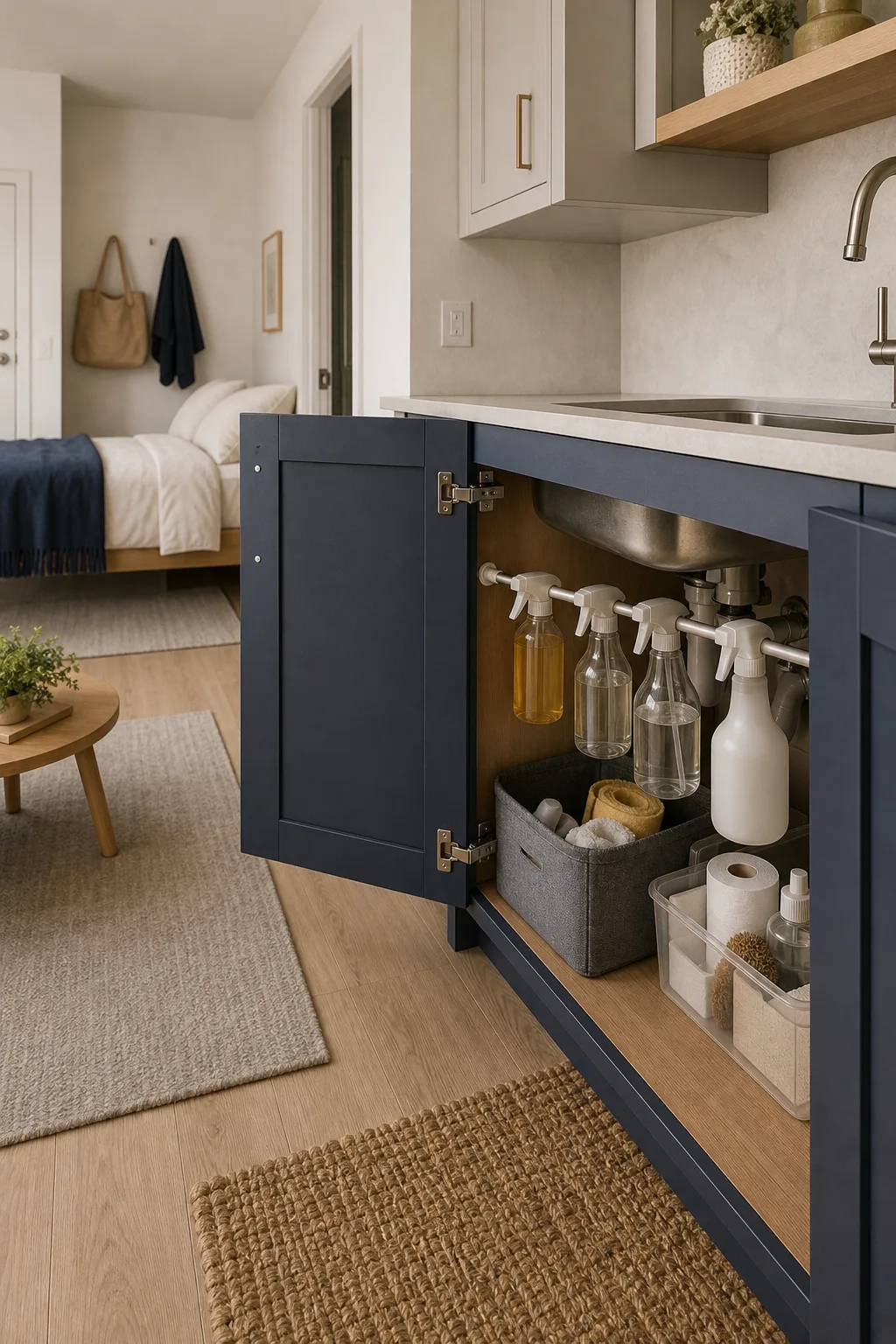
The cabinet under a studio kitchen sink is usually a chaotic cave of cleaning sprays and grocery bags. A simple tension rod hung horizontally across the inside of the cabinet lets you hang spray bottles by their triggers, instantly freeing up the floor of the cabinet for bins or extra sponges. This is one of the most effective apartment organization ideas I have used because it costs almost nothing and requires no tools or landlord permission. Pair it with a small pull-out bin on the cabinet floor to catch sponges, scrub brushes, and dish soap refills. You go from a jumbled pile to a genuinely functional system in about ten minutes.
Tip: Decant dish soap and hand soap into matching pump bottles so the cabinet top stays tidy too.
3. Stack a freestanding shelf unit beside or above your refrigerator

Studio kitchens rarely have a pantry, so the vertical space beside or above the refrigerator is prime real estate you are probably not using. A slim freestanding shelf unit (look for ones around 12 inches deep) fits neatly in that gap and gives you several shelves for dry goods, small appliances, or extra paper towels. This is a classic renter-friendly storage move because it is freestanding, leaves no holes, and moves with you. Label each shelf so items have a home and you are not stacking things randomly when you are in a hurry. If you are tight on floor space, check whether your refrigerator has a flat top you can use for a basket of pantry overflow.
Tip: Put your most-used items at eye level and seasonal or backup supplies on the top shelf.
Closet
4. Divide your closet with a hanging fabric organizer and a tension rod
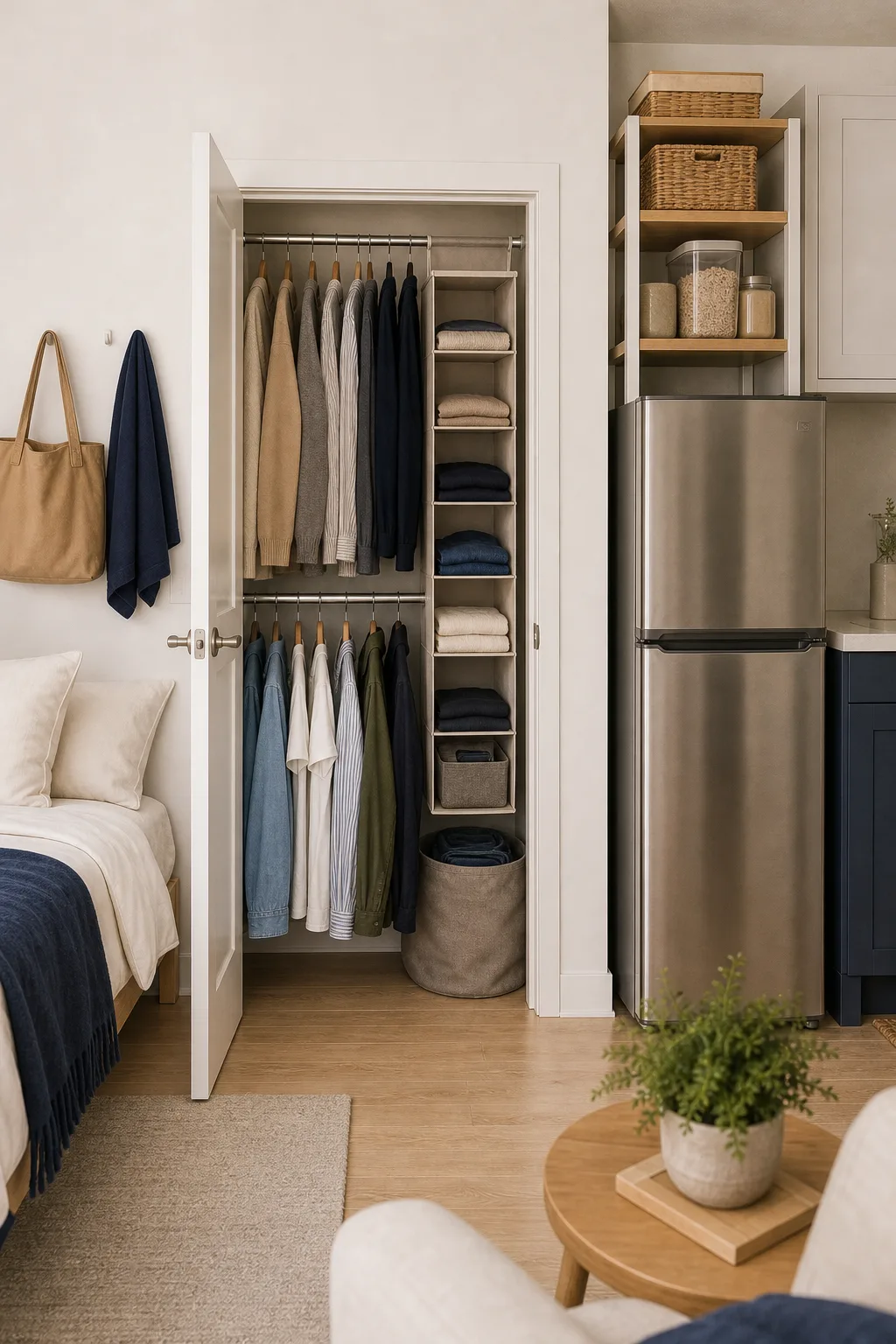
Studio closets tend to be small and single-rod, which means clothes pile on top of each other and folded items end up in chaos. Add a second tension rod below the existing one to create a double-hang section for shirts, jackets, and shorter items. Then hang a fabric shelf organizer from the main rod to hold folded sweaters, jeans, or shoes. Together these two tools can nearly double your usable closet storage without a single screw. This is one of those home organization tips that sounds almost too simple but genuinely transforms a cramped closet into something that feels considered.
Tip: Group your clothes by category first so you know how much hanging versus folded space you actually need before adding hardware.
5. Add an over-door organizer to the back of your closet door

The back of a closet door is almost always wasted space in apartments, and an over-door organizer fixes that without any drilling. Use it for shoes, accessories, cleaning supplies, or even a small collection of bags and scarves. Clear pocket organizers let you see everything at a glance so you are not digging through a bin every morning. In a studio where closet space is limited, this single addition can absorb an entire category of items that used to live on the floor or on a chair. Most over-door hooks and organizers hang on standard hollow-core doors, which is exactly what most rental apartments have.
Tip: Assign each row or section a category, like shoes on the bottom rows and accessories higher up, so the system stays intuitive.
Entryway
6. Create a no-drill entryway station using a freestanding coat rack and a small shelf

Most studios have a front door that opens directly into the living area with no dedicated entry. A slim freestanding coat rack placed just inside the door gives you a landing spot for coats, bags, and keys without requiring any wall anchors. Pair it with a small console table or floating shelf (the kind that uses existing furniture for support) to hold a tray for keys, a small bin for mail, and your everyday bag. This turns a forgotten doorway into a functioning zone and keeps the rest of your studio from becoming a dumping ground for entry clutter. Small space organization really does start at the door.
Tip: Keep a small basket at the base of the coat rack for shoes you wear most, so they have a home instead of landing in the middle of the floor.
7. Set up a dedicated drop zone for daily carry items

In a studio, when things do not have a specific home, they end up everywhere. A small tray or divided box near the front door for keys, transit cards, earbuds, and lip balm takes about two minutes to set up and saves you five minutes of searching every single morning. This is one of the simplest apartment organization ideas and one of the highest-impact. The goal is to make putting things away easier than setting them down randomly. If you do not have a console table, a small wall-mounted hook rail (command hook style, no drilling into studs) works just as well for bags and keys.
Tip: Limit the tray to items you carry every day, otherwise it becomes a catch-all within a week.
Desk & WFH
8. Build your desk zone with vertical storage to keep the surface clear

In a studio, your desk is often also your dining table or your kitchen counter, which means surface clutter becomes a real problem fast. Set up a small desktop shelf riser to move items like notebooks, a plant, or a lamp to a second level, leaving the main surface clear for actual work. A pegboard leaning against the wall behind your desk (no mounting required) gives you a place to hang headphones, small organizers, and a power strip, all without touching the walls. If your desk has drawers, use small dividers inside them so supplies do not shift around. A calm desk zone makes the whole studio feel more organized because it is usually the most visible surface.
Tip: At the end of each workday, do a 60-second surface reset so your desk does not bleed clutter into your living space overnight.
9. Manage cords and tech clutter with a cable box and a power strip

Cord clutter is one of the fastest ways a studio WFH setup starts to look and feel chaotic. A simple cable management box hides your power strip and the cord bundle inside it, turning a pile of wires into one clean box on or under your desk. Velcro cable ties keep individual cords bundled and labeled so you know what belongs where. If your desk is near a wall, a few adhesive cable clips route cords flat against the baseboard or the back of the desk leg so they disappear from view. These are all renter-friendly solutions, no permanent changes to the apartment required.
Tip: Label both ends of every cable with a small piece of tape and a marker so you never have to guess which cord belongs to which device.
Bathroom
10. Use over-toilet shelving and a tension rod to maximize bathroom storage

Studio bathrooms are often the smallest room in the apartment, with barely enough space to turn around. An over-toilet freestanding shelf unit is the single biggest upgrade you can make without drilling. It uses the dead vertical space above the toilet tank and gives you several shelves for toiletries, towels, and extra supplies. Inside the cabinet under the sink, add a small tension rod to hang spray bottles and a two-tier shelf insert to double your usable surface area. These are the kinds of no-drill apartment organization ideas that make a genuine difference in a bathroom where every inch counts.
Tip: Keep daily-use items like face wash and toothpaste on the lowest accessible shelf and backup supplies on the top shelf.
11. Contain shower and counter clutter with a caddy and a small tray

A shower caddy that hangs over the showerhead or tension-mounts between the walls keeps bottles off the floor and the ledge of the tub, which matters a lot in a small bathroom that doubles as a visual anchor for the studio. On the vanity counter, a small tray corrals your everyday items like moisturizer, deodorant, and a hair tool so they do not spread across every surface. Decanting products into consistent containers helps the space look calmer even when it is full. In a studio, the bathroom is one of the few private rooms you have, and keeping it orderly makes the whole apartment feel more settled.
Tip: Audit your shower products every month and remove anything you have not used recently, small spaces fill up faster than you expect.
Cleaning Storage
12. Store cleaning supplies in a slim caddy that tucks behind a door or in a closet corner
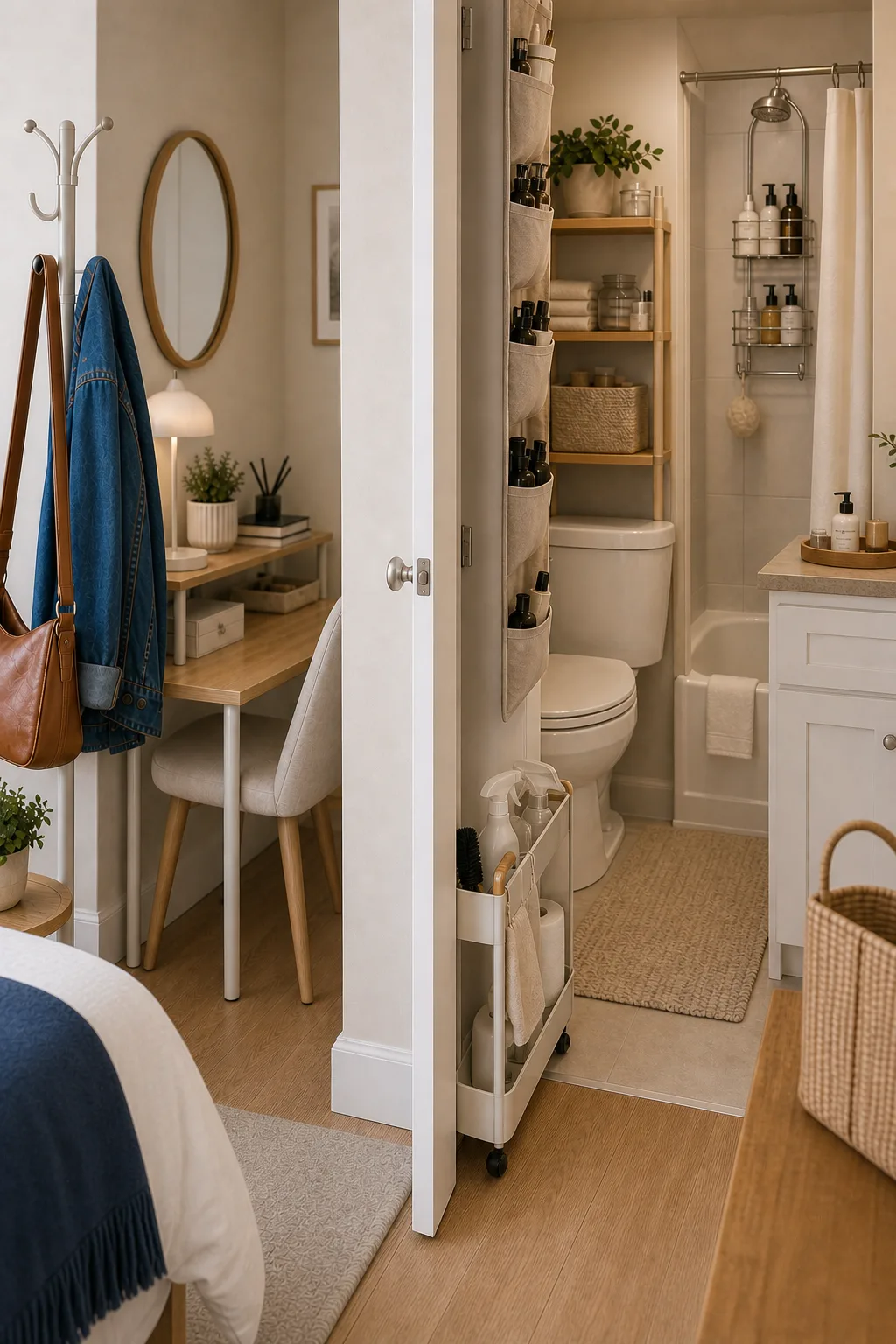
Cleaning supply storage is one of the most overlooked parts of apartment organization room by room because most studios do not have a utility closet. A slim handled caddy holds your most-used cleaning tools and tucks behind a door, under the sink, or in the corner of your main closet. Decant bulk cleaners into small labeled spray bottles so the caddy stays light and portable. Keep a small brush or dustpan in a designated spot near the kitchen since it is the area you will clean most often. When your cleaning supplies have a real home, you are more likely to actually put them away instead of leaving them out on the counter.
Tip: Carry the caddy room to room when you clean rather than storing supplies in multiple spots so nothing gets lost or forgotten.
FAQ
How do I organize a studio apartment when I have no storage at all?
Start with freestanding furniture that pulls double duty, like an ottoman with interior storage or a bed frame with drawers underneath. Vertical shelving units and over-door organizers add storage without using floor space or requiring wall anchors. Focus on one zone at a time so the process feels manageable rather than overwhelming.
What is the best way to separate living and sleeping areas in a studio?
A bookshelf, curtain panel on a tension rod, or a large area rug can visually divide the two zones without any construction. Position your bed so it faces away from the main living area when possible, and keep only sleep-related items on that side of the room. Even a small visual boundary makes each zone feel more intentional.
Can I organize a studio apartment without drilling into walls?
Yes, and most rental apartments actually require it. Tension rods, over-door organizers, freestanding shelving, adhesive hooks rated for your wall type, and furniture with built-in storage are all no-drill solutions that work well in studios. The key is choosing tools that are adjustable and portable so they adapt to your space without leaving damage behind.
How do I keep a studio apartment from feeling cluttered all the time?
Every item in your studio needs a designated home, not just a general area. When things have specific spots, putting them away becomes automatic. Do a quick 10-minute reset each evening to return items to their zones. The fewer surfaces you have covered with loose items, the more spacious the studio will feel even when it is full.
What are the most useful storage products for a small studio apartment?
The ones that consistently make the biggest difference are over-door organizers, tension rods (both inside cabinets and across doorways), freestanding shelf units, bed frames with drawers, and a handled cleaning caddy. None of these require landlord approval and all of them move with you when your lease ends.
Save this guide somewhere you can find it when you are ready to tackle the next zone. If you want more renter-friendly organization ideas sent straight to your inbox, the Nest & Narrow newsletter is where I share what is actually working in my own small apartment, no fluff, just practical stuff.