

When your entire apartment is one room, your closet does a lot of heavy lifting. It stores clothes, yes, but in most studios it also ends up holding extra linens, off-season items, and anything that does not have a better home. That kind of pressure on a small space makes it easy for things to pile up fast. Building a studio wardrobe capsule is one of the most effective apartment organization ideas I have tried, because it forces you to be intentional about what lives in that closet and how it is arranged.
I want to be upfront: this is not about whittling your wardrobe down to 30 items and calling it minimalism. It is about creating a small space organization system where every piece has a place, you can actually see what you own, and adding one new item does not cause everything else to collapse. Most of these steps are renter-friendly storage solutions that require zero drilling and zero landlord approval. If you are working with a standard apartment closet, a freestanding wardrobe, or even an open rack in a studio corner, these steps will translate.
Key takeaways
- A studio wardrobe capsule works best when you treat your closet as zones, not just one big storage dump.
- Renter-friendly storage tools like tension rods, over-door organizers, and freestanding shelves give you structure without permanent changes.
- Editing your wardrobe before organizing it saves you from building a beautiful system around things you do not actually wear.
Why I finally tackled my studio closet
I spent almost a year working around a closet that was technically organized but practically useless because I had never actually zoned it. Everything was hanging, nothing was grouped, and finding a specific jacket felt like a small archaeology project. Building a proper studio wardrobe capsule took one Saturday afternoon and made me realize the problem was never the size of the closet.
Step-by-step
Start Here: Edit Before You Organize
1. Pull everything out before you organize anything

Trying to organize around existing clutter never works. Pull every single item out of your closet and set it on your bed or floor so you can see the full picture. This is the step most people skip, and it is the reason their system falls apart within two weeks. Seeing everything at once makes it much easier to spot duplicates, items you forgot you owned, and things that have no business living in a wardrobe at all. It also gives you a clean surface to work with when you start building your new system.
Tip: Org tip: Do this step on a day you have two or three hours free so you are not leaving your bed covered in clothes overnight.
2. Sort into keep, donate, and relocate piles

Once everything is out, sort into three categories: keep, donate, and relocate. Relocate means items that belong in your closet but should move to a different zone, like off-season sweaters that are taking up prime real estate on the main rod. The donate pile is for things you have not worn in a year or that no longer fit the way you want. Be honest but not ruthless. The goal of a studio wardrobe capsule is a closet you can actually use, not one that looks good in a photo but leaves you with nothing to wear.
Tip: Org tip: Use a large shopping bag or cardboard box as your donate bin so it is ready to leave the apartment the same day.
Zone Your Closet
3. Map your closet into three clear zones
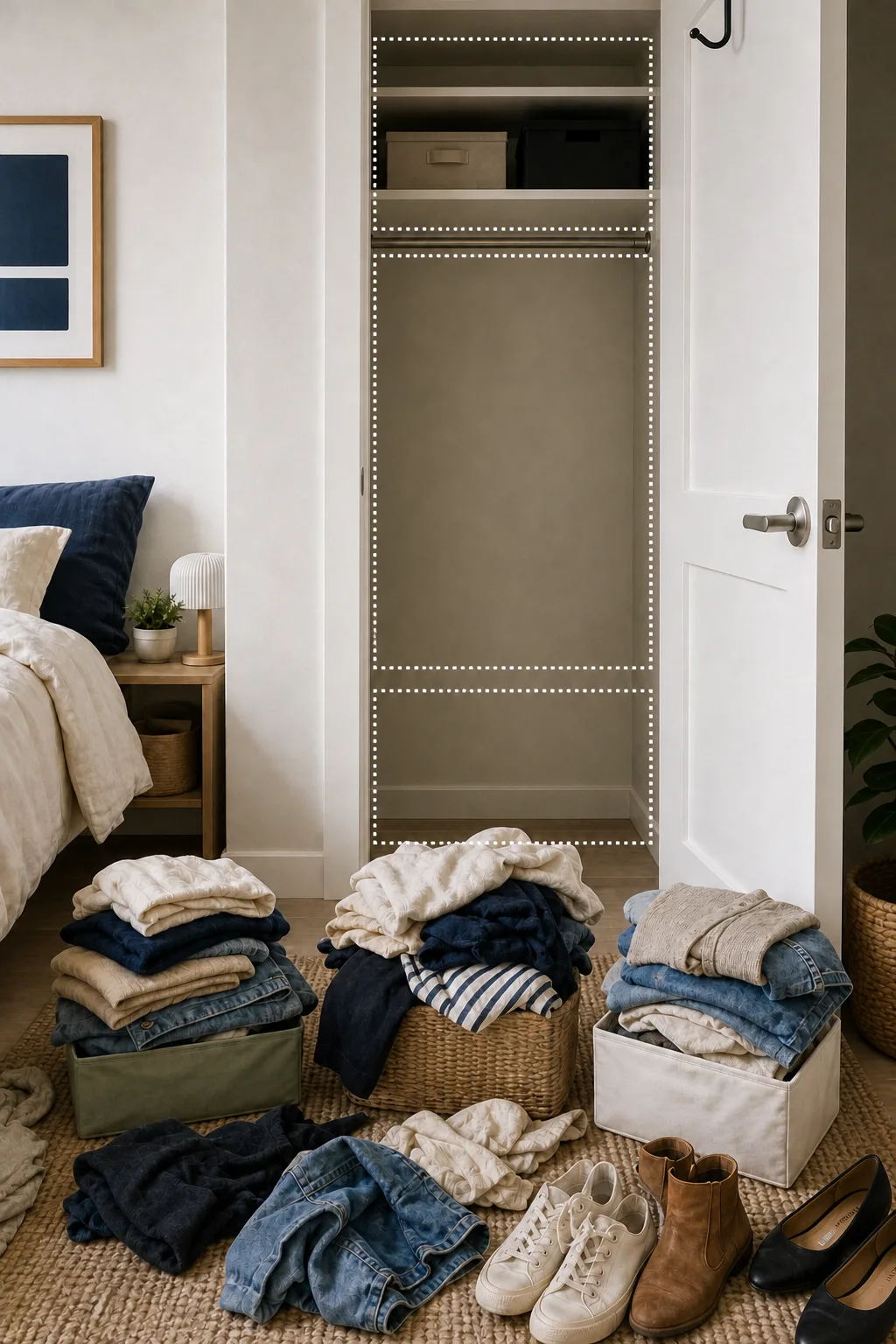
Before adding any bins or hangers, sketch out three zones for your closet: everyday items, occasional items, and off-season or overflow storage. Everyday items belong at eye level and within easy reach. Occasional items like formal wear or specialty gear can go higher or toward the back. Off-season clothes should be stored in a way that keeps them accessible but out of the daily flow. Zoning is the foundation of good small space organization because it stops the closet from becoming one big undifferentiated pile.
Tip: Org tip: Use painter's tape on the closet wall to label zones temporarily while you are still figuring out the layout.
4. Add a second hanging rod to double your rail space
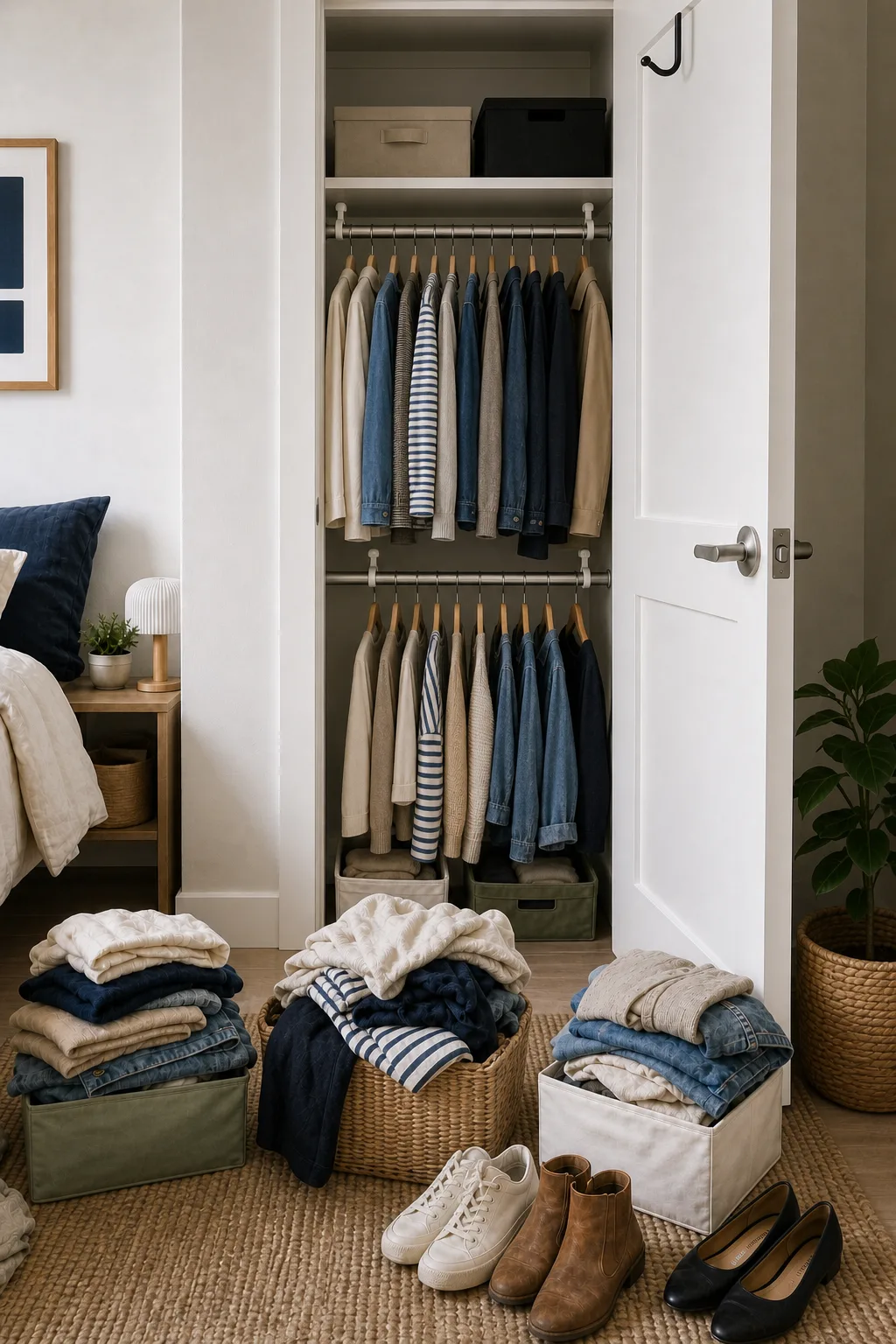
Most standard apartment closets have one rod running the full width, which wastes the bottom half of the space. A hanging closet doubler, which hooks over your existing rod and drops a second rod below it, instantly doubles your hanging capacity without any drilling. Use the top rod for longer items like dresses and pants hung at the waist, and the bottom rod for shorter items like tops, jackets, and folded trousers. This is one of the easiest renter-friendly storage upgrades you can make, and it costs less than twenty dollars at most home stores.
Tip: Org tip: Hang the doubler on the side of the closet that holds your shortest garments so the lower rod does not crowd the floor.
5. Switch to slim velvet hangers throughout
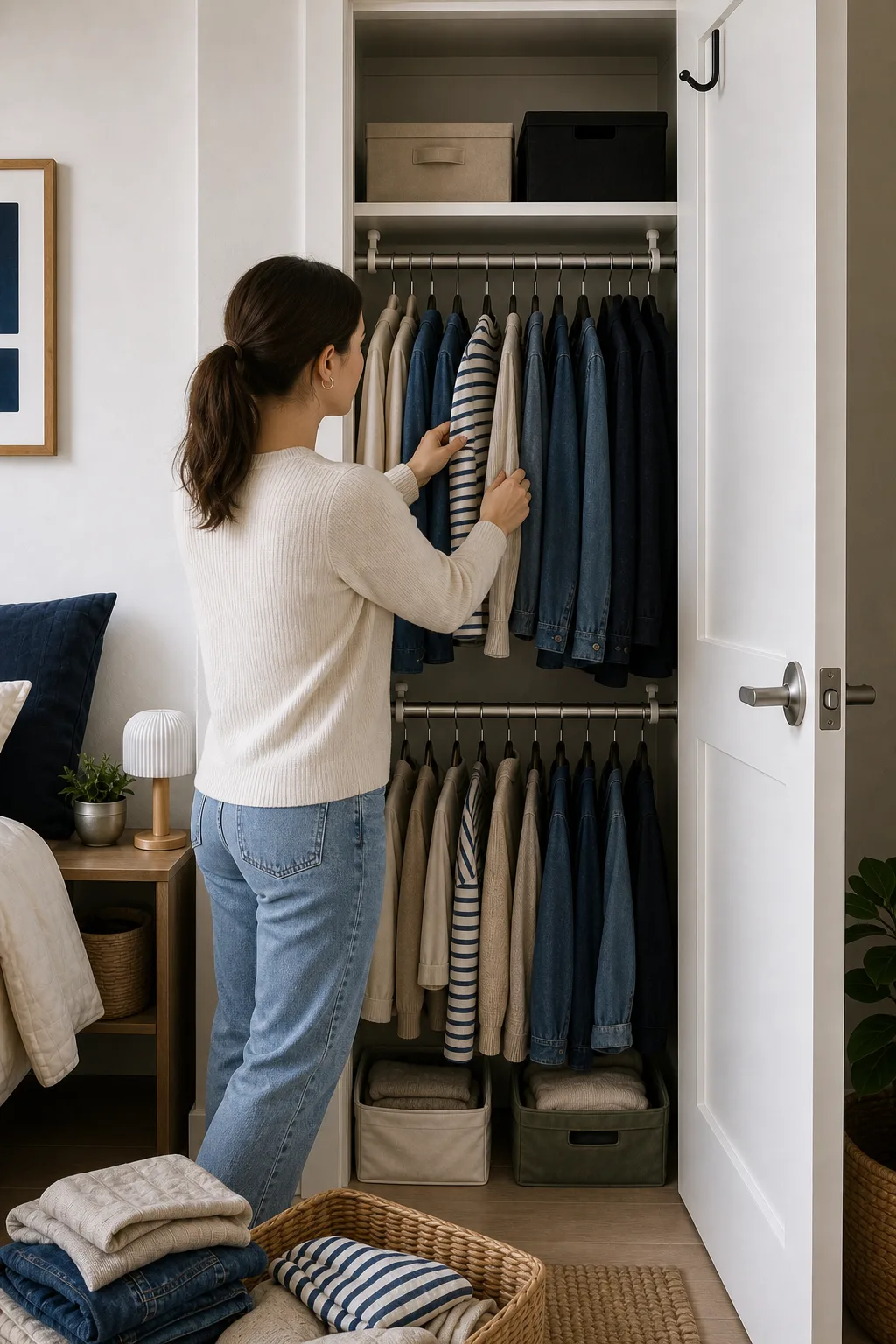
Wire hangers take up more rod space than you realize, and they let clothes slip off constantly. Switching to slim velvet hangers is one of those home organization tips that sounds minor but genuinely changes how a closet feels. Velvet hangers are roughly half the width of standard plastic ones, which means you can fit noticeably more on the same rod. They also grip fabric so things stay put. Matching hangers create visual consistency that makes even a packed closet look more intentional and calm.
Tip: Org tip: Replace hangers in batches as you sort rather than all at once so the project does not become overwhelming.
Maximize Shelf and Floor Space
6. Use shelf dividers to keep folded stacks from toppling

If your closet has a built-in shelf, folded items like sweaters and jeans tend to lean and collapse into each other unless something holds them upright. Clear acrylic shelf dividers clip onto the shelf and create individual columns for each stack. This is a small detail that makes a big difference in a studio wardrobe capsule because it means your folded items stay where you put them even after you pull one thing out. Look for dividers that grip the shelf without screws so they qualify as a no-drill solution.
Tip: Org tip: Limit each column to four or five folded items so pulling from the bottom does not topple the whole stack.
7. Stack vacuum storage bags for off-season bulky items

Bulky sweaters, heavy jackets, and extra bedding are the main things that eat up closet space in a small apartment. Vacuum storage bags compress these items to a fraction of their original size, which frees up shelf and floor space for everyday items. In a studio, this kind of off-season rotation is essential because you simply do not have room to store all seasons at full volume simultaneously. Compressed bags slide neatly under the bed, on a high shelf, or into a rolling bin in the corner. This is one of the most practical studio wardrobe capsule apartment organization ideas for renters with limited square footage.
Tip: Org tip: Label each bag with a piece of masking tape and a marker so you know what is inside without opening it.
8. Install an over-door organizer for accessories and small items

The back of your closet door is valuable real estate that most people ignore. An over-door organizer with clear pockets or hooks holds scarves, belts, sunglasses, and small bags without taking up any rod or shelf space. These organizers hang over the door without hardware, which makes them a fully renter-friendly storage solution. In a studio wardrobe capsule, keeping accessories visible and accessible means you actually use them rather than forgetting they exist at the bottom of a bin.
Tip: Org tip: Assign one pocket per category so you always know where to look and where to return things.
Handle the Floor Zone
9. Contain shoes in clear stackable boxes or a floor rack

Shoes on the closet floor create chaos fast, especially in a small space where floor real estate matters. Clear stackable shoe boxes let you see every pair at a glance and keep them protected from dust. A slim floor shoe rack is another solid option if you prefer quick grab-and-go access. Either way, containing shoes in a designated footprint stops them from sprawling across the closet floor and blocking access to everything behind them. In a studio wardrobe capsule, the floor zone is just as important as the hanging and shelf zones.
Tip: Org tip: Store the shoes you wear most often at the front of the rack and seasonal or occasion shoes toward the back or in boxes on a high shelf.
10. Add a freestanding wardrobe if your closet space is genuinely too small
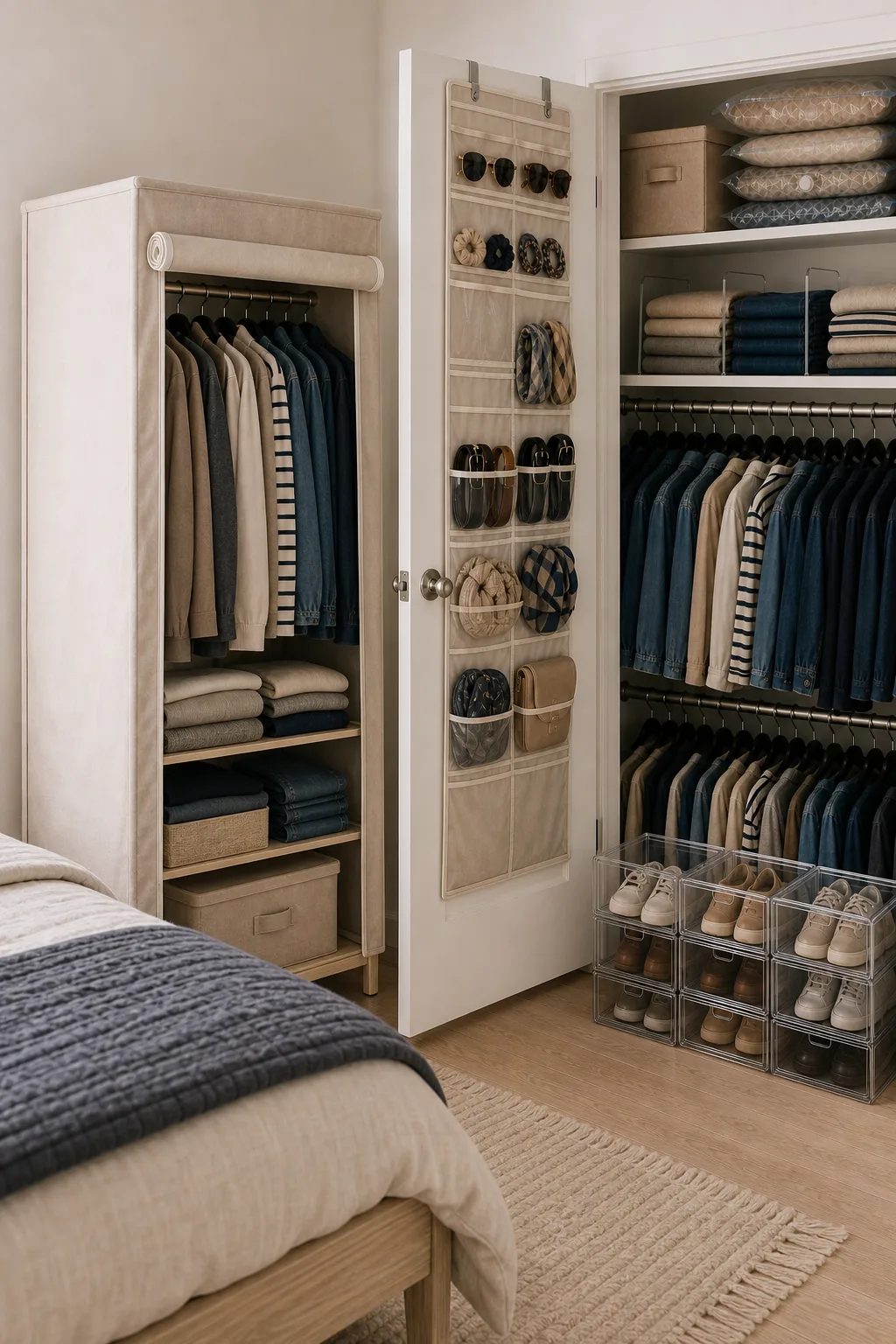
Some studio apartments have closets that are more of a suggestion than a functional storage system. If your built-in closet is truly inadequate, a freestanding wardrobe is one of the best renter-friendly storage solutions available because it requires no drilling and moves with you. Look for one with a hanging rod, a small shelf, and a drawer or two so it can handle multiple clothing categories. Position it in a corner or against a wall to minimize its footprint in your living space. A freestanding wardrobe treated as a proper zone within your studio wardrobe capsule works just as well as a built-in when it is organized thoughtfully.
Tip: Org tip: Measure your ceiling height before buying a freestanding wardrobe to make sure it fits without awkward gaps or forced angles.
Maintain the System
11. Create a one-in-one-out rule to keep the capsule intact

A studio wardrobe capsule only stays functional if you maintain it over time. The simplest way to do that is a one-in-one-out rule: when something new comes into the closet, something else leaves. This is not a rigid minimalism practice, it is just a way of keeping your storage capacity honest. In a small apartment where closet space is fixed, adding without removing is what causes systems to break down. Keep a small donation bag inside or near your closet so the process of letting things go stays easy and immediate.
Tip: Org tip: Do a quick five-minute closet reset every Sunday to catch anything that has been tossed in rather than properly placed.
12. Do a seasonal refresh every three months

Even a well-organized studio wardrobe capsule needs a reset as seasons shift. Every three months, spend about thirty minutes pulling out off-season items, rotating in current-season pieces, and reassessing what is working. This is also a good time to notice if any zones have crept out of their boundaries or if your donation bag is full and ready to go. A seasonal refresh keeps your small space organization system from quietly sliding back into chaos. Treating it as a short, scheduled habit rather than a big annual overhaul makes it much easier to stay consistent.
Tip: Org tip: Set a recurring calendar reminder so the refresh happens automatically rather than only when things get bad enough to force it.
FAQ
What is a studio wardrobe capsule and do I need to own fewer clothes to make it work?
A studio wardrobe capsule is a closet system built around intentional organization rather than a specific item count. You do not need to own fewer clothes to benefit from it. The goal is to know what you own, be able to access it easily, and store it in a way that makes sense for your actual space. Zoning, the right storage tools, and a consistent maintenance habit matter more than how many pieces are hanging on your rod.
What are the best renter-friendly storage solutions for a small apartment closet?
The most practical renter-friendly storage solutions for a small closet include hanging closet doublers, over-door organizers, slim velvet hangers, freestanding shelf units, and vacuum storage bags. None of these require drilling or permanent changes, so they work in rental apartments and move with you when you leave. Clear stackable shoe boxes and acrylic shelf dividers are also worth adding because they improve visibility without altering anything structural.
How do I organize a studio apartment closet when there is barely any space to work with?
Start by editing what is in the closet before adding any organization tools. A closet that is too small often just has too many things in it, including items that belong elsewhere in the apartment. Once you have removed what does not belong, use a hanging rod doubler to create more hanging levels, compress off-season items into vacuum bags, and use the door for accessories. Even a very small closet can function well when every zone has a clear purpose.
How often should I do a studio wardrobe capsule refresh?
A seasonal refresh every three months works well for most people. This lines up roughly with the shift between winter, spring, summer, and fall clothing, which means you are rotating storage and doing a quick edit at the same time. If you do a short five-minute tidy each week in between, the quarterly refresh stays manageable and never turns into a full-day project.
Save this guide to your apartment organization board so you can come back to it when you are ready to start, or share it with a friend who is dealing with a closet that has gotten out of control. If you want more small-space organization ideas sent straight to your inbox, the Nest and Narrow newsletter is a good place to start. Sign up at nestandnarrow.com and I will keep the tips practical, renter-friendly, and sized for real apartment life.