
When you live in a small apartment, toys have a way of taking over every flat surface, corner, and cabinet shelf you thought you had claimed. Toy rotation is the system where you keep only a small portion of toys accessible at one time and store the rest out of sight, swapping them out every week or two. It sounds simple, and honestly, it is. The payoff is a calmer living space, less visual noise, and kids who are genuinely more interested in what is in front of them.
The tricky part is making toy rotation work inside an apartment where you have no basement, no dedicated playroom, and very likely a landlord who would prefer you not drill into every wall. These 12 steps are built around that exact reality. You will find apartment organization ideas that use existing furniture, renter friendly storage that requires no permanent hardware, and home organization tips that hold up long term even in the tightest square footage.
Key takeaways
- Toy rotation in a small apartment works best when you assign one dedicated out-of-sight storage zone for the off-rotation bins, whether that is a high closet shelf, a bed skirt-covered under-bed area, or a lidded ottoman.
- Keeping only one to two categories of toys in rotation at a time dramatically reduces floor clutter and makes small space organization feel achievable without buying a lot of new furniture.
- Renter friendly storage tools like tension rods, over-door organizers, freestanding shelves, and lidded bins let you build a full toy rotation system without a single nail hole.
Why I Started Rotating Toys in My One-Bedroom
My living room used to look like a toy store had a slow leak, with pieces spread across every surface by nine in the morning. I started toy rotation mostly out of desperation and kept it because the apartment genuinely felt calmer, and because my kid was more focused with fewer choices in front of her. It is one of those small space organization habits that I wish I had started much earlier.
Step-by-step
Before You Build the System
1. Count What You Have Before You Rotate Anything
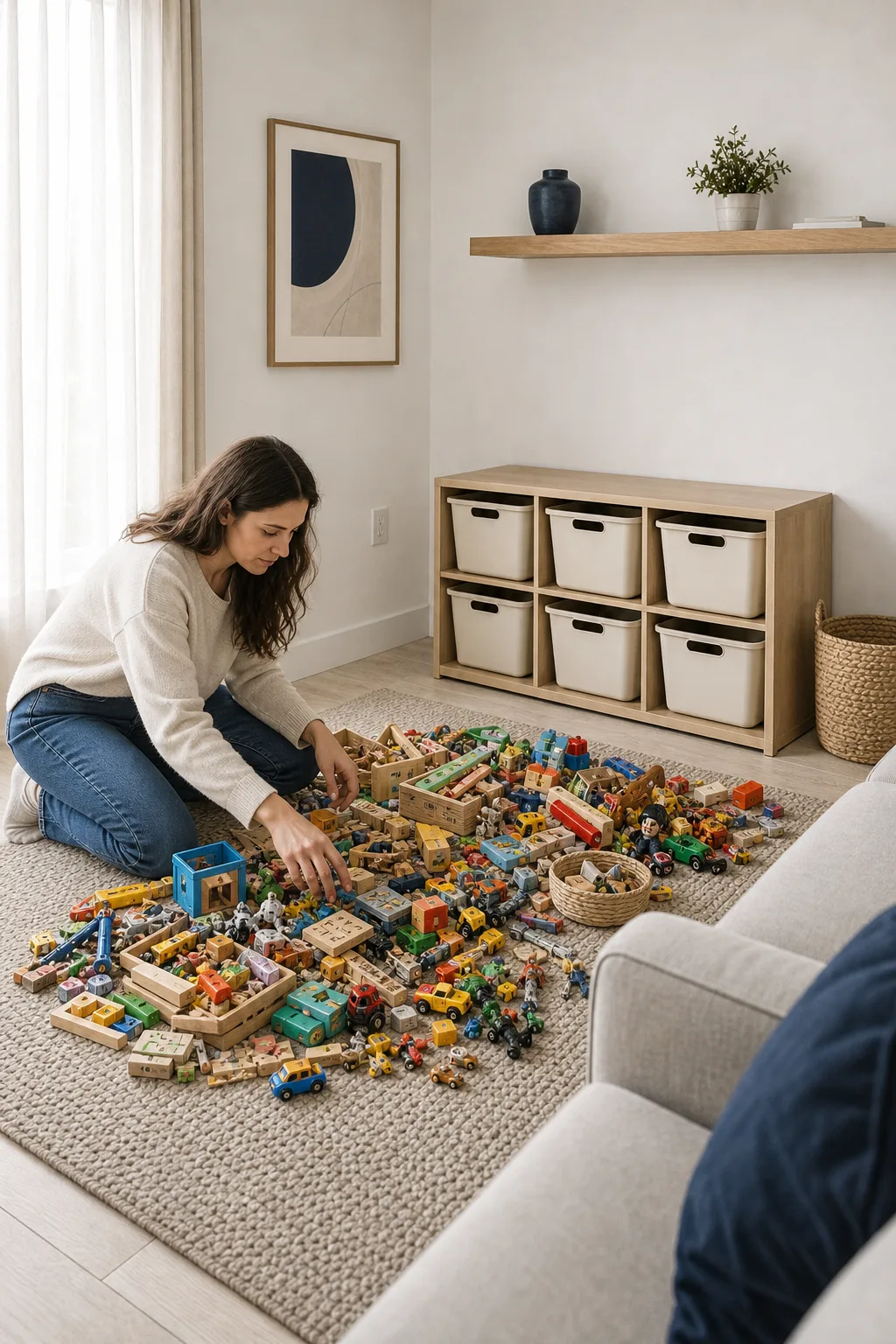
Pull every toy out into one pile and do a rough count by category: building toys, art supplies, small figures, vehicles, puzzles, and so on. You cannot build a rotation schedule without knowing what you are working with. For toy rotation in a small apartment to actually reduce clutter, you need a realistic picture of total volume first. This step usually reveals duplicates, broken pieces, and items that were never touched, all of which are candidates for donation before you even start. A smaller starting inventory makes every other step easier.
Tip: Org tip: Bag and label donations immediately so they leave the apartment before you second-guess them.
2. Sort Into Rotation Batches of Roughly Equal Appeal
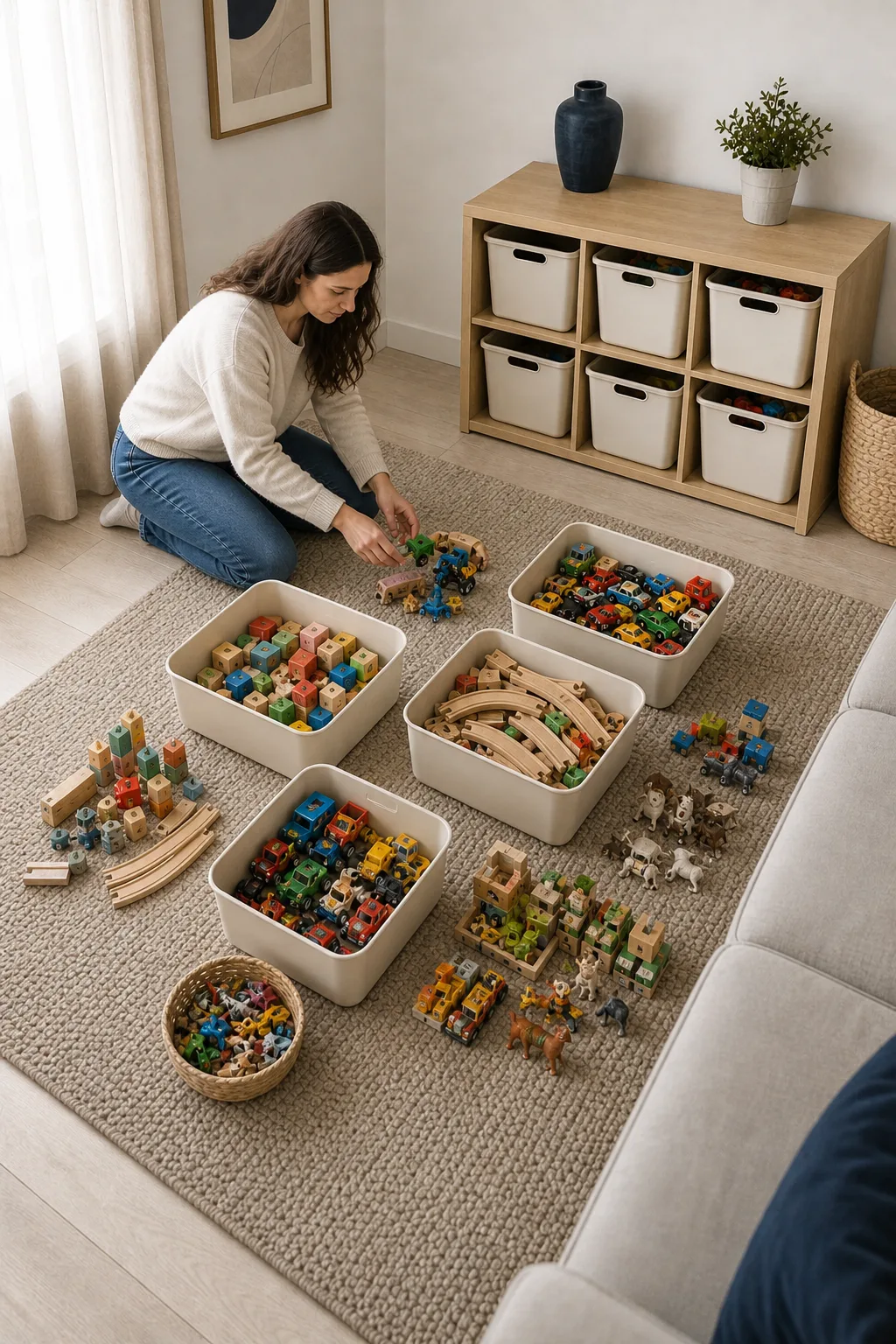
Divide your edited toy collection into two to four equal batches, making sure each batch has a mix of open-ended play items and something with slightly higher novelty. If one batch is all puzzles and another is all vehicles, the puzzle week will feel like punishment. Balance matters for the system to hold. Aim for three to six items per batch depending on the child's age and your storage space. For small space organization purposes, fewer items per batch means smaller bins and easier storage.
Tip: Org tip: Photograph each batch on your phone so you remember what belongs in which bin when you are rotating.
Setting Up Your Storage Zones
3. Choose a Single Out-of-Sight Storage Zone for Off-Rotation Bins

The whole system depends on the off-rotation toys being genuinely out of sight so they feel fresh when they come back. In an apartment, your best options are a high closet shelf, the space under a bed with a dust ruffle or bed skirt, inside a lidded storage ottoman, or the top shelf of a wardrobe armoire. Pick one zone and commit to it. Renter friendly storage in this role does not need to look pretty since it is hidden, so plain lidded bins or drawstring laundry bags both work well. Stacking flat-lidded bins on a closet shelf is one of the most space-efficient apartment organization ideas for this purpose.
Tip: Org tip: Label the front of each bin with a strip of washi tape and a marker so swapping is fast.
4. Use a Freestanding Shelf as Your Active-Rotation Display

The toys currently in rotation need a home that is accessible but contained. A small freestanding bookshelf or a narrow four-cube organizer works well in an apartment because it requires no installation and can move with you. Keep each shelf level to one category so cleanup stays intuitive for small kids. This approach is a core apartment organization idea because the shelf itself signals where things belong without you having to explain it repeatedly. If floor space is tight, a vertical three-shelf tower takes up less square footage than a wide low unit.
Tip: Org tip: Leave one shelf empty intentionally so there is always room to put something away without reshuffling.
5. Assign One Bin or Basket Per Active Toy Category

Within your active rotation display, give each category its own container. Vehicles in one basket, building pieces in another, art supplies in a small bin with a lid. Open bins with low sides are easiest for young kids to access and clean up independently. This is one of the most practical home organization tips for small apartments because it means you are not sorting a pile at the end of the day, you are just dropping items into their labeled home. Matching bins are not required, but consistent sizing helps everything stack neatly when needed.
Tip: Org tip: Cloth bins with handles are lighter and easier for kids to carry back to the shelf than hard plastic ones.
Smart Storage Techniques
6. Put Puzzles and Games in a Vertical File Holder to Save Shelf Space

Puzzle boxes and board game boxes are notoriously bad at stacking because they slide and topple. In a small apartment, a vertical file sorter or a magazine file box lets you store them spine-out like books, which saves a full shelf level and makes grabbing one easy. This is a simple small space organization trick that also keeps lids matched to their bases. You can tuck the file sorter on the bottom shelf of your rotation display or inside a closet. For renter friendly storage, no hardware is involved and the file sorter can be repurposed later.
Tip: Org tip: Rubber-band puzzle pieces inside their bags and tuck the bag inside the box before storing vertically so pieces do not scatter.
7. Use an Over-Door Shoe Organizer for Small-Piece Toys
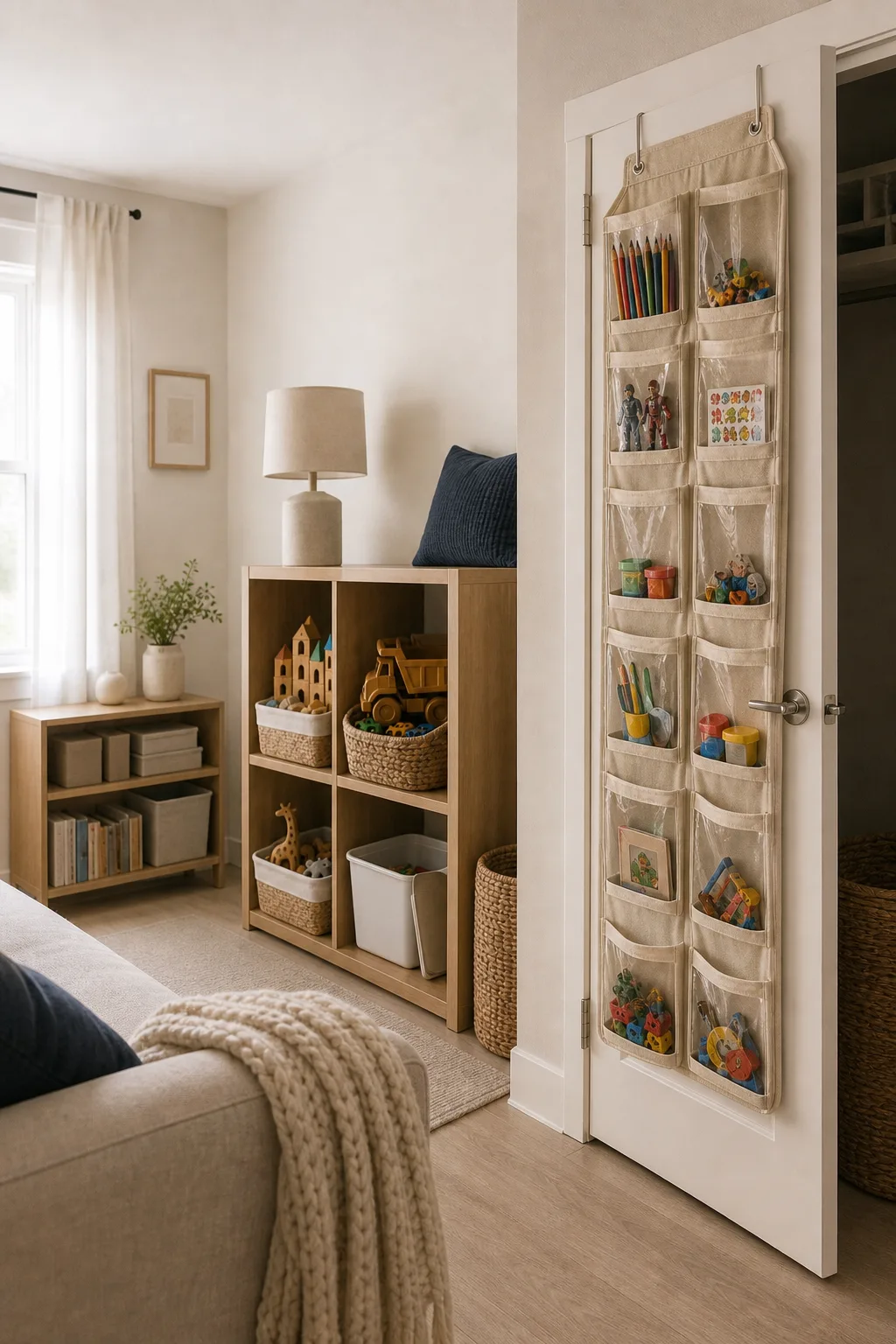
An over-door pocket organizer hung on the inside of a closet door is one of the most underused apartment organization ideas for toy storage. Each pocket holds a category of small-piece items: crayons, small figures, sticker books, playdough tools. Because the pockets are see-through, kids can find what they want without dumping everything out. This is a genuinely renter friendly storage solution since the organizer hooks over the door and leaves zero marks. It also keeps small items off the floor and out of rotation in a space that would otherwise be wasted.
Tip: Org tip: Choose an organizer with clear pockets rather than fabric ones so the contents are always visible.
Running the System Week to Week
8. Schedule Your Swap Day and Keep It Short

Toy rotation only stays a system if the swap actually happens. Pick one consistent day, Sunday evening or Monday morning tends to work well, and keep the swap to under ten minutes. Bring out the next bin, put the current toys back in the outgoing bin, return it to your storage zone, done. If the swap feels like a big project it will stop happening. This is one of the most important home organization tips for maintaining toy rotation in a small apartment over the long term because consistency is what prevents the pile-up from coming back.
Tip: Org tip: Set a recurring phone reminder for swap day so it does not slip past you during a busy week.
9. Create a No-Toy Zone in at Least One Room Area

In a small apartment the living room often doubles as a play space, dining area, and work-from-home spot all at once. Designating one zone as a no-toy area, even just the couch cushions and coffee table, gives you a visual reset that makes the whole apartment feel more organized. This is a boundaries-based approach to small space organization rather than a storage purchase. It also trains kids over time that not every surface is fair game. Use a small area rug to define the play zone so the boundary feels physical rather than arbitrary.
Tip: Org tip: Keep a small basket near the no-toy zone as a quick drop point for stray items so they have somewhere to go before the next tidy.
Room-Specific Rotation Ideas
10. Store Art Supplies in the Kitchen With a Two-Bin System

If art is part of your toy rotation, keeping those supplies in the kitchen makes practical sense because that is where cleanup happens. A two-bin system works well: one bin holds the current active art items in rotation, the other holds supplies that are not in circulation this week and lives on a high cabinet shelf. This doubles as one of the more functional apartment organization ideas because it keeps messy supplies close to the sink without cluttering the living area. A handled caddy that you can carry to the table and back keeps things contained between uses.
Tip: Org tip: Check the active art bin when you do your weekly swap to swap in a new medium, watercolors one week, collage supplies the next.
11. Tuck the Off-Rotation Bins Under the Bed With Slim Rolling Drawers

If your closet shelf is already maxed out, the space under the bed is your next best storage zone for off-rotation toy bins. Slim rolling under-bed drawers sit low enough to fit under most standard bed frames without raising the mattress height. They pull out fully so you can see and access the entire bin when it is time to swap. This is a renter friendly storage approach because nothing is attached to the walls or floor. For studio apartments especially, using under-bed space for toy rotation storage keeps the main living area clear and makes the room feel larger.
Tip: Org tip: Measure the clearance under your bed frame before buying drawers since heights vary quite a bit between frames.
Maintaining the System Long Term
12. Do a Quarterly Edit So the Rotation Stays Fresh
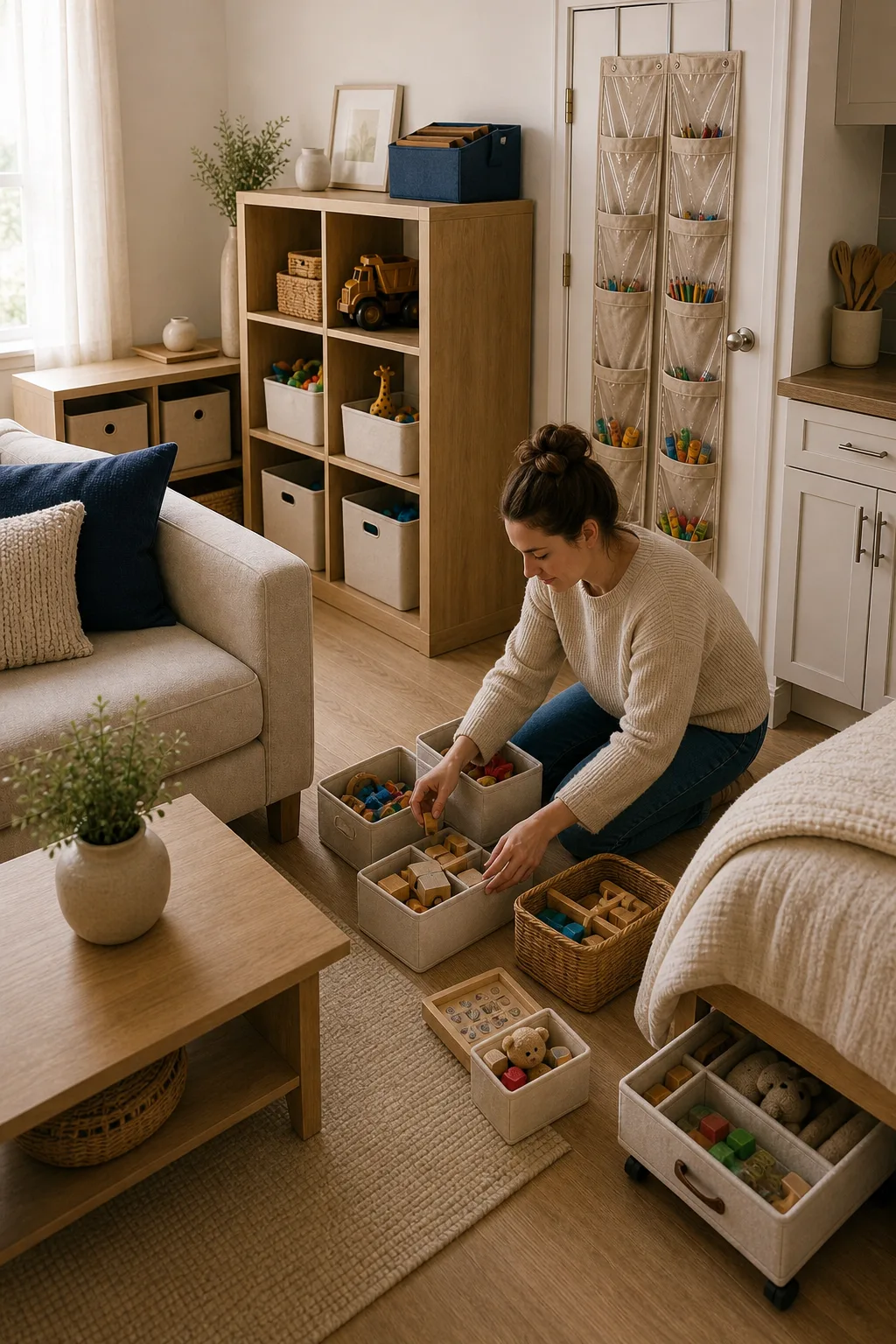
Every three months, pull all the rotation bins out together and do a quick re-sort. Kids grow fast and what felt engaging six months ago may now be too simple or simply unplayed. Remove items that are consistently skipped, add anything new that came in as a gift, and rebalance the batches. This quarterly habit is one of the most effective home organization tips for keeping toy rotation in a small apartment from quietly expanding back into clutter. It also gives you a natural point to pass along toys before they accumulate, which is especially important when your storage space is genuinely limited.
Tip: Org tip: Do your quarterly edit before a birthday or holiday so you have room to absorb new items without the total volume increasing.
FAQ
How many toys should be in rotation at one time in a small apartment?
A good starting point is six to ten items for toddlers and slightly more for older kids who engage in longer independent play. In a small apartment the goal is a number that fits in one basket or on one small shelf without overflowing. Fewer items in rotation actually increases engagement because there is less decision fatigue, so err on the side of less when you are unsure.
How often should I rotate toys in a small apartment?
Every one to two weeks is a common and manageable schedule for most families in small apartments. If interest drops before the week is up, shorten the rotation. If your child is still deeply engaged at two weeks, you can stretch it to three. The schedule should follow your child's engagement level, not a rigid calendar.
What is the best renter friendly storage for off-rotation toys?
Lidded bins on a high closet shelf, slim rolling under-bed drawers, and lidded storage ottomans are the top three options for renters because none of them require drilling or permanent hardware. All three are easy to take with you when you move. For very small apartments, under-bed rolling drawers tend to offer the most hidden capacity without taking up any living area floor space.
What if my child asks for a toy that is not in the current rotation?
This comes up and it is worth having a simple answer ready. Many families keep one or two special items outside the rotation system entirely, things with high emotional attachment. For general requests, a brief explanation that the toy is resting and will come back soon works better than you might expect, especially once kids experience the excitement of toys returning. If a specific toy is requested consistently, consider moving it into the active rotation earlier.
Can toy rotation work in a studio apartment with no separate storage room?
Yes, and in a studio it is arguably more important than anywhere else. The key is stacking your off-rotation bins inside furniture that serves another purpose: an ottoman with a lid, the top shelf of a tall wardrobe, or slim under-bed drawers. The active rotation lives on one small freestanding shelf or in a low cube organizer. When the off-rotation bins are genuinely out of sight, the studio feels like an adult space again rather than a playroom.
Save this guide somewhere easy to find before your next swap day, whether that is a bookmark, a Pinterest pin, or a screenshot on your phone. If you want more renter-friendly small space organization ideas sent straight to your inbox, the Nest & Narrow newsletter covers exactly that. No fluff, just practical apartment organization tips from someone who is also working with limited square footage.