

The under sink cabinet is one of the most underused spots in any apartment kitchen. Between the plumbing curves, the odd height clearance, and whatever got shoved in there when you first moved in, it tends to become a catch-all for things you would rather not think about. But with a clear approach, that cabinet can hold cleaning supplies, dish soap backstock, sponges, and more, all within easy reach.
Good under sink kitchen organization does not require a drill, a landlord's permission, or a hefty budget. It requires a realistic look at what you actually store there, a few smart containers, and a plan that works around the pipes instead of fighting them. Whether you are working with a single-basin sink in a studio or a standard double cabinet in a rental apartment, these home organization tips will help you reclaim every inch.
Key takeaways
- Remove everything first and measure your actual usable space, including pipe clearance, before buying any organizers.
- Use stackable, adjustable, or pull-out organizers to work around plumbing without permanently altering the cabinet.
- Group items by use frequency so the things you reach for daily are in front and easy to grab without digging.
The Cabinet That Started It All
The first cabinet I ever organized in my own apartment was the one under the kitchen sink, mostly because it embarrassed me every time I opened it to grab the dish soap. A tension rod, a pull-out bin, and a waterproof mat later, it became the cabinet I showed people first. Sometimes the smallest fix changes how you feel about a whole room.
Step-by-step
Prep Your Space
1. Pull Everything Out and Start with a Clean Slate

Before any organizer goes in, take everything out of the cabinet completely. Wipe down the cabinet floor and walls with a damp cloth, and check for any moisture near the pipes. This is your only chance to see the true footprint you are working with, including where the drain pipe and supply lines sit. Toss anything expired, duplicated, or that genuinely belongs somewhere else in your kitchen.
Tip: Keep a small trash bag nearby so you can discard old sponges or near-empty bottles immediately rather than letting them back into the pile.
2. Measure Around the Pipes Before Buying Anything
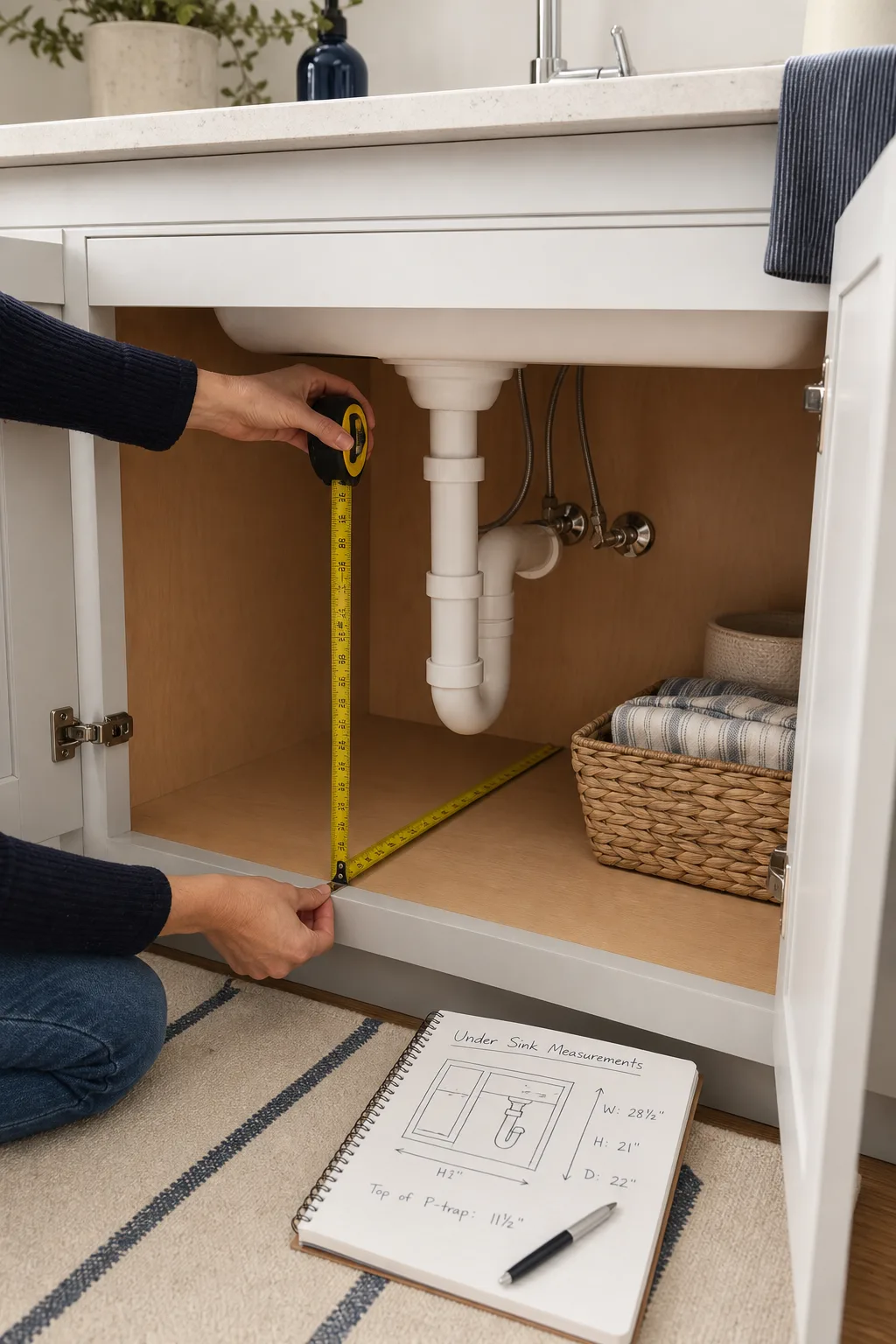
Measure the cabinet width, depth, and height in at least two spots because the pipe takes up space that your measuring tape does not account for automatically. Note where the drain pipe exits, how low the supply lines hang, and how much clearance you have on either side. These measurements will save you from returning organizers that looked perfect online but will not fit in reality. Apartment kitchens especially tend to have tighter-than-expected under sink dimensions.
Tip: Sketch a rough top-down diagram of the cabinet floor with the pipe locations marked so you can refer to it while shopping.
3. Sort What You Store into Clear Categories

Group everything into categories before it goes back in: daily cleaning supplies, dish and sink supplies, trash bags, backup stock, and anything miscellaneous. Small space organization works best when you commit to a category system up front rather than organizing by shape or container size. If something does not fit a category, question whether it belongs under the sink at all. Renter friendly storage is most effective when the cabinet only holds what truly lives in the kitchen.
Tip: Limit yourself to three or four categories maximum so the system stays simple enough to maintain week to week.
No-Drill Storage Solutions
4. Use a Tension Rod to Hang Spray Bottles

A spring tension rod installed horizontally across the cabinet opening creates instant vertical hanging storage for spray bottle triggers, with no drilling needed. Hang your multi-surface cleaner, glass cleaner, or dish spray so the bottles dangle and the cabinet floor stays open for bins and boxes below. This is one of the most effective no-drill under sink kitchen organization tricks because it uses dead air space that would otherwise go to waste. Tension rods are inexpensive and come down without a mark when you move out.
Tip: Choose a rod rated for at least a few pounds and check that it clears the spray bottle caps when the door closes.
5. Add a Stackable Shelf Riser to Double Your Vertical Space
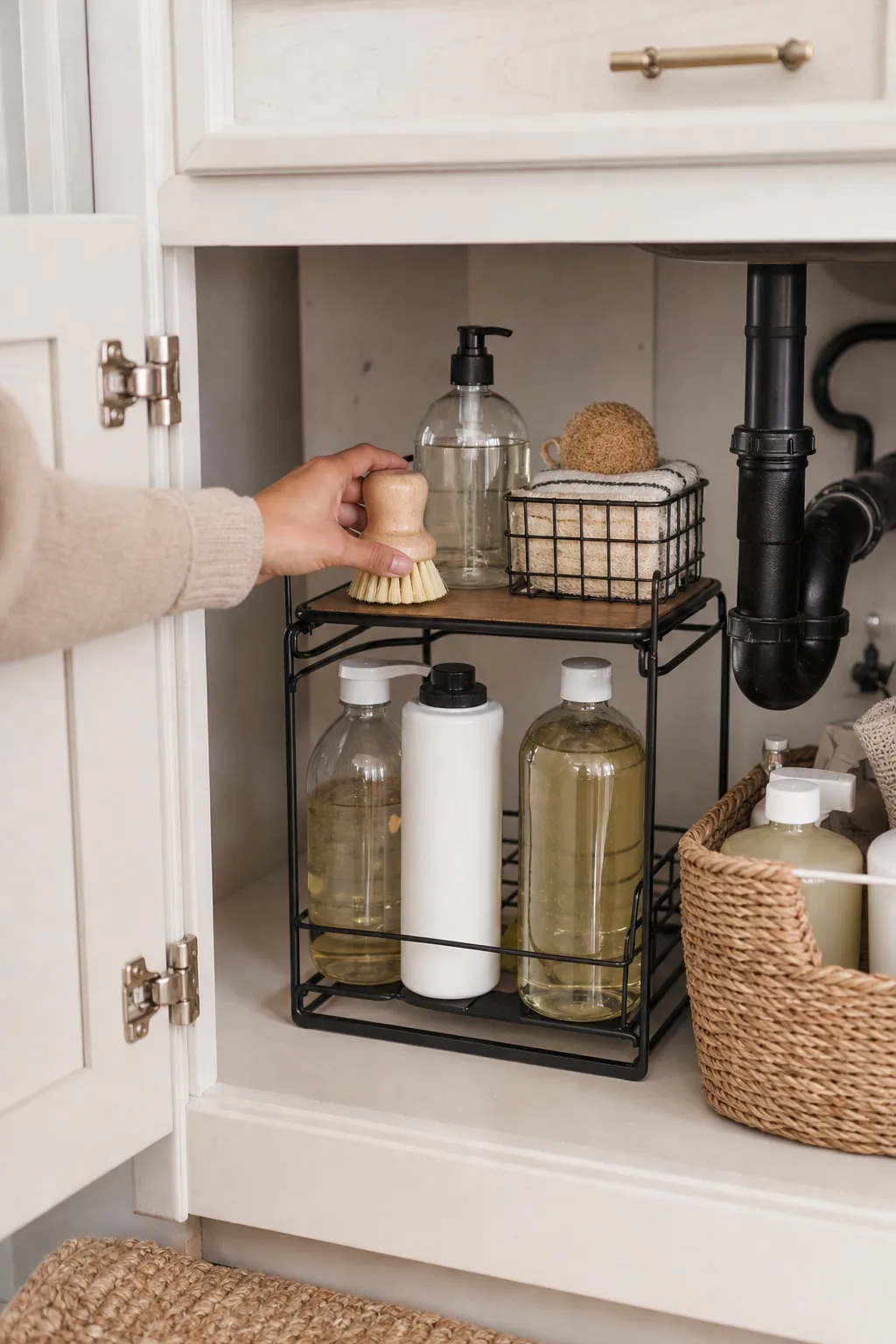
A freestanding shelf riser that fits beside or around the drain pipe instantly creates two levels of storage in what is otherwise a single flat space. Place taller items like dish soap refills on the lower level and smaller bottles or sponge caddies on top. Look for risers with adjustable heights or U-shaped cutouts designed specifically for under sink kitchen use, as these accommodate the pipe without having to cram anything awkward around it. This is a go-to apartment organization idea because it requires no permanent installation.
Tip: Measure the riser height against your cabinet interior before purchasing so you know the top shelf will not hit the cabinet ceiling when loaded.
Renter-Friendly Foundations
6. Line the Cabinet Floor with a Waterproof Mat

A waterproof shelf liner or silicone mat on the cabinet floor protects against drips from dish soap bottles and any slow moisture from the pipes. It is easier to wipe down or replace a mat than to scrub a stained or swollen cabinet floor, which matters especially in a rental where you want to protect your security deposit. Choose a mat that can be cut to fit around the pipe base if needed. This small step also keeps bins and organizers from sliding when you open and close the cabinet door.
Tip: Check the mat monthly for trapped moisture, particularly near the drain pipe connection, so you catch any small leaks early.
7. Assign a Pull-Out Bin to Your Daily Supplies

A sliding pull-out bin or basket placed at the front of the cabinet keeps your most-used items, sponges, dish soap, scrub brushes, accessible without reaching into the back. Look for a bin with a handle or an open front so you can grab it with one hand while the other is still holding something. This is one of the most practical home organization tips for renters because it turns a deep cabinet into usable front-to-back space rather than a pile-up zone. Choose a bin narrow enough to sit beside the pipe rather than in front of it.
Tip: Designate this bin strictly for daily-use items so it never becomes a catch-all for overflow stock.
8. Store Backup Stock in a Labeled Bin at the Back
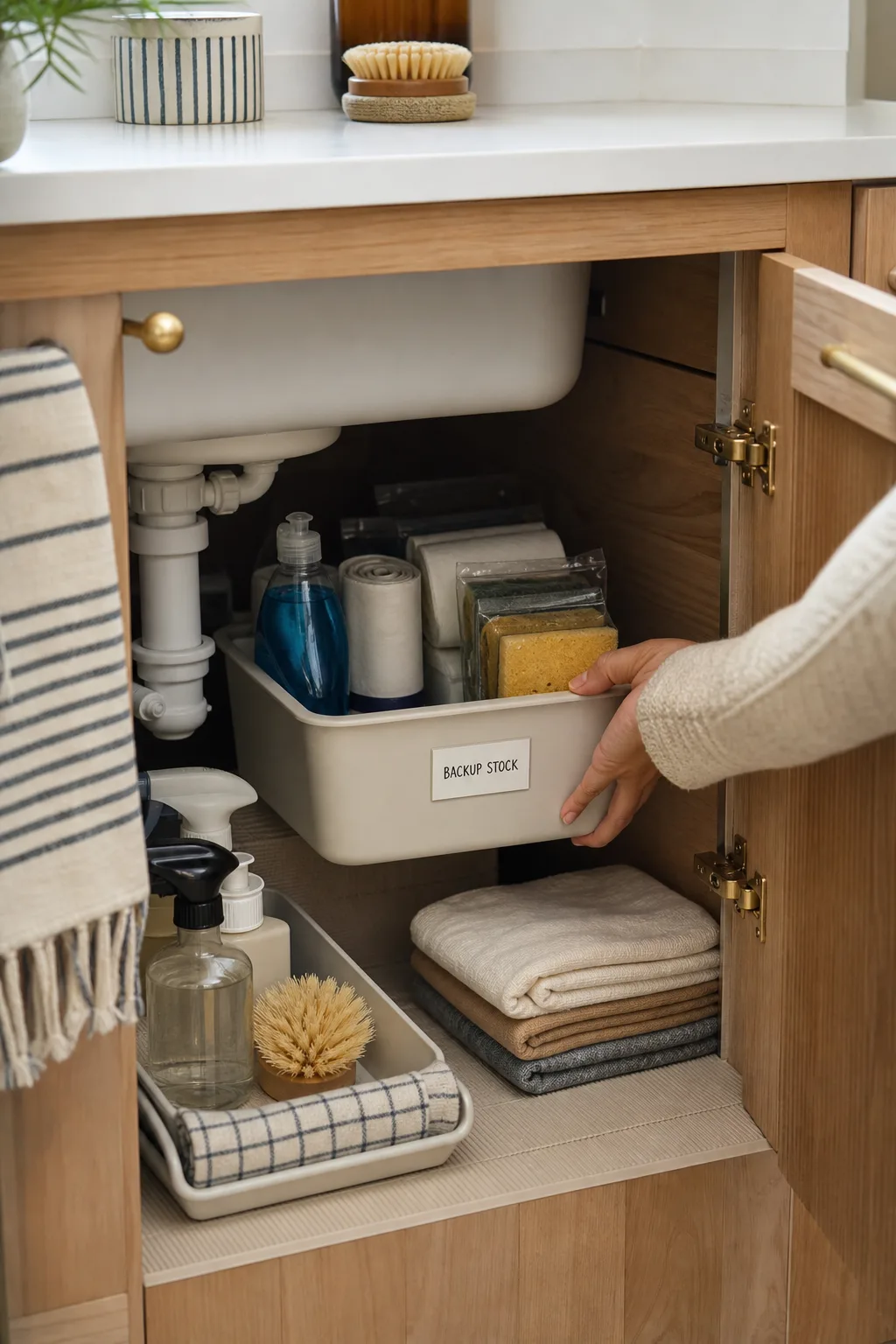
The back half of the under sink cabinet is harder to reach, which makes it the right place for backup stock: a spare dish soap bottle, extra trash bags, a replacement sponge pack. Use a shallow bin or basket that slides out, or at minimum label the front of it clearly so you know what is there without having to crouch and look. Under sink kitchen organization renter friendly storage is about making the whole cabinet functional, not just the easy-to-reach front section. Rotate stock forward as you use items up so nothing expires at the back.
Tip: Keep backup stock to one or two extras per item so the back section does not become a secondary junk drawer.
Use the Door
9. Mount a Small Caddy to the Cabinet Door Interior
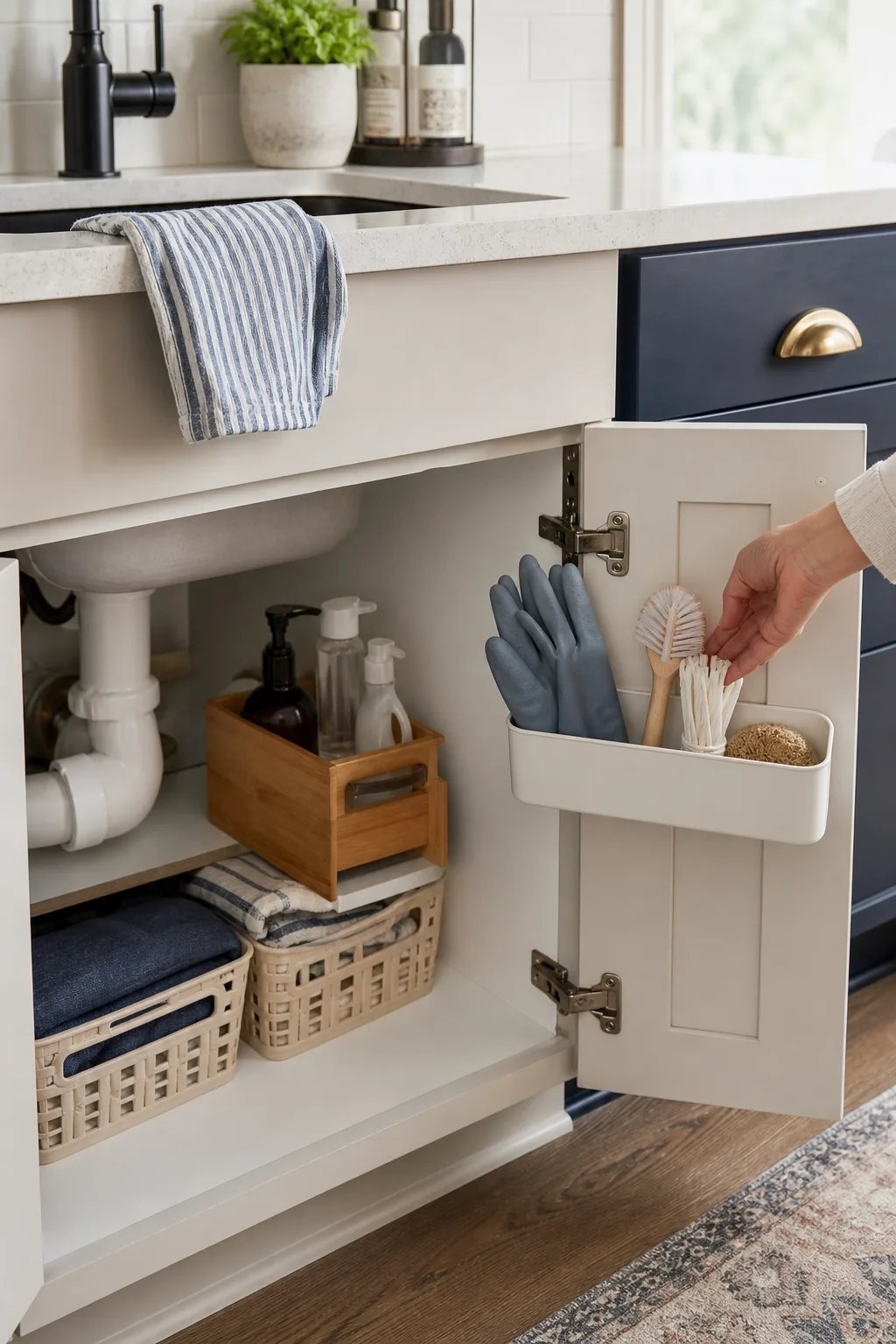
The inside of the cabinet door is often completely blank and ready to hold a slim adhesive or tension-clip caddy for small items: rubber gloves, a bottle brush, extra twist ties, a spare scrubber. Adhesive caddies designed for cabinet doors hold surprising weight and remove cleanly with the right adhesive strip, making this a strong renter-friendly option. Keep the caddy narrow so it does not bump the front of your organizers when the door closes. This small space organization move adds real capacity without touching the cabinet interior at all.
Tip: Test the door closure with the caddy loaded before committing to the adhesive placement so nothing catches on the cabinet frame.
10. Hang a Slim Pocket Organizer on the Door for Flat Items

A fabric or plastic pocket organizer attached to the cabinet door interior works well for flat or flexible items: trash bag ties, reusable gloves laid flat, sponge refills still in packaging, or a dryer sheet or two if you use them for cabinet freshness. Over-the-door pocket organizers designed for pantry doors often adapt well to under sink cabinet doors as long as the pockets are not so deep that the door will not close. This under sink kitchen tip turns a surface that usually does nothing into active storage. Measure the door interior height carefully before choosing a pocket organizer.
Tip: Avoid storing heavy bottles in door pockets since the weight will strain any adhesive or hook over time.
Tackle Awkward Items
11. Create a Dedicated Spot for Trash Bag Storage
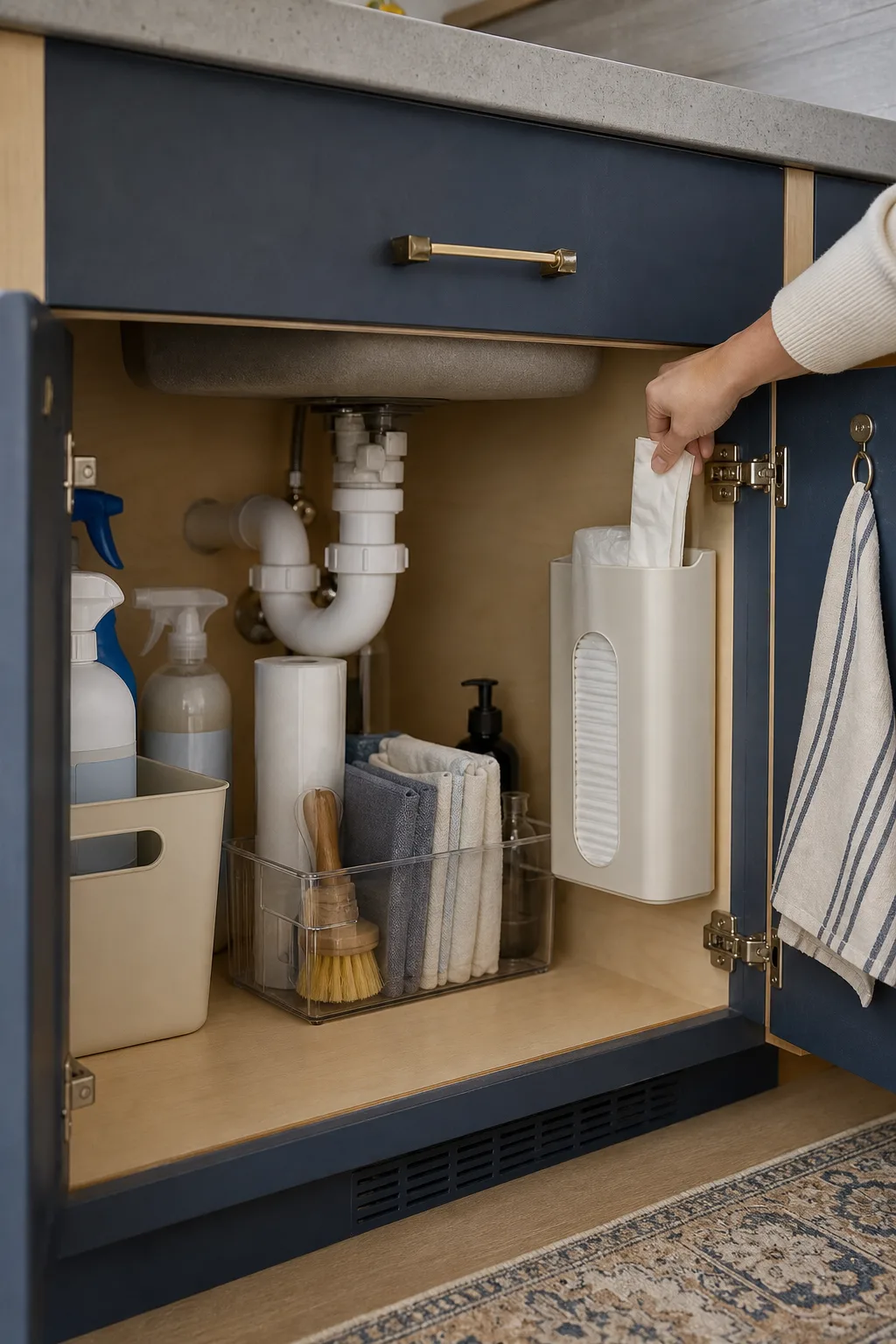
Trash bags are bulky and tend to get stuffed wherever they fit, which means they end up blocking everything else. Give them a consistent spot: rolled or folded into a tall slim bin beside the pipe, stored in a wall-mounted dispenser on the cabinet interior side wall using adhesive, or clipped into a bag-roll holder. When trash bags have a home that is not the floor of the cabinet, the whole under sink kitchen feels more organized by default. This is one of those apartment organization ideas that seems minor but makes a visible difference every time you open the cabinet.
Tip: Store a few individual bags loose on top of the roll or folded stack so you can grab one quickly without unwinding the whole pack.
Maintain the System
12. Do a 5-Minute Reset Every Two Weeks
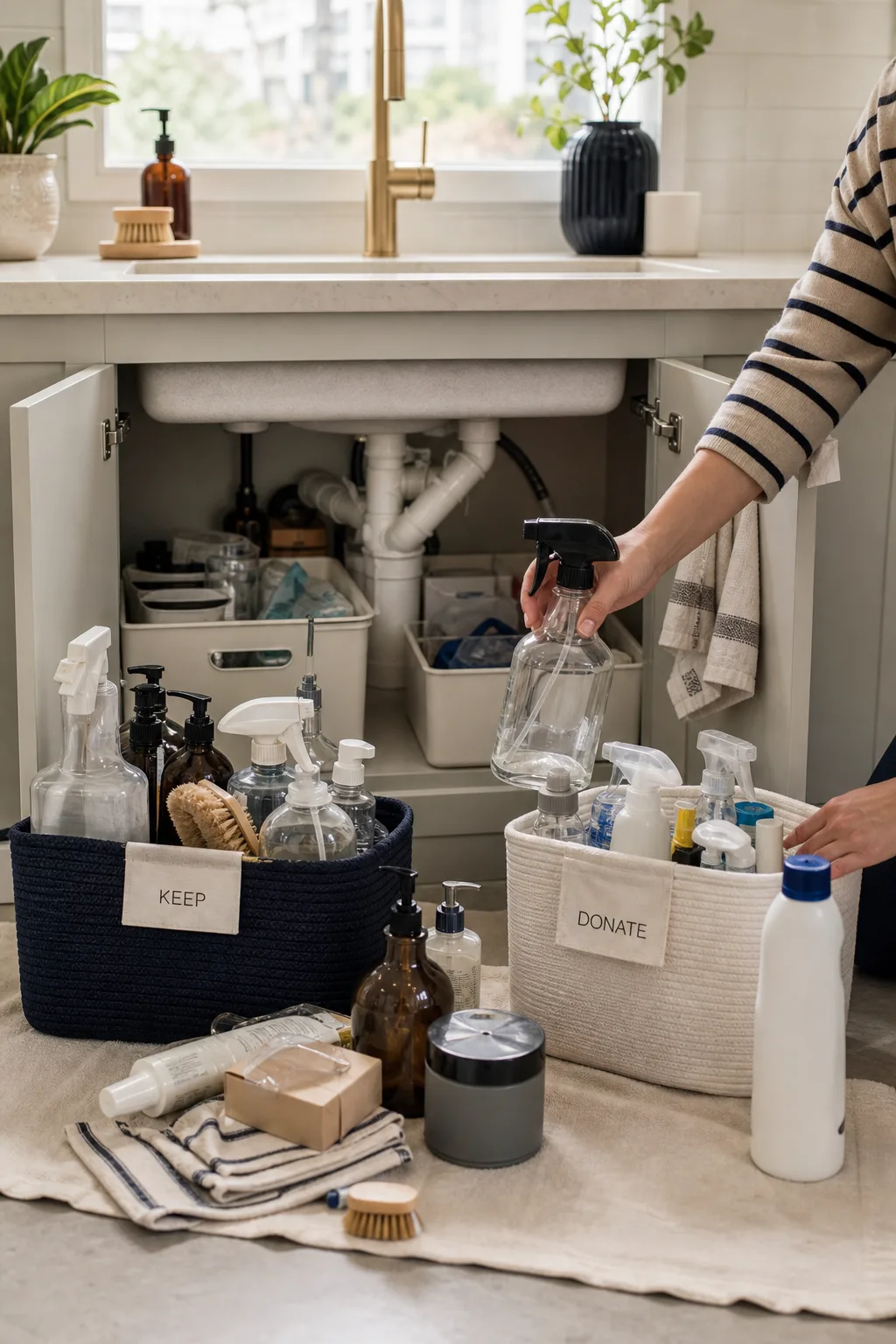
Under sink kitchen organization stays functional only if you maintain it. A quick two-week reset, where you pull everything out, toss empty bottles, refill the daily bin, and return anything that wandered in, keeps the system from degrading back into a pile. Set a recurring reminder on your phone or tie it to something you already do regularly, like taking out the trash or restocking dish soap. Small space organization in apartment kitchens works long-term when maintenance is built into a routine rather than treated as a separate project.
Tip: Use the reset to check under the pipes for moisture so you catch any drips before they cause real damage to the cabinet floor.
FAQ
What is the best way to organize under the kitchen sink in a rental apartment?
Focus on freestanding and adhesive solutions that require no drilling. A tension rod for spray bottles, a stackable shelf riser, a waterproof liner, and a pull-out bin for daily supplies will cover most needs without altering the cabinet. Under sink kitchen organization renter friendly storage means every piece can come out when you move and leave no damage behind.
How do I organize under the sink with pipes in the way?
Measure around the pipes before purchasing anything, and look for organizers with U-shaped cutouts or adjustable widths designed to fit beside a drain pipe. Use the space on either side of the pipe for bins, and use the door and tension rods to pick up vertical space that the pipe does not affect.
What should I actually store under the kitchen sink?
Stick to kitchen-specific cleaning and sink supplies: dish soap and refills, sponges, scrub brushes, rubber gloves, trash bags, and under-sink cleaning products. Backup stock of those items fits well at the back. Avoid storing food, heavy appliances, or items that belong in other rooms, since the under sink cabinet works best as a focused zone.
How do I keep under sink cabinets from getting damp or moldy?
Line the cabinet floor with a waterproof mat and check the pipes and mat for moisture every few weeks. Good airflow and a tidy cabinet make it easier to spot slow drips early. If you notice recurring dampness, report it to your landlord promptly so it does not become a larger maintenance issue.
Are tension rods strong enough to hold spray bottles under the sink?
Yes, a quality tension rod rated for a few pounds holds standard spray bottles comfortably. Position it near the front of the cabinet opening and check that the rod is fully extended and seated against both side walls. Avoid overloading with more than three or four bottles, and check the tension monthly to make sure it has not loosened.
Save this guide to your kitchen or apartment organization board so it is easy to find when you are ready to tackle the cabinet. If you want more small-space ideas sent straight to you, the Nest and Narrow newsletter covers practical apartment organization tips on a regular basis. You can sign up at nestandnarrow.com.